
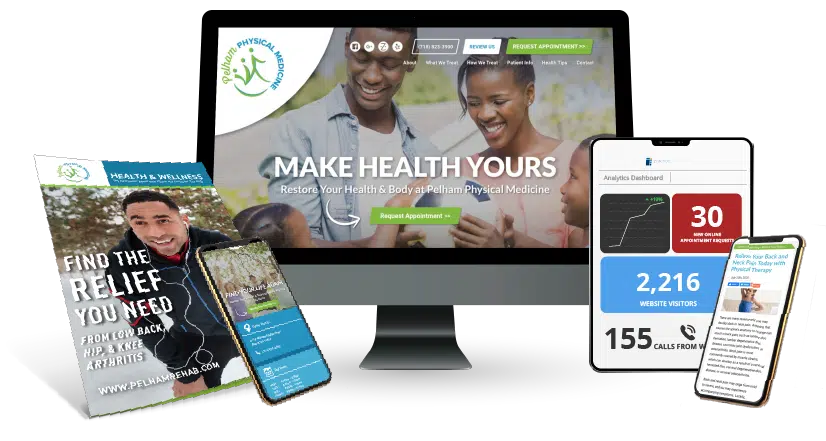








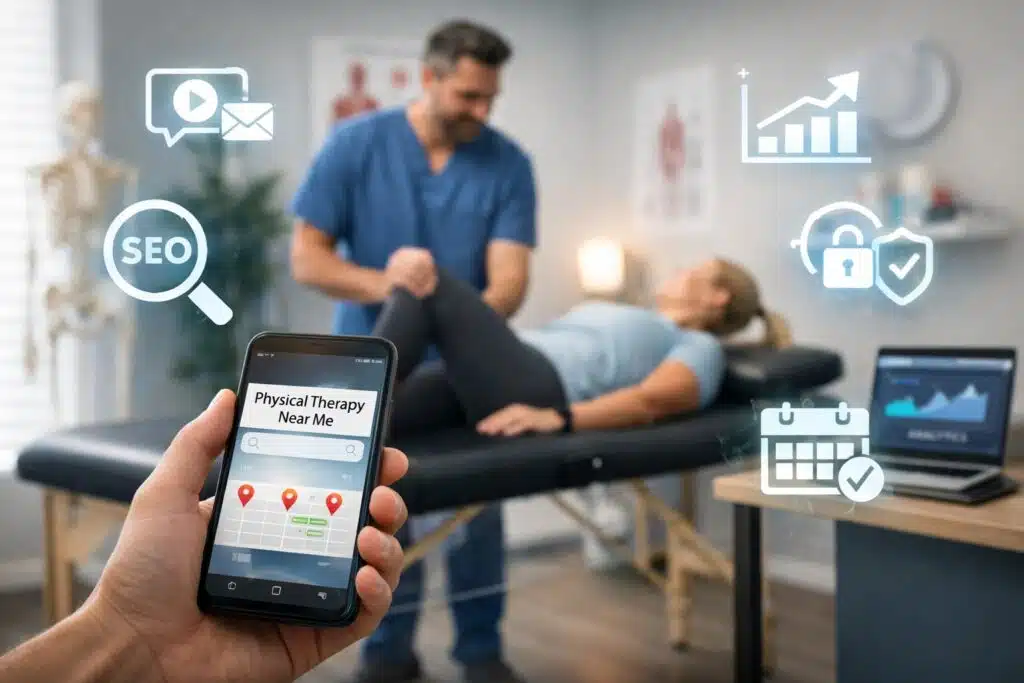
Patients are no longer discovering physical therapy practices the same way they did just a few years ago. In 2026, many people are not simply typing “physical therapy near me” into a search engine. Instead, they are asking AI assistants questions like “Where can I get help for sciatica near me?” or “Who treats running injuries in my area?”
These questions are now answered through AI-generated search summaries, video platforms, review sites, and instant booking tools. As a result, the patient journey has become far more fragmented than the traditional “Google search → website visit → phone call” pathway that clinics once relied on.
For physical therapy practices, this shift means that traditional SEO alone is no longer enough to maintain consistent patient flow. Clinics must now compete for visibility across multiple discovery channels, including AI search results, short-form video platforms, and frictionless scheduling systems that allow patients to book appointments immediately.
Practices that adapt to these changes will continue attracting new patients and strengthening referral relationships. Those who rely on outdated marketing strategies may find themselves increasingly invisible in a crowded digital landscape.
At Practice Promotions, we work exclusively with physical therapy clinics and understand how quickly this environment is evolving. Below are five healthcare marketing trends shaping the future of physical therapy growth in 2026, and what your practice can do now to stay ahead.
Trend 1: Beyond SEO — Winning the “AI Overview” (AEO)
For years, search engine optimization (SEO) helped physical therapy clinics attract patients searching for terms like “physical therapy near me” or “treatment for back pain.” But patient discovery is evolving.
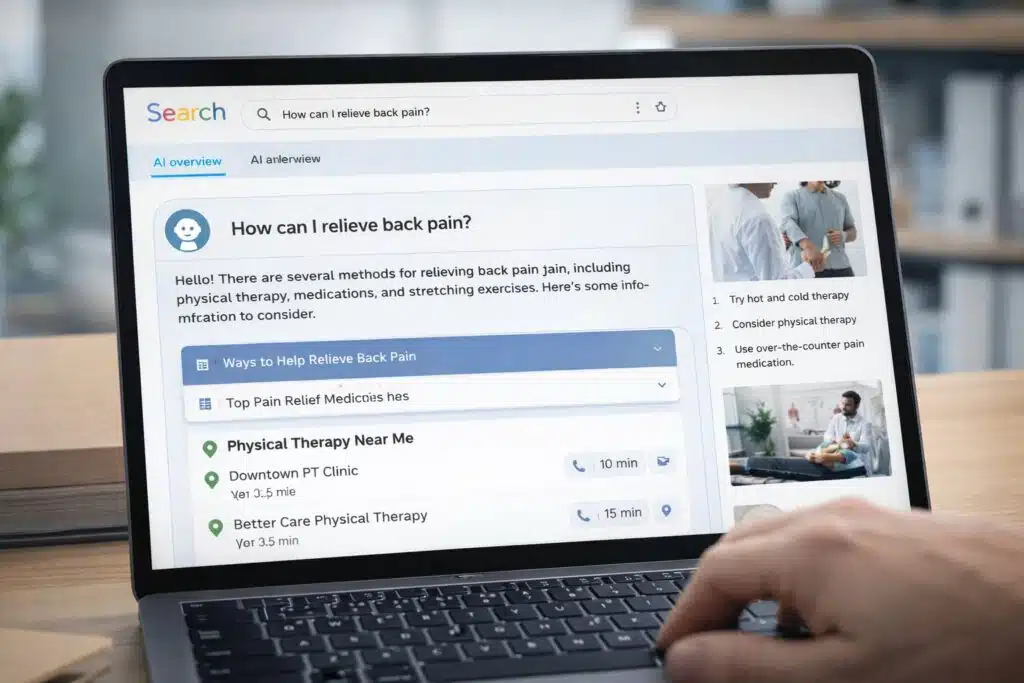
Today, many searches are answered directly through AI-generated summaries before users even visit a website. Platforms like Google’s AI Overviews and conversational assistants now summarize treatments, conditions, and local providers directly in search results.
This shift introduces a new layer of visibility called Answer Engine Optimization (AEO). Instead of focusing only on traditional rankings, practices must also ensure AI systems understand and surface their expertise.
Research shows that 70–80% of healthcare searches begin online, but AI-generated summaries are already reducing traditional website clicks by 20–40% in some cases. Clinics that appear in these summaries often become the first providers patients consider.
How PT Practices Can Optimize for AI Search
To help AI systems recognize your expertise, clinics should focus on:
- Structured data (schema markup) that clearly identifies services like dry needling, vestibular rehabilitation, or post-surgical therapy.
- Condition-focused educational content answering questions patients ask online.
- Detailed provider pages highlighting clinician specialties and treatment areas.
As AI-driven search becomes more common, physical therapy practices that optimize for AEO will be more likely to appear directly in patient answers and not just traditional search listings.
Trend 2: The “Frictionless” Patient — Self-Scheduling Is Now Expected
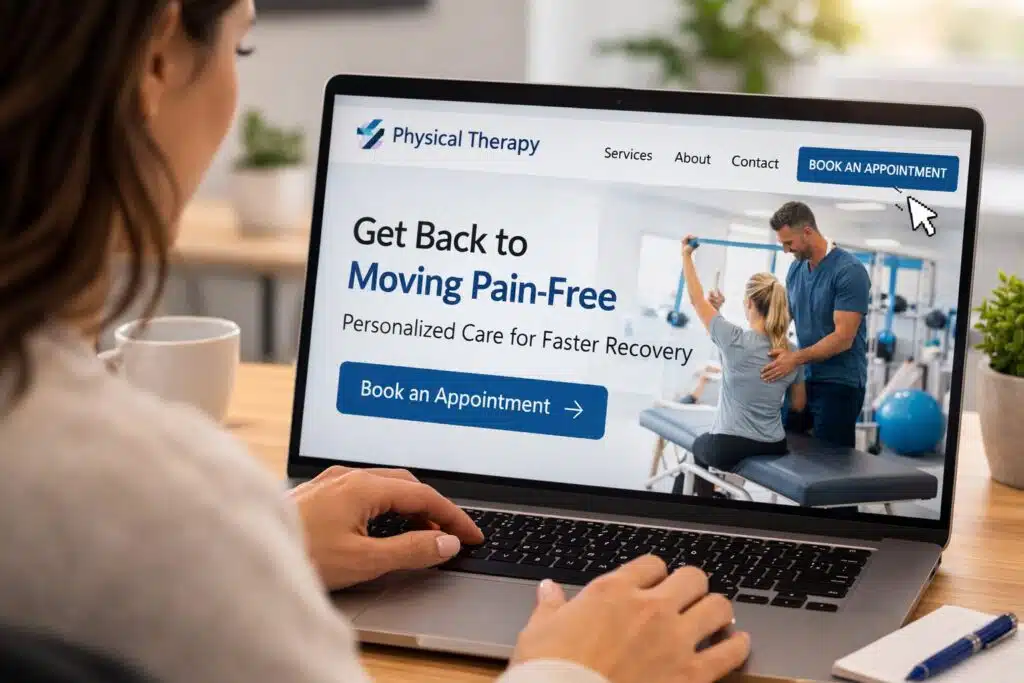
Today’s healthcare consumers expect convenience. If booking an appointment requires calling during office hours, many patients will simply move on to the next provider.
This shift toward convenience is creating what many marketers call the “frictionless patient.” People want the ability to research providers, check availability, and schedule appointments instantly, often outside traditional business hours.
The data support this change. Studies show that 43% of online medical appointments are booked outside of standard office hours, meaning a large portion of patients prefer scheduling when clinics are closed.
For physical therapy practices, this makes online self-scheduling a requirement rather than a luxury.
Why Self-Scheduling Matters for PT Practices
When patients can book appointments immediately, clinics benefit in several ways:
- Higher conversion rates because patients can secure an appointment the moment they decide to seek care.
- Reduced front desk workload, saving significant administrative time.
- Better patient experience, which strengthens satisfaction and retention.
Many practices also discover that self-scheduling improves operational efficiency. For example, clinics often free up the equivalent workload of one full-time employee for every 100 appointments managed through automated scheduling.
Practical Implementation for PT Clinics
For the best results, self-scheduling tools should integrate directly with your EMR system, such as WebPT or Prompt. When connected to your website’s “Book Now” buttons, these systems allow patients to see real-time availability and reserve appointments instantly.
In a digital environment where convenience drives patient decisions, clinics that remove scheduling friction will consistently capture more new patient inquiries.
Trend 3: Short-Form, Physician-Led Video (The Trust Accelerator)
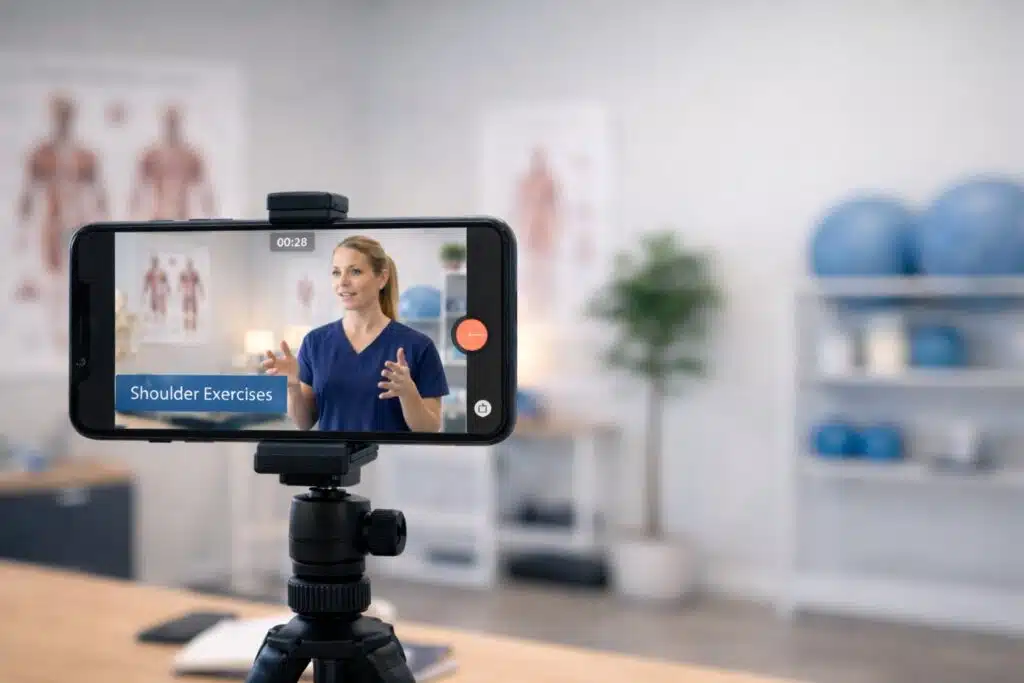
Patients want to understand their condition before they schedule an appointment. Short-form video has quickly become one of the most effective ways for clinics to educate and build trust with potential patients online.
Platforms like Instagram Reels, TikTok, and YouTube Shorts now allow providers to share quick, helpful insights directly from the clinic environment. Instead of polished commercials, patients respond more strongly to authentic videos that show real clinicians explaining real problems.
Video is powerful because people process visual information much faster than text. Research shows that patients retain about 95% of a message when watching a video, compared to roughly 10% when reading text.
For physical therapy practices, this creates a major opportunity to educate and connect with patients before they ever visit the clinic.
Video Ideas That Work Well for PT Clinics
Short videos should focus on simple questions patients already ask every day, such as:
- “How to improve desk posture in 30 seconds.”
- “What happens during your first physical therapy evaluation.”
- “Three stretches that may help relieve sciatica discomfort.”
These videos do not need complex production. A smartphone recording inside the clinic is often more effective because it feels genuine and educational.
Why Video Drives Patient Engagement
Short-form video consistently generates two to three times more engagement than static images on most social platforms. This increased engagement helps clinics reach more local patients and strengthen trust before the first appointment.
For physical therapy practices, short educational videos are not just marketing content; they are an opportunity to demonstrate expertise and reassure patients that they are choosing the right provider.
Trend 4: Privacy-First Marketing and HIPAA-Compliant Tracking

Healthcare marketing is entering a new phase where patient privacy and data protection are central to digital strategy. In recent years, regulators have increased scrutiny around how healthcare websites collect and track patient data online.
Many clinics use tools such as Google Analytics or advertising pixels to measure marketing performance. However, when these tools collect identifiable patient information without proper safeguards, they may create HIPAA compliance risks.
Recent enforcement trends highlight the seriousness of this issue. Healthcare organizations have paid more than $100 million in HIPAA-related fines between 2023 and 2025 linked to tracking technologies such as advertising pixels and third-party analytics tools.
For physical therapy practices, this creates a challenge: clinics still need marketing data to understand which campaigns generate new patient appointments, but they must also protect patient privacy.
Why Compliance Matters for PT Practices
Privacy-focused marketing protects both patients and clinics:
- Patient trust improves when individuals know their data is handled responsibly.
- Regulatory risk decreases, helping clinics avoid potential penalties.
- Marketing insights remain available so practices can continue improving patient acquisition.
Moving Toward HIPAA-Safe Analytics
Many practices are now shifting to server-side tracking and HIPAA-compliant analytics platforms, which allow marketing teams to measure campaign performance while limiting exposure of sensitive data.
Solutions such as server-side Google Tag Manager or privacy-focused analytics tools like Freshpaint help clinics maintain visibility into marketing performance while protecting patient information.
As privacy regulations continue to evolve, physical therapy practices that adopt compliant tracking strategies will be better positioned to maintain both trust and marketing effectiveness.
Trend 5: Capacity-Based Demand Shaping
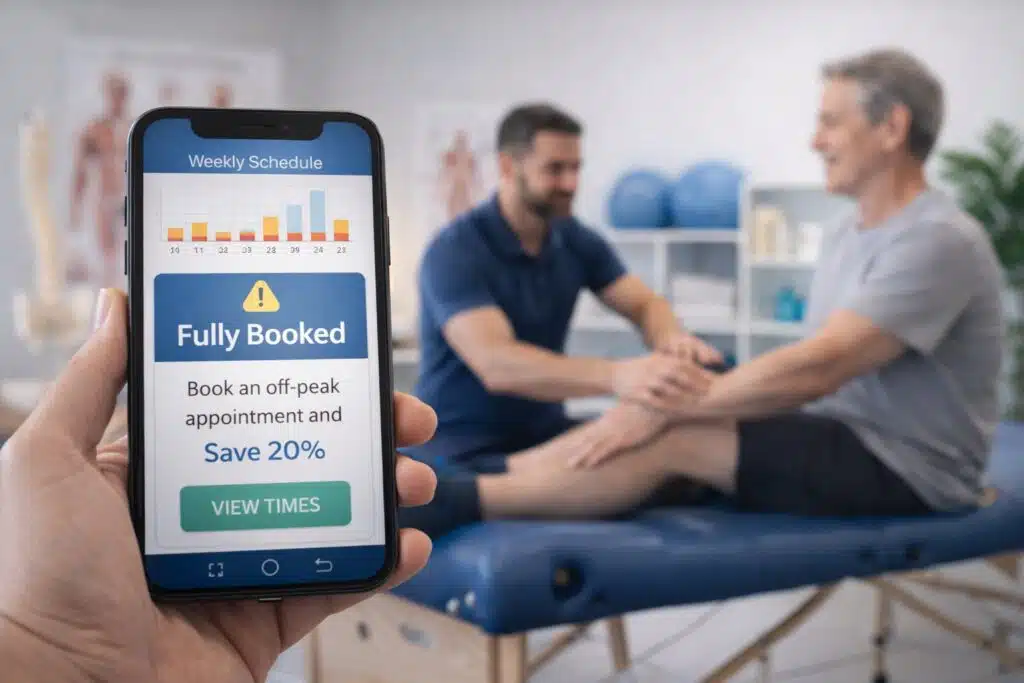
Many physical therapy practices invest in digital marketing to attract more patients. However, marketing often operates separately from clinic scheduling and provider availability. When these two areas are not aligned, practices may spend advertising dollars promoting services that are already fully booked.
This is where capacity-based demand shaping becomes important. Instead of promoting every service equally, marketing efforts should adjust based on which clinicians or specialties currently have open availability.
For example, if a clinic’s back pain specialist is booked for the next three weeks, continuing to promote back pain services may lead to missed opportunities and frustrated patients. Instead, marketing can shift focus toward services with immediate openings, such as sports rehabilitation, pelvic health therapy, or post-surgical recovery programs.
When marketing aligns with provider capacity, clinics can:
- Fill open appointment slots faster
- Reduce patient wait times
- Improve patient satisfaction and scheduling efficiency
Practices can lose 30–50% of potential revenue when marketing campaigns drive demand for services that have no available appointments. By coordinating marketing strategy with real-time clinic capacity, physical therapy practices can direct patient demand toward the services that need it most.
This approach allows clinics to use marketing more strategically, ensuring that patient interest translates into actual booked appointments rather than lost opportunities.
Conclusion: Smarter Marketing for Physical Therapy Practices
Physical therapy marketing is changing quickly. Patients no longer rely only on Google searches. Many now find providers through AI summaries, short videos, online reviews, and instant booking tools.
For clinics, this means visibility alone is not enough. Your practice also needs to make it easy for patients to learn about your services, trust your expertise, and book an appointment without delays.
The trends discussed in this article show where healthcare marketing is moving. Clinics that adapt early will have a clear advantage in attracting and converting new patients.At Practice Promotions, we help physical therapy practices build marketing strategies that attract the right patients and support long-term growth. If you want to strengthen your visibility and attract more qualified patient inquiries, reach out to us to start building a strategy tailored to your practice goals.