
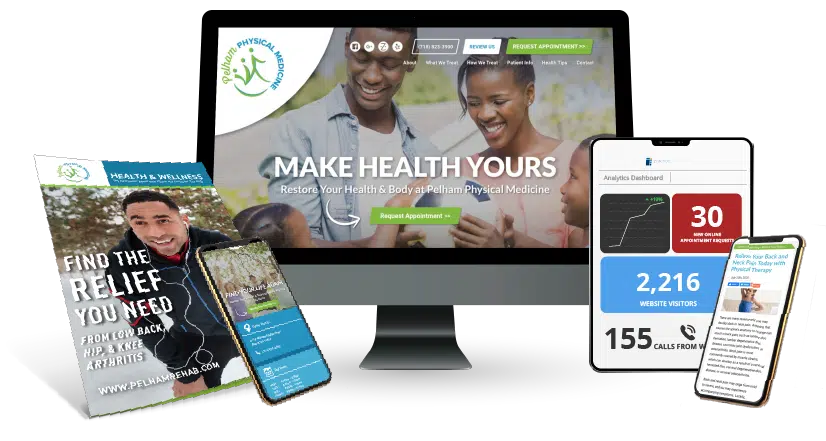









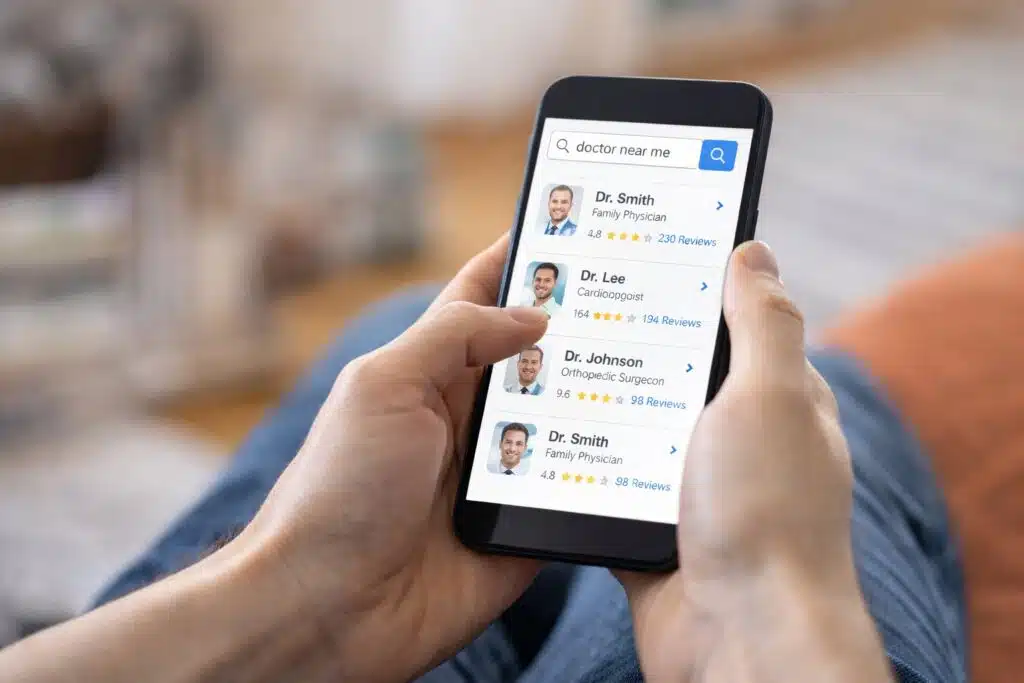
The way patients choose healthcare providers has changed. Today, most people begin their search for care online. In fact, research shows that over 70% of patients rely on online reviews when choosing a doctor, making a clinic’s digital reputation a critical factor in attracting new patients.
That means a clinic’s digital presence often becomes the first interaction a patient has with a practice.
Many healthcare providers already have a website or a social media page. However, having an online presence alone does not guarantee new patient appointments. Without a clear healthcare marketing strategy, those digital channels often fail to turn website visitors into actual bookings.
This is where a structured approach becomes important.
A strong digital marketing strategy for healthcare helps practices reach patients at the right moment, build trust before the first visit, and guide potential patients toward scheduling care.
In this article, we will walk through 5 healthcare marketing strategies that can help practices improve visibility, attract new patients, and strengthen long-term growth.
Why Traditional Referrals Are No Longer Enough
For many years, healthcare practices relied heavily on referrals. Patients often found providers through recommendations from other doctors, family members, or friends.
Referrals still matter, but the patient decision process has changed.
Today, even when someone receives a recommendation, they rarely schedule an appointment right away. Instead, they usually search online to learn more about the provider.
Patients often look for information such as:
- Online reviews to see what other patients experienced
- The clinic’s website to understand services and expertise
- Educational content that explains treatment options
In other words, word-of-mouth referrals now often lead to a Google search before a phone call.
This shift creates both a challenge and an opportunity for healthcare providers.
Practices that rely only on referrals may lose potential patients during this research stage. On the other hand, clinics that invest in a strong digital marketing strategy for healthcare can reinforce trust and encourage those patients to move forward with scheduling care.
Another advantage of digital marketing is measurability. Traditional advertising methods often make it difficult to know which efforts actually bring in new patients.
Digital marketing works differently. It allows practices to track website visits, phone calls, and appointment requests. This visibility helps practices understand which marketing activities are producing results and where to invest next.
For many healthcare providers, this shift turns marketing from a guessing game into a more predictable growth strategy.
Core Healthcare Marketing Strategies That Drive Patient Growth
Below are five high-impact healthcare marketing strategies that many growing practices use to attract new patients and strengthen long-term performance.
1. Advanced SEO: Dominating the Local Search Landscape
Search engine optimization (SEO) remains one of the most important parts of a strong healthcare marketing strategy. When patients experience pain or health concerns, their first step is often a Google search.
The practices that appear at the top of those search results are far more likely to receive website visits, phone calls, and appointment requests.
However, modern medical SEO goes beyond simply adding keywords to a webpage. Today, successful SEO focuses on answering the types of questions patients ask while researching symptoms or treatment options.
For example, a patient may search for phrases such as:
- “Why does my back hurt when I sit?”
- “How to relieve sciatica pain at home”
- “best physical therapist near me”
By creating content that answers these questions clearly, practices can become a trusted source of information before a patient even schedules an appointment.
A strong local SEO strategy usually includes several key elements. Here are some of the most important ones:
- Optimizing the Google Business Profile: Keeping contact information accurate, updating photos, and encouraging patient reviews helps improve visibility in local map results.
- Targeting location-specific keywords: Pages optimized for searches like “physical therapy in [city name]” help practices appear in local searches.
- Answering common patient questions: Educational articles and treatment guides help practices rank for symptom-related searches.
- Maintaining consistent online listings: Making sure the practice name, address, and phone number are consistent across directories helps search engines verify the business.
When these elements work together, SEO can help healthcare providers improve visibility and attract patients who are actively searching for care in their area.
2. Precision PPC: Bidding on Patient Intent
Search engine optimization builds long-term visibility, but sometimes practices need results quickly. This is where pay-per-click (PPC) advertising becomes useful.
PPC campaigns allow healthcare providers to appear at the very top of search results almost immediately. When someone searches for treatment, your practice can appear before the standard organic listings.
The real advantage of PPC is that it focuses on patient intent. Instead of broad marketing messages, these campaigns target people who are actively searching for help with a specific problem.
Healthcare providers often structure PPC campaigns around searches such as:
- Condition-based searches: Examples include phrases like “sciatica treatment,” “post-surgery knee rehabilitation,” or “sports injury clinic near me.”
- Location-focused searches: Queries such as “physical therapist in [city]” or “chiropractor near me” signal that a patient is looking for care nearby.
- Service-specific searches: Patients may search for treatments like “shockwave therapy,” “manual therapy,” or “ACL rehab program.”
These searches often come from patients who are already motivated to schedule care. Because of that, PPC campaigns can become a powerful way to fill open appointment slots and attract new patient inquiries.
When combined with SEO, PPC gives practices both long-term visibility and immediate reach, creating a balanced digital marketing strategy.
3. Video Content: Building Trust Before the First Visit
Healthcare is personal. Before choosing a provider, many patients want to feel confident about who they are trusting with their care.
Video content can help bridge that gap.
When patients watch a short video from a provider, they get a better sense of the clinic, the environment, and the approach to care. This can make a practice feel more approachable and trustworthy before the first appointment.
Video also helps explain treatments and answer common patient questions in a format that is easy to understand.
Many practices use video as part of their healthcare marketing strategy in a few effective ways. Here are some examples:
- Educational short videos: Short clips that explain exercises, injury prevention tips, or common treatment questions.
- Patient success stories: Testimonials that highlight real treatment outcomes while respecting HIPAA and patient privacy rules.
- Clinic introductions: Videos that introduce the care team, show the facility, and explain how the treatment process works.
These types of videos allow potential patients to learn about your practice in a more personal way. As patients become familiar with your team and approach, trust often begins to build even before the first visit.
4. Hyper-Personalized Email and SMS Campaigns
Attracting new patients is important, but keeping existing patients engaged is just as valuable. Many healthcare practices see stronger long-term growth when they stay connected with patients even after treatment begins.
SMS and Email communication can support this goal.
These tools allow clinics to share helpful updates, send reminders, and encourage patients to continue their care plans. When messages are relevant and timely, they can improve both patient engagement and treatment completion.
A strong healthcare marketing strategy often uses patient communication tools in several ways. Below are a few common examples:
- Reactivation messages for past patients: Clinics may send reminders during seasonal injury periods or offer check-ins for patients who completed treatment months earlier.
- Plan-of-care reminders for current patients: Automated reminders can encourage patients to attend scheduled appointments and follow through with recommended treatment plans.
- Educational updates and wellness tips: Short emails or texts with helpful information can keep patients engaged between visits.
These communication channels help practices maintain ongoing relationships with patients. In time, consistent engagement can support better retention and stronger patient loyalty.
5. Social Proof and Reputation Management
Patient reviews now play a major role in how people choose healthcare providers. Before scheduling an appointment, many patients look at online ratings to see what others experienced at a clinic.
Because of this behavior, reviews have become a modern form of word-of-mouth marketing.
A strong reputation online can help a practice build trust quickly. On the other hand, very few reviews or negative feedback can make patients hesitate before reaching out.
Practices that manage their online reputation actively often gain an advantage over competitors who ignore this area.
Several steps can help improve review visibility and patient trust. Here are some common approaches:
- Request reviews from satisfied patients: A simple follow-up message after an appointment can encourage patients to share their experience online.
- Use automated review request tools: Automation makes it easier to collect feedback consistently without adding extra work for the staff.
- Respond to reviews professionally: Acknowledging feedback shows patients that the practice values their experience and listens to concerns.
- Follow privacy guidelines: Responses should remain professional and avoid sharing any patient-specific details in order to remain HIPAA compliant.
In due course, a strong collection of positive reviews can help reinforce credibility and make new patients feel more confident about choosing your practice.
Staying Compliant: The HIPAA and Data Privacy Shield
Healthcare marketing comes with an important responsibility that other industries do not face: protecting patient privacy.
While digital marketing tools can provide valuable insights into website traffic and campaign performance, healthcare providers must follow strict rules when handling patient data.
Regulations such as HIPAA (Health Insurance Portability and Accountability Act) require practices to protect personal health information and avoid collecting identifiable patient data through marketing platforms.
This means healthcare marketing strategies must balance two priorities at the same time: measuring marketing performance while protecting patient privacy.
Several practices can help healthcare providers maintain this balance:
- Avoid collecting personally identifiable information (PII) through analytics tools: Marketing platforms should not capture patient names, medical details, or other sensitive data.
- Use privacy-safe tracking methods: Analytics tools can measure page views, clicks, and appointment requests without tying that activity to specific individuals.
- Work with HIPAA-aware marketing platforms: Some marketing tools are designed specifically for healthcare and include privacy safeguards.
- Train staff on privacy standards: Marketing teams and clinic staff should understand how patient information must be handled when using digital systems.
When privacy rules are respected, healthcare providers can still measure campaign performance while maintaining the trust patients place in them.
Measuring Success: KPIs for the Ambitious Practice Owner
One of the biggest advantages of digital marketing is the ability to measure results. Instead of guessing which marketing activities bring in patients, practices can review data and see what is working.
These insights help providers adjust their healthcare marketing strategy and invest more confidently in the channels that attract patients.
Several key metrics can help practices evaluate their marketing performance. Here are some of the most useful ones:
- Patient Acquisition Cost (PAC): This metric shows how much marketing spend is required to attract one new patient. Tracking PAC helps practices understand whether their marketing budget is being used efficiently.
- Lifetime Value (LTV): This represents the total value a patient may bring to the practice over time through follow-up visits, ongoing care, and referrals.
- Conversion Rate: This measures how many website visitors take action, such as calling the clinic or booking an appointment online.
When practices monitor these metrics consistently, they gain a clearer view of how their marketing efforts support patient growth. In due course, this data can help guide smarter decisions about where to focus marketing resources.
Conclusion: The Competitive Edge of a Cohesive Strategy
A single ad or social post rarely drives consistent growth for a healthcare practice. Real results usually come from a cohesive healthcare marketing strategy where SEO, paid advertising, content, and patient engagement work together.
In today’s environment, your online presence often becomes the digital front door of your practice. And in 2026, the practices that succeed are the ones that make it easiest for patients to find them and trust them.
If you want to strengthen your visibility and attract more qualified patient inquiries, the team at Practice Promotions can help you build a strategy tailored to your goals. Reach out to learn how the right SEO approach can support your clinic’s growth.