
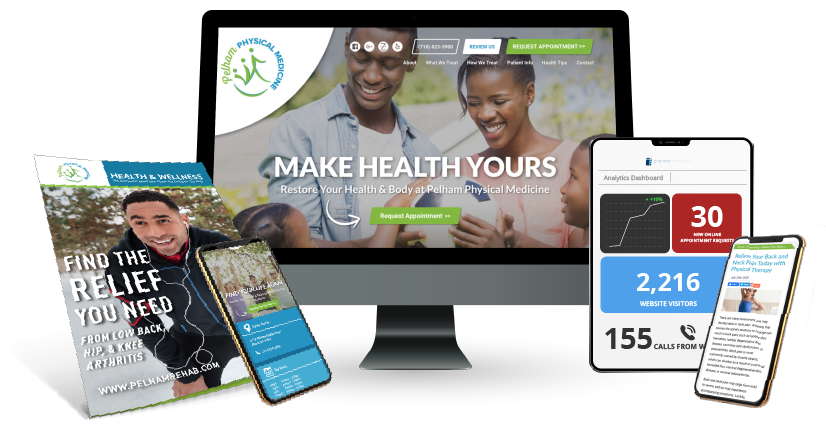










October is one of the biggest opportunities of the year to showcase the value of physical therapy and turn awareness into action.
Every fall, thousands of people search for terms like “PT Month”, “National Physical Therapy Day”, and even “when is PT month” because they’re looking for answers. They’re dealing with pain, recovering from surgery, trying to stay active, or searching for a provider they can trust.
And here’s the key point: National Physical Therapy Month isn’t just something to celebrate; it’s something to market.
In this guide, you’ll learn 4 proven, clinic-friendly ways to build momentum during PT Month and use October to drive more evaluations, referrals, and long-term patient relationships.
What is National Physical Therapy Month?
National Physical Therapy Month is an annual awareness initiative designed to highlight the impact physical therapists have on movement, recovery, performance, and long-term health.
When is PT Month?
If you’ve ever wondered when is PT month, the answer is simple:
PT Month takes place every October.
That means your clinic gets a built-in marketing “season” every year, with a clear deadline and plenty of opportunities to create campaigns that feel timely, relevant, and helpful.
History and purpose
National Physical Therapy Month was established by the American Physical Therapy Association (APTA) in 1992 to recognize physical therapists as movement experts and to increase public awareness around what PT can help with.
The theme: a ready-made marketing angle
Many years, the APTA also promotes a theme during October, often tied to a major public health focus like:
- Falls prevention
- Osteoarthritis awareness
- Healthy aging and mobility
- Pain management and injury prevention
Even if you don’t follow the theme exactly, it can give your clinic an easy “hook” for content, workshops, and community events.
1. Market to Patients: Position PT as the First Line of Defense
When patients are in pain, they don’t always start with physical therapy. They often start with rest, Google searches, medications, or hoping it goes away.
PT Month is the perfect time to shift that mindset and position your clinic as the first stop, not the last resort.
Physical therapy as a safe alternative to opioids

One of the strongest public health conversations connected to physical therapy is pain management, especially as many patients want to avoid long-term reliance on medications.
| Did you know that? According to the Centers for Disease Control (CDC) in 2023, approximately 125 million prescriptions were given to American patients for opioid drugs to help them relieve pain related to disease, injury, or surgery. |
A study conducted by Stanford University and Duke University Schools of Medicine found that people who got physical therapy soon after getting a pain diagnosis decreased their likelihood of using opioid drugs by 7% to 16% in the months following the diagnosis. And those patients who did use drugs to control pain saw a 5% to 10% reduction in the amount of opioids they used for pain relief.
In plain terms: getting PT sooner can change the entire trajectory of care.
That message matters because many patients still don’t realise they have options beyond medication, injections, or “waiting it out.”
During National Physical Therapy Month, your clinic can confidently educate patients on a simple idea:
PT helps reduce pain, improve function, and address the root cause, not just the symptom.
The value proposition patients understand: “PT saves money”

Patients don’t only want pain relief; they want a solution that makes sense financially.
In its 2023 report, “The Economic Value of Physical Therapy in the U.S.”, the American Physical Therapy Association (APTA) reviewed eight common conditions and compared the economic value of PT services against alternative care pathways. The report estimates net economic benefit, meaning the “bigger picture” value of physical therapy when you account for outcomes and downstream costs (not just the price of PT visits).
In other words, the question isn’t simply: “How much does PT cost?”
It’s: “What does PT help prevent?”
For example, the APTA report found estimated net economic benefits of physical therapy for:
- Knee osteoarthritis: $13,981
- Low back pain: $4,160
- Falls prevention: $2,144
- Cancer rehabilitation: $3,514
- Stress urinary incontinence: $10,129
- Lateral epicondylitis (tennis elbow): $10,739
- Vascular claudication: $24,125
- Carpal tunnel syndrome: $39,533
How to use this in your PT Month marketing (without sounding pushy):
Position it as patient education and empowerment, not a sales pitch. For example:
“Physical therapy isn’t just about short-term relief. It’s about improving function and helping you avoid bigger problems later. For many common conditions, PT can be one of the smartest first steps you can take.”
This is the kind of data that helps patients connect the dots between PT and the bigger picture: fewer unnecessary appointments, less imaging, fewer prescriptions, and fewer “dead ends.”
Action step: publish educational content designed to convert

If people are searching “PT Month” and “National Physical Therapy Day” in October, your clinic should have content that meets them there.
A few blog titles that work especially well during PT Month include:
- 5 Stretches to Help Relieve Back Pain This PT Month
- How to Celebrate National Physical Therapy Month in [City, State]
- 10 Steps to a Stronger, Pain-Free Knee This National Physical Therapy Month
- National Physical Therapy Day: What PT Can Help With (And When to Start)
Want an easy upgrade for local SEO?
Add a short local intro to each blog post like:
“If you’re dealing with back pain in [City], our physical therapy team can help you move better and feel better, without relying on quick fixes.”
2. Market to Physicians: Strengthen Referral Relationships

Let’s be honest: a lot of PTs feel like physicians are the competition, or that doctors “don’t refer anymore.”
But in most cases, the issue isn’t hostility. It’s attention.
Doctors are overwhelmed, busy, and constantly bombarded by messages. That means you need to market in a way that respects their time and actually stands out.
The problem: physicians are drowning in digital noise
In 2020, primary care physicians averaged 100 message views per workday, plus 53 outside hours and 33 on nonworkdays, equating to roughly one hour daily on inbox tasks. And it’s safe to say those numbers have only increased.
So if your clinic’s referral outreach is mostly cold emails, it’s not that you’re doing something wrong. It’s that you’re competing with:
- patient messages
- lab results
- internal systems
- insurance admin
- vendor outreach
- staff communication
Your email isn’t just one message. It’s one message in an avalanche.
The solution: high-quality print marketing that gets noticed

Print still works, especially when it’s done well.
Brochures, postcards, and short newsletters can cut through the noise in a way digital often can’t, because they’re:
- tangible
- quick to scan
- easy to pass to patients
- visually memorable
Instead of “asking for referrals,” your goal should be: make it easy for the doctor to recommend you.
The brain factor: why visuals beat text
Here’s the key point worth keeping (and strengthening):
The human brain processes images dramatically faster than text. According to MIT, the human brain requires only 13 milliseconds to process an entire image. The human brain processes images 60K times faster than it does text.
That’s why a well-designed Physical Therapy Month postcard can make a stronger impression than a cold email subject line.
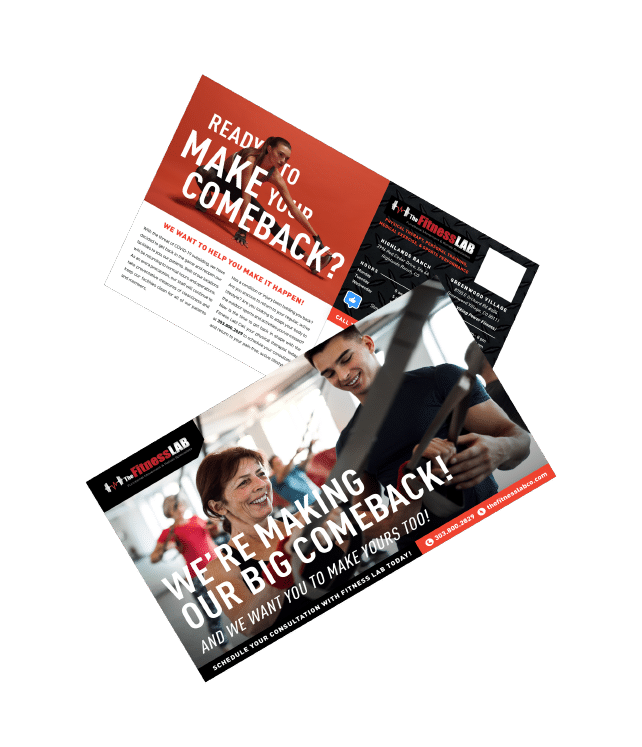
A great print piece communicates instantly:
- what you treat
- who you help
- how to refer
- why you’re different
No scrolling required.
Action step: send a “Thank You” referral pack during October
One of the simplest ways to use PT Month to strengthen referral relationships is to send a small appreciation + education pack to local physicians.
You don’t need it to be expensive. You need it to be consistent and professional.
A strong PT Month pack might include:
- a short thank you letter
- a branded brochure (conditions you treat, how to refer)
- a “PT as first-line care” one-page handout
- a few patient-friendly postcards
- your direct contact information
This positions your clinic as proactive, easy to work with, and patient-centered.
And importantly: it keeps you top-of-mind when a doctor has a patient who says, “I don’t want meds, I want to actually fix this.”
3. Community Engagement: Go Beyond the Clinic Walls

National awareness campaigns are powerful, but physical therapy clinics grow locally.
That means the real advantage of PT Month is how you apply national momentum to your local community.
Why “National” works best when applied locally
People may search for PT Month online, but they still want a provider close to home.
Community engagement supports your growth in three ways:
- builds trust faster than ads alone
- generates word-of-mouth referrals
- creates content you can repurpose online (photos, videos, posts)
It also strengthens your local brand presence, which supports local SEO and long-term visibility.
Strategic volunteering (that aligns with October)
Volunteering is a great way to build visibility while supporting causes that matter, especially when they naturally connect to your clinical expertise.
Here are a few high-impact alignments during October:
Breast Cancer Awareness Month (Oncology rehab focus)
Physical therapy can play a major role in recovery after breast cancer surgery.
Partner with a local support group, offer a free educational session, or provide a short workshop on safe movement after surgery.
National Chiropractic Month (co-marketing opportunity)
Rather than competing, consider collaborating with a chiropractor on a shared event, such as:
- posture screening
- back pain workshop
- mobility and strength talk
You’ll reach a similar audience, but with different needs and different entry points.
Falls prevention and balance screening
Falls prevention is a strong theme for PT Month because it’s practical, high-value, and easy for patients to understand.
Host a free balance screening event and promote it as a community service, not a sales pitch.
This creates a natural path into care for:
- older adults
- patients with vestibular issues
- post-surgical recovery
- general strength and mobility decline
Networking: build partnerships around National Physical Therapy Day
If you want a “one-day event” to anchor your October marketing, build something around National Physical Therapy Day.
You can partner with:
- local gyms
- running clubs
- CrossFit boxes
- yoga studios
- senior living communities
Examples of easy events:
- injury prevention clinic
- “run stronger” workshop
- mobility and recovery session
- strength basics for healthy aging
The goal is visibility and trust. The referrals follow.
4. Internal Marketing: Leverage Your Staff and Social Proof

Your staff are the face of your clinic, and during PT Month, they can help turn everyday interactions into meaningful marketing moments.
Internal marketing isn’t about hype. It’s about consistency.
Spirit week and swag that starts conversations
A simple spirit week can energize your team and create a more memorable patient experience.
Ideas that work well:
- matching clinic shirts
- PT Month mugs at the front desk
- branded postcards patients can take home
- small referral cards with a patient-friendly offer
One smart tactic: Add a code on the postcard that gives patients a small reward if they refer a friend, such as a free add-on service or a percentage off a future visit (where permitted).
The October review push (Google and Yelp)

If you want one “high ROI” marketing move during PT Month, this is it.
October is the perfect time to ask for reviews because:
- patients already feel the seasonal momentum
- your staff are already talking about PT Month
- it frames the request as part of a celebration, not an awkward favor
Make it simple for staff:
- choose one day per week to request reviews
- provide a short script
- text or email the review link immediately after the visit
Social proof builds faster than almost any other marketing asset, and it supports both Google visibility and conversion rates.
Social media and Google Business Profile updates
Most clinics post on social media, but forget that Google Business Profile can act like a mini social feed too.
During National Physical Therapy Month, use it to post:
- staff celebration photos
- patient success stories (with consent)
- community events and screenings
- short injury prevention tips
- “Meet the PT” spotlights
These posts help your clinic look active, trusted, and local, which matters when someone is deciding who to call.
Conclusion: Making the Most of October
National Physical Therapy Month can be a powerful growth engine when you treat it as more than a celebration.
When you focus on these four pillars:
- Patients (education + value + conversion content)
- Doctors (referral relationships + standout marketing)
- Community (local visibility + partnerships)
- Staff (social proof + consistency + culture)
You create a marketing system that doesn’t just generate attention. It generates new patient evaluations.
And if you want the biggest impact, don’t wait until October 15th to start.
Start planning in September so you can hit the ground running on October 1st.

Promote Your Clinic With PT Month Print Marketing
Ready to make PT Month your best marketing month of the year?
Reach out today to create professional posters, postcards, brochures, and print campaigns that help your clinic stand out and drive more new patient evaluations during National Physical Therapy Month.