
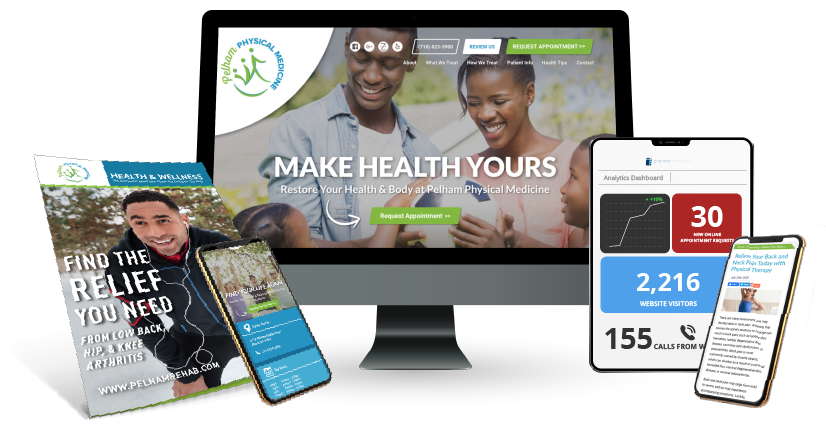










Want a steady stream of patients walking through your clinic’s door? The key isn’t just about good treatments—it’s about getting found online. And that means you need SEO. But not just any SEO: you need to nail the right keywords that put you right in front of those looking for your services.
Let’s be real—ranking on Google is a game-changer. If you want your physical therapy clinic to pop up in local searches, you’ve got to use the right keywords. This is where physical therapy marketing plays its most significant role—ensuring your clinic appears when potential patients are actively searching for help.
You don’t need to reinvent the wheel—just use what’s already proven to work. I’m talking about SEO keywords that will boost your clinic’s online presence and get you more patients.
Ready? Let’s jump in.
Understanding the Role of Keywords in Physical Therapy Marketing
Here’s the deal: If people can’t find your clinic online, they can’t book an appointment. Simple as that. This is where keywords come in. Without them, you’re basically invisible.
Think of keywords like the signposts on the internet that lead potential patients to your clinic. When someone searches for “back pain therapy near me” or “sports injury rehab in [Your City]”, you want to be the top result—not the one buried on page 10.
But here’s the thing: Keywords don’t just help you get traffic—they help you get the right traffic. Practice Promotion knows this—the right keywords bring in people who are already looking for solutions to their problems. That’s a goldmine of potential patients ready to walk through your door.
What Makes Keywords Essential for Online Success
Let’s be real: without keywords, your clinic’s website is just another digital brochure—floating around in cyberspace with no one to see it.
Here’s why keywords matter for your online success:
- Keywords drive traffic to your website: When someone searches for “physical therapy in [Your City]”, they’re actively looking for someone to help them. If you’re not using those keywords, you’re missing the opportunity to meet them at the exact moment they need help.
- They ensure you attract the right patients: Keywords like “sports rehab” or “knee injury recovery” don’t just bring anyone to your site—they bring people looking for specific services you offer. That means they’re more likely to convert into real patients.
Without the right keywords, your clinic is invisible. When you use high-volume, relevant keywords, your clinic moves to the front of the line. And that’s where you want to be.
How to Use Keywords to Attract the Right Patients
So, now you know keywords are essential. But how do you actually use them to bring in the right patients? Here’s the secret: Target Local Keywords to Get Found in Your Area
Let’s face it: If you’re not optimizing for local SEO, you’re missing the most significant opportunity. People are searching for physical therapy in their local area—and you want your clinic to be the first one they find. Use keywords like:
- “Best physical therapy in [Your City]”
- “Sports rehab near me”
These location-based keywords ensure you appear when patients in your area need you.
Target Service-Specific Keywords to Address Patient Needs
Your potential patients aren’t just searching for physical therapy—they’re searching for solutions. So, if your clinic specializes in back pain treatment or sports injury recovery, make sure to use keywords like:
- “Back pain therapy [Your City]”
- “Sports injury rehab for athletes”
These service-specific keywords help your clinic show up for the right searches. Patients are actively looking for specific solutions, and when they find your website optimized for the services they need, they’re more likely to book an appointment.
Long-Tail Keywords: A Goldmine for Conversions
Here’s the golden ticket: long-tail keywords. These are super-specific phrases that might have lower search volume, but they bring in people who are ready to convert. Think:
- “Best physical therapy for knee pain after surgery”
- “Affordable back pain relief in [Your City]”
These long-tail keywords are your clinic’s best friend. They allow you to target patients who already know exactly what they need. And guess what? They’re more likely to book an appointment because they’re closer to making a decision.
Top SEO Keywords You Need for Physical Therapy Clinics
To make sure your physical therapy clinic stands out in search results, using the right SEO keywords is essential. It’s all about attracting qualified leads by being visible when patients need your services. Effective physical therapy marketing strategies go beyond just choosing random keywords—they focus on location-specific, service-specific, and long-tail terms that align with what patients are actually searching for. Here’s how you can do it while strengthening your clinic’s online presence.
Must-Have Keywords for Local Search Dominance
Local SEO is crucial for ensuring that when someone searches for a physical therapist near them, your clinic is the first result they see. Here are some examples of local search keywords to optimize for:
- “Physical therapy in [Your City]”
- “Sports rehab near me”
- “Best physical therapist in [Your City]”
- “Back pain physical therapy [Your City]”
These location-based keywords ensure that you show up in the right searches for people nearby who are actively looking for physical therapy services. By optimizing your website for these terms, you become the go-to clinic for anyone in your area searching for help.
High-Impact Keywords for Specific Services
If you specialize in a specific treatment or service, service-specific keywords will help you stand out. Here’s how you can target the exact services your patients are seeking:
- “Back pain physical therapy in [Your City]”
- “Sports injury rehab for athletes”
- “Knee surgery recovery therapy”
- “Neck pain treatment near me”
Using these high-impact keywords makes sure your clinic is visible when someone is looking for a solution to their specific pain or recovery needs. This way, you’ll attract patients who are ready to book for the exact service they need.
Targeting Niche Audiences with Precision
Niche keywords are perfect for attracting a specific audience. Whether your clinic caters to athletes, seniors, or workers recovering from injuries, these keywords ensure that you attract the right patients:
- “Physical therapy for athletes in [Your City]”
- “Post-surgery rehab for seniors”
- “Manual therapy for chronic pain”
- “Rehabilitation for office workers with back pain”
These niche-targeted keywords help you connect with a particular group of people who are actively seeking specialized treatment, making it easier to convert them into loyal patients.
Using Service-Specific Keywords for Better Conversions
When you target service-specific keywords, you’re attracting patients who know exactly what they need. These keywords have a high intent because people searching for them are looking for precise solutions. Here’s how you can optimize for service-specific keywords:
- “Back pain relief therapy”
- “Sports rehab for ACL injuries”
- “Chronic pain management physical therapy”
- “Physical therapy for shoulder injury”
These service-specific keywords are highly relevant and ensure that patients who need specific treatments will find your clinic. By optimizing your website with these terms, you’re showing up when it matters most—patients are searching for exactly what you provide. This is the foundation of innovative physical therapy marketing, making it easier to convert online searches into actual patients.
Optimizing for Conversion with Precise Keyword Targeting
The key to higher conversion rates is precision. When you use long-tail and service-specific keywords, you’re attracting patients who are ready to take action. For example:
- “Best physical therapy for knee surgery recovery in [Your City]”
- “Top sports rehab for tennis elbow near me”
Practice Promotion ensures that by targeting these narrowed-down, service-specific keywords, your clinic is the first option for patients looking for exact solutions. This results in better-qualified leads and higher conversions.
Optimizing Your PT Clinic’s Local SEO
When it comes to local SEO, Practice Promotion knows that it’s all about getting found by local patients who need your services. By optimizing for local searches, you ensure that your clinic appears at the top when people search for physical therapy services in their area. Let’s dive into how you can get this right:
Leveraging Google My Business for Local Searches
Google My Business (GMB) is a must-have for any clinic looking to dominate local searches. Here’s how you can make the most of it:
- Claim your GMB listing: First things first—claim and verify your Google My Business listing so you can start showing up in local searches.
- Optimize your profile: Include your business name, address, phone number, website, and working hours. The more complete your profile, the better.
- Add photos: Patients trust clinics that show they’re real. Upload high-quality images of your clinic, team, and services.
- Encourage reviews: Ask happy patients to leave Google reviews—this will help boost your credibility and local ranking.
- Post updates: Regularly update your GMB profile with new offers, services, and events to keep your listing fresh and engaging.
The Importance of Local Citations and Directories for SEO
Local citations and directories are essential for improving your local SEO. These are mentions of your clinic on other websites with your business information (name, address, phone number). Here’s why they matter:
- Boost local visibility: Listings on sites like Yelp, Healthgrades, and Yellow Pages help potential patients find you quickly.
- Consistency is key: Ensure your clinic’s name, address, and phone number (NAP) are consistent across all directories.
- Increase trust and authority: Quality citations improve your clinic’s local authority and search engine ranking.
- Leverage niche directories: Don’t just stop at the big players—look for industry-specific directories like American Physical Therapy Association or Wellness.com for even more exposure.
How to Optimize Your Website for Location-Specific Keywords
Now, let’s talk about making sure your website is optimized for local searches. Here’s how to use location-specific keywords to drive traffic and attract local patients:
- Use city and neighborhood names: Make sure to include your city, neighborhood, or region in key areas like title tags, headers, and content. For example, “Physical Therapy in [Your City]” or “Sports Injury Rehab in [Neighborhood]”.
- Create location-specific pages: If you serve multiple areas, create separate pages for each location and target specific location-based keywords for those areas.
- Optimize for mobile: Since most local searches are done on mobile devices, ensure your website is mobile-friendly to provide a great user experience.
- Leverage local schema markup: Use structured data (schema markup) to help search engines understand your business location, services, and contact info, improving visibility in local search results.
By focusing on these local SEO tactics, you’ll increase your clinic’s online visibility, attract more local patients, and ultimately grow your practice. The key is to be consistent, strategic, and stay engaged with your online presence. Start optimizing today, and soon you’ll be the first clinic people find when they search for physical therapy in your area.
Building Your Clinic’s Online Reputation
Your online reputation is one of your clinic’s most potent marketing tools. Patients trust online reviews as much as personal recommendations. When they search for “physical therapy near me,” they’re likely to check Google reviews before booking an appointment. The key? Make it easy for patients to leave reviews.
Ask for reviews right after a successful treatment, when patients are most satisfied. If they’ve seen improvement, they’re more likely to leave positive feedback. Practice Promotion suggests streamlining the process by sending a follow-up email with a direct link to your Google My Business page, making it effortless for patients to share their experience.
Incentivize reviews with small perks like discounts or a free consultation. A little nudge goes a long way. But remember, authenticity matters—never push for fake reviews. Patients can spot forced feedback, which can hurt your reputation.
Responding to every review, positive or negative, is equally important. Thank patients for their feedback and address any negative reviews with a solution-oriented approach. A thoughtful response can turn an unhappy patient into a loyal advocate for your clinic.
By actively managing online reviews, your clinic builds trust and credibility—key factors that help you rank higher on Google. Now let’s explore how reviews influence your SEO ranking and help your clinic get noticed.
Encouraging and Managing Online Reviews
Your clinic’s online reputation is a key driver of success. Google reviews are critical—patients trust them like personal recommendations. To gather reviews:
- Ask for reviews after successful treatments when patients are happiest.
- Simplify the process by sending follow-up emails with a direct review link.
- Offer small perks, such as discounts or free consultations, for leaving feedback.
- Respond to all reviews—both positive and negative—to show you value patient feedback and are committed to improvement.
By building a steady stream of authentic reviews, your clinic boosts trust and Google visibility, directly leading to more patients.
How Reviews Influence Your SEO and Local Ranking
Positive reviews directly impact your SEO ranking. Google uses them to gauge your clinic’s trustworthiness, improving your visibility in local searches like “best physical therapy in [Your City]”. The more five-star reviews, the higher your ranking:
- Reviews signal trust to Google, helping you show up in local search results.
- Quality matters: Detailed reviews of your services enhance your ranking.
- Responding to reviews also boosts your SEO by showing active engagement.
A strong review presence leads to better SEO, increased visibility, and ultimately, more patients.
Utilizing Local Directories and Citations to Boost SEO
If you want your physical therapy clinic to rank higher locally, utilizing local directories and citations is a game-changer. These platforms—like Yelp, Healthgrades, and Yellow Pages—not only help potential patients find you but also give Google the signals it needs to rank your clinic higher in local search results.
By ensuring your clinic’s details are listed consistently across reputable directories, you’re telling Google that your business is legitimate and credible. But it’s not just about getting listed—it’s about keeping your information consistent and up-to-date. When done correctly, it drives more visibility and trust, leading to more patients walking through your door. Let’s explore how to leverage local citations to boost your clinic’s SEO.
Why Listings in Directories Like Yelp and Healthgrades Matter
If you’re not listed on directories like Yelp or Healthgrades, you’re missing out on prime SEO opportunities. Here’s why these platforms are so important:
- Google values directories: Having your clinic listed on authoritative sites like Yelp, Healthgrades, and Angie’s List sends a signal to Google that your business is legitimate, helping boost your rankings in local search.
- Patients trust these platforms: When patients look for services like physical therapy, they turn to trusted platforms for guidance. Your presence on Yelp and Healthgrades increases the chances that potential patients will discover your clinic.
- Builds credibility: Patients are more likely to book an appointment with a clinic that has positive reviews and a solid presence on well-known directories. It’s a win for both SEO and your reputation.
In short, being listed on these platforms not only improves your local SEO but also builds trust with your audience. More visibility equals more patients—and Practice Promotion can help ensure your clinic is easy to find.
Building Consistent, Quality Citations Across the Web
Consistency is key when it comes to citations. Practice Promotion recognizes that local citations are a crucial factor in local SEO. Citations are mentions of your clinic’s name, address, and phone number (NAP) across the web. Here’s how you can build consistent and quality citations:
- Begin by focusing on the major directories: Get your clinic listed on top sites like Google My Business, Yelp, and Healthgrades. These directories carry significant weight in local search rankings.
- Be consistent: Ensure your NAP details are consistent across every listing. If your clinic’s name, address, or phone number appears differently on multiple sites, it can confuse Google and negatively impact your rankings.
- Use niche-specific directories: Don’t stop with general directories—find directories specific to the healthcare industry, like Zocdoc or Vitals. These directories can further boost your clinic’s authority in your field.
By building consistent citations, you increase your clinic’s visibility in local search and show Google that your clinic is an authentic, trusted business. It’s a simple way to get your clinic in front of more local patients, improve SEO, and build your online reputation.
How to Use These Keywords to Optimize Your Website
- Strategic Placement of Keywords on Your Site
- Optimizing Your Services, Blog, and Landing Pages
SEO Tools and Techniques to Track Keyword Performance
Tracking your SEO performance is essential to ensure your clinic’s website is ranking well for the right keywords. Without the proper tools, you can’t measure success or identify areas for improvement. The right SEO tools help you understand how your clinic’s keywords are performing, giving you the data needed to adjust your strategy. In this section, we’ll dive into the best tools and techniques that can help you track, analyze, and optimize your keyword strategy for better results.
Best Tools for Monitoring Your Keywords
To ensure your keyword strategy is on track, you need powerful tools to monitor your rankings and performance. Here’s a list of essential tools for tracking your clinic’s keywords:
- Google Analytics: This free tool provides valuable data on your site’s traffic, including which keywords bring visitors to your site. It allows you to measure the success of your SEO efforts.
- Google Search Console: A must-have for any clinic, it shows how your website performs in Google search results. You can track which keywords are bringing traffic, identify any indexing issues, and optimize accordingly.
- SEMrush: This comprehensive tool allows you to track keyword rankings, monitor competitor keywords, and even find new keyword opportunities. SEMrush provides detailed insights to ensure you’re targeting the right keywords for your clinic.
- Ahrefs: Known for its keyword tracking and backlink analysis, Ahrefs helps you monitor how your website ranks for specific keywords and provides competitor analysis to stay ahead of the game.
These tools are essential for tracking keyword performance, improving your SEO strategy, and ensuring your clinic ranks for the most valuable keywords. With these tools, you’ll have everything you need to stay on top of your SEO game.
Analyzing the Results and Making Adjustments
Tracking your keywords is just the beginning. Analyzing results and making the necessary adjustments is where the real magic happens. Here’s how you can make the most of the data you gather:
- Measure keyword ranking: After tracking your keywords, check your current ranking in search results. Are your targeted keywords moving up, or are you stuck in the same spot? If your keywords aren’t ranking well, it’s time to revisit your strategy.
- Identify underperforming keywords: If specific keywords are driving traffic but not converting, consider adjusting your content to match the searcher’s intent better. You may need to tweak your page titles, meta descriptions, or on-page content.
- Focus on high-converting keywords: Pay close attention to keywords that bring in qualified leads. These are the keywords worth investing in. If you’re seeing high traffic but not enough conversions, refine your landing pages to target high-intent keywords and enhance user experience.
- Adjust your content regularly: SEO isn’t a one-time fix. Google updates its algorithm frequently, so your content must stay relevant. Regularly adjust your keywords based on trends, search volume, and competitor activity to maintain your clinic’s SEO.
The key is to monitor, analyze, and adjust continuously. SEO is a long-term strategy, but with the proper adjustments, your clinic’s keyword performance can keep improving, bringing in more patients and increasing your online visibility.
Putting It All Together: A Winning SEO Strategy for Your Clinic
By now, you’ve learned the key elements of a strong SEO strategy—from targeting local keywords to optimizing your website and managing your online reputation. But it’s not enough to simply implement these tactics; you need to bring them all together in a cohesive, consistent plan. Here’s how you can do just that.
A winning SEO strategy combines keyword optimization, content creation, and reputation management with continuous tracking and adjustments. The goal is to create a system where your clinic is consistently visible in local search results, drives quality traffic, and converts that traffic into loyal patients. Practice Promotion can guide you through building a sustainable SEO plan that delivers long-term results.
Crafting a Consistent SEO Plan
Creating an SEO plan isn’t a one-time task. It’s about maintaining a consistent approach to ensure long-term growth and visibility. Here’s how to build a plan that keeps your clinic visible:
- Set clear goals: Know what you want to achieve with your SEO efforts—whether it’s increased website traffic, higher conversion rates, or better local rankings. Having specific goals gives you a roadmap to measure success.
- Target the right keywords: Use a mix of local keywords, service-specific terms, and long-tail keywords to ensure you’re covering all bases. This helps you reach local patients and those looking for specialized care.
- Create and optimize content regularly: Keep your website fresh by updating it with new blog posts, service pages, and patient testimonials. This shows Google and potential patients that your clinic is active and engaged.
- Monitor your progress: Use tools like Google Analytics and Google Search Console to track your rankings and website traffic. This will help you identify what’s working and where you need to improve.
Practice Promotion knows that consistency is the key. A one-time effort won’t cut it—keep your SEO strategy alive with ongoing updates and optimization.
Tracking Growth and Adapting Your Strategy
SEO is a dynamic process, and to stay ahead, you need to track your growth and be ready to make adjustments as needed. Here’s how you can ensure your strategy evolves:
- Track keyword rankings: Regularly check where your target keywords rank. Suppose you’re seeing positive movement, great! If not, you may need to adjust your content or target different keywords to match user intent.
- Measure conversions: Traffic is significant, but conversions are what matter. Look at how many visitors are turning into patients—and if the conversion rate is low, refine your call-to-action (CTA), landing pages, or contact forms.
- Adapt to Google’s algorithm changes: Google frequently updates its algorithm. Stay informed and adapt your strategy to maintain your rankings. This could mean updating your content, adjusting keyword strategies, or improving your mobile optimization.
- Competitor analysis: Monitor your competitors’ activities closely. If they’re ranking higher, check their content, backlinks, and keyword targeting. Use this information to refine your own strategy.
The key is to continually monitor and adjust your SEO strategy to ensure it aligns with both patient needs and search engine demands. By continuously optimizing your strategy, you’ll keep attracting new patients and strengthening your clinic’s online presence.
Growing Your Clinic with Smart SEO Keyword Choices
By now, you’ve learned how a strong SEO strategy can help you boost your clinic’s visibility, attract the right patients, and increase your revenue. Whether it’s optimizing for local keywords, managing your online reputation, or leveraging powerful SEO tools, everything ties together to create a consistent marketing plan that drives results. Practice Promotion can help you stay on top of all these strategies, ensuring your clinic thrives in a competitive market. Keep optimizing, keep engaging, and soon you’ll be the go-to physical therapy clinic in your area—trusted by patients and loved by Google.