










If you’ve ever wondered why one patient commits to their full plan of care while another disappears after two visits, you’re not alone.
Most physical therapy clinics don’t lose patients because the care isn’t effective. They lose patients because the experience around the care breaks down somewhere along the way.
That’s where patient journey mapping comes in.
In this guide, we’ll break down:
- what patient journey mapping is,
- why the PT patient journey is different from most healthcare experiences,
- and how to build a patient journey map that improves retention, outcomes, referrals, and long-term growth.
Why the Physical Therapy Patient Journey Is Unique
A patient can walk into urgent care, get treated, and never return. But physical therapy is rarely a “one-and-done” experience.
A typical PT episode of care might include:
- An initial evaluation
- A structured plan of care (often 6–12+ visits)
- Education and coaching
- Progressive treatment and reassessment
- Discharge planning and long-term maintenance

That means physical therapy is high-touch, relationship-driven, and dependent on consistency. If the patient drops off halfway through, outcomes suffer, and so does your clinic’s revenue.
So, what is patient journey mapping?
Patient journey mapping is the process of visually outlining every step a person takes when interacting with your clinic, from the moment they first feel pain to the moment they become a loyal advocate.
It’s similar to customer journey healthcare strategies used by hospitals and health systems, but in physical therapy, it needs to be more personal, more consistent, and more retention-focused.
In other words, a patient’s customer journey isn’t just about what happens inside the treatment room. It includes everything surrounding the care:
- How easy it is to book
- How quickly you respond
- How comfortable the front desk makes them feel
- How confident they are in the plan
- How well you keep them engaged between visits
- How supported they feel after discharge
The goal: from transactional care to transformational experiences
When your patient journey is intentional, you stop delivering “appointments” and start delivering a complete experience.
And that experience drives the outcomes that matter most for practice growth:
- Higher completion rates for the plan of care
- Better clinical results
- More 5-star reviews
- More referrals
- More repeat visits over time
That’s what a strong patient journey map helps you build.

The 6 Stages of the Physical Therapy Patient Journey
Every clinic’s process looks slightly different, but most successful practices follow a similar pattern. The key is understanding that patients don’t move through these stages logically, but rather emotionally.
Here are the 6 stages of the PT patient journey, with practical insights you can apply immediately.
Stage 1: Pre-Visit Awareness (The “I Hurt” Phase)
| Category | Summary |
|---|---|
| Patient mindset | “Something’s wrong. I need relief.” |
| Common emotions | Pain, worry, frustration, urgency |
| What they’re trying to do | Find a solution and confirm they’re choosing the right provider |
| Common discovery channels | Google search, Google Maps, social media, physician referral, word of mouth |
| Common friction points | Confusing websites, unclear services, no proof of outcomes, lack of trust signals |
| What your clinic should deliver | Clarity, credibility, confidence, quick next steps |
| Retention impact | Sets the tone for trust and commitment before the first appointment |
The earliest part of the patient journey often happens quietly, long before your clinic ever appears in their life.
This is the stage where patients start doing what people naturally do when something feels off: they try to solve it themselves. They search symptoms, watch quick videos, test a few stretches, and hope it goes away. Sometimes they wait longer than they should, especially if they’ve had a similar issue before and assume it will “work itself out.”
In this phase, patients are usually anxious, uncomfortable, and looking for answers fast.
This is why the pre-visit stage matters so much for physical therapy practices. You’re not just competing against other clinics, you’re competing against:
- denial (“it’ll pass”)
- procrastination (“I’ll deal with it next week”)
- quick fixes (“maybe I just need a new pillow”)
- fear (“what if this is serious?”)
The biggest question they’re asking
Even if patients don’t say it out loud, the question is:
“Can you actually help me?”
And your website, reviews, and messaging need to answer that quickly.
| Strengthen Your Patient Journey With a Better PT Website If your website isn’t making it easy for patients to book, the journey breaks before it starts. Practice Promotions Website Design helps PT clinics turn more visitors into scheduled evaluations. Design a PT Website that Converts Patients 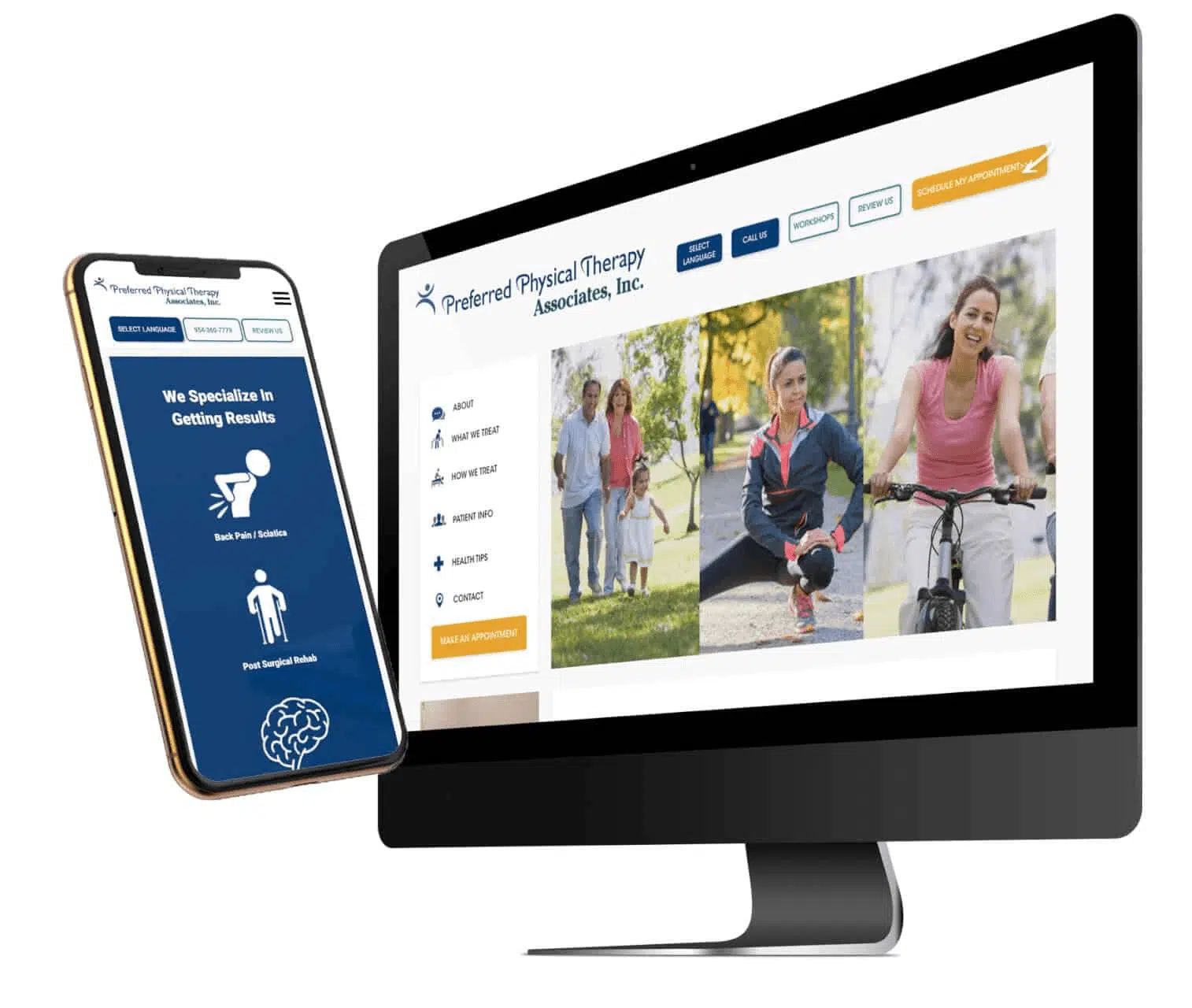 |
Differentiation opportunity: “Direct Access” marketing
One of the biggest missed opportunities in PT marketing is direct access education.
Many patients don’t realize they may be able to see a physical therapist without a physician referral (depending on state rules and insurance).
If you clearly explain direct access in your content, you remove friction and become the obvious choice.
👉 Quick win: Add a short section on your homepage or key service pages explaining how to get started, even if they’re not sure whether they need a referral.
Stage 2: Initial Contact (The “Can You Help Me?” Phase)
| Category | Summary |
|---|---|
| Patient mindset | “Can you help me, and how fast can I get in?” |
| Common emotions | Anxiety, uncertainty, urgency |
| Key touchpoints | Phone call, contact form, online booking, live chat, Google message |
| Common friction points | Long hold times, missed calls, slow responses, and confusing insurance questions |
| What patients need most | Clear next steps, a friendly tone, confidence that they’re in the right place |
| What your clinic should deliver | Speed + empathy + clarity |
| Retention impact | Strong first contact increases eval conversion and reduces drop-off before visit #1 |
The initial contact stage is where many clinics unknowingly create friction, even when their care is excellent.
This is not because teams don’t care. It’s because most clinics are busy, front desks are stretched, and operational systems weren’t designed to meet modern patient expectations. Patients have been trained by every other industry (banking, travel, food delivery) to expect quick clarity and smooth next steps.
Common pain points at this stage
Even strong clinics lose leads because of simple friction, like:
- Long hold times
- Missed calls with no callback
- Confusing insurance conversations
- Lack of clarity on pricing or next steps
- No online booking option
- A website that’s hard to use on mobile
Patients are in pain. They’re not shopping like a retail customer. If contacting you feels difficult, they’ll choose the next clinic.
A strong initial contact experience is less about being perfect and more about being guiding. This is where your front desk becomes a major driver of retention before treatment even begins.
👉 Pro tip: The goal isn’t to “process” the patient. It’s to help them feel confident that they’re in the right place.
Stage 3: The Evaluation (The First Impression)
| Category | Summary |
|---|---|
| Patient mindset | “Is this the right plan for me?” |
| Common emotions | Hope, nervousness, skepticism, relief |
| Key touchpoints | Intake, evaluation, first treatment experience, scheduling follow-ups |
| Common friction points | Too much jargon, unclear plan of care, no timeline, no explanation of “why” |
| What patients need most | Confidence, clear expectations, and a simple path forward |
| What your clinic should deliver | A clear plan, reassurance, measurable goals, and strong communication |
| Retention impact | High buy-in leads to higher plan-of-care completion and better outcomes |
This is the transition from “lead” to “patient.” Up until this point, they may still be in “shopping mode,” comparing options, looking for reassurance, or hoping they can get away with minimal commitment. The evaluation is where they decide whether they’re going to treat this like a real health investment or a quick experiment.
And it’s one of the most important moments in the entire patient customer journey.
The importance of “buy-in”
Clinical skill matters, but patient belief matters too.
A patient can have the perfect plan of care on paper, but if they don’t understand it or believe in it, they won’t follow through.
Buy-in improves when patients clearly understand:
- What’s causing the problem (in plain English)
- What the plan is
- What progress should look like
- Why consistency matters
- What happens if they stop early
In other words, the evaluation should create structure. This is also where many clinics fall into a “clinical overload” trap, using too much jargon and not enough clarity.
👉 Quick win: End every evaluation with a simple recap:
- “Here’s what we found.”
- “Here’s what we’re going to do.”
- “Here’s what you can expect over the next 4–6 weeks.”
Stage 4: Active Treatment (The “Work” Phase)
| Category | Summary |
|---|---|
| Patient mindset | “This is helping, but do I still need all these visits?” |
| Common emotions | Motivation early on, then boredom, impatience, or overconfidence |
| Key touchpoints | Ongoing visits, re-checks, home program adherence, progress tracking |
| Common friction points | Mid-treatment slump, schedule conflicts, cost concerns, and lack of progress visibility |
| What patients need most | Accountability, progress markers, encouragement, reminders of the “why” |
| What your clinic should deliver | Clear milestones, consistent communication, a structured plan they can follow |
| Retention impact | Strong engagement reduces drop-off and increases completion of the plan of care |
Active treatment is the stage where clinics tend to focus heavily on the clinical work, and unintentionally underestimate the psychology of follow-through.
From a clinician’s perspective, this is the progression phase: building strength, restoring mobility, improving control, and closing the gap between “feeling better” and “being fully resilient.”
From a patient’s perspective, this phase is much more emotional and inconsistent.
In the first few sessions, most patients are highly engaged. They’re paying attention, they’re hopeful, and they’re often excited to feel early relief. Then reality sets in. Progress becomes slower, the exercises feel repetitive, and the urgency that originally drove them to book starts fading.
Common reasons patients drop off mid-plan:
- “I feel better now.”
- Schedule conflicts
- Work stress
- Childcare issues
- Financial concerns
- Lack of motivation
- They don’t understand why they still need visits
What keeps patients engaged
Retention increases when you reinforce:
- Progress tracking
- Small wins
- Purpose of the plan
- Long-term outcomes
- Accountability and structure
A strong patient journey in this stage makes progress visible and purposeful. Patients stay consistent when they can clearly connect what they’re doing today to what they want to be able to do in the future.
Stage 5: Discharge & Graduation (The Celebration)
| Category | Summary |
|---|---|
| Patient mindset | “I’m better. What’s next, and how do I stay that way?” |
| Common emotions | Pride, relief, uncertainty, excitement |
| Key touchpoints | Discharge visit, final reassessment, home program, follow-up plan |
| Common friction points | Abrupt discharge, unclear next steps, no long-term plan |
| What patients need most | Closure, a clear maintenance plan, confidence in self-management |
| What your clinic should deliver | A “graduation” feel, a future-proof plan, and a clear invitation to return |
| Retention impact | Increases long-term loyalty and reduces relapse-driven drop-off |
Discharge is often treated like a clinical endpoint, but in reality, it’s a branding moment.
Patients don’t remember the specific exercises you gave them in week four. They remember the overall experience of getting better and what it felt like to be supported through the process.
This is why the discharge stage matters so much for retention and future growth. It’s the point where the patient’s identity shifts from “injured” to “capable again.”
Transitioning from care to long-term wellness
Discharge is also where many clinics can expand their impact by creating a bridge into long-term maintenance, wellness, or prevention. Even if the patient doesn’t sign up for anything new right away, the key is that they leave with a clear sense of what “staying healthy” looks like.
This might include:
- A personalized home exercise plan (HEP)
- A return-to-sport or return-to-work strategy
- Maintenance sessions
- Wellness services
- Injury prevention support
If discharge feels abrupt, patients often leave without closure, and you lose future return visits.
👉 Quick win: Treat discharge like a milestone, not a checkout.
Stage 6: Post-Care Advocacy (The Lifelong Fan)
| Category | Summary |
|---|---|
| Patient mindset | “I trust this clinic. I’d recommend them.” |
| Common emotions | Gratitude, confidence, loyalty |
| Key touchpoints | Follow-up emails, newsletters, check-ins, review requests, reactivation campaigns |
| Common friction points | Patients forget you exist, no follow-up system, no review process |
| What patients need most | A reason to stay connected and an easy way to share their experience |
| What your clinic should deliver | Simple review/referral prompts, helpful ongoing content, relationship-building |
| Retention impact | Drives repeat visits, referrals, and consistent reputation growth |
Most PT clinics rely heavily on referrals, but the reality is that referrals aren’t random. They’re built through a consistent experience that patients remember, talk about, and trust enough to recommend.
Post-care advocacy is about staying connected without being intrusive. The best post-care systems are subtle, helpful, and designed to keep the relationship warm over time.
| Stay Top of Mind After Discharge With PT Newsletters The patient journey doesn’t end at discharge. Practice Promotions Physical Therapy Newsletters help you stay connected after treatment, encourage repeat visits, and turn past patients into long-term advocates. Explore Physical Therapy Newsletters  |
How to Create a PT-Specific Patient Journey Map
You don’t need a corporate strategy team to build a great patient journey map. You just need clarity, honesty, and a willingness to improve the experience step by step.
Here’s a practical framework you can use.
Step 1: Create Your Patient Personas

Not every patient experiences your clinic the same way. That’s why journey mapping works best when you start with a few realistic personas.
Two examples:
“Post-Op Pete”
- High stakes, medically complex
- Needs reassurance and structure
- Often nervous about pain or reinjury
- Usually motivated, but can be overwhelmed
“Weekend Warrior Wendy”
- Busy, active, wants quick solutions
- May resist slowing down
- Often expects fast results
- Might stop early once symptoms improve
These patients have different fears, motivations, and decision-making patterns. If you treat them the same, your retention suffers.
👉 Quick win: Create 3–5 personas based on your most common patient types, then map the journey from their perspective.
Step 2: Identify Touchpoints (Digital and In-Clinic)

A touchpoint is any moment where a patient interacts with your clinic.
Some are obvious:
- The evaluation
- A treatment session
- Discharge
Others are “invisible” but extremely influential:
- Your Google Business Profile
- Your website navigation
- Your online booking experience
- Reminder texts
- Front desk conversations
- Wait time in the lobby
- Billing explanations
- Follow-up emails
Your patient customer journey is the sum of all these touchpoints.
If even one is confusing or frustrating, it can change how the patient feels about everything else.
Step 3: Overlay Emotional States

This is where most journey maps become powerful. PT patients don’t just move through a process; they move through emotions.
They often start with pain, fear, frustration, or uncertainty. And your clinic should guide them toward confidence, clarity, control, and independence.
A great journey map doesn’t just ask, “What happens here?”
It asks, “How should the patient feel here?”
That shift is what improves retention.
Step 4: Audit for “Leaking Buckets”

Every clinic has drop-off points. Journey mapping helps you find them.
Examples of common “leaks”:
- High no-show rate after evaluation
- Patients ghosting around visit 3–4
- Poor conversion from website inquiry to scheduled eval
- Low completion rate of the full plan of care
- Low review volume despite happy patients
Once you identify the leak, you can fix it with one or two targeted improvements. That’s how patient journey mapping turns into measurable growth.
Bridging the Gaps: Strategies for PT Practice Growth
A journey map is only useful if it leads to action. Here are practical ways to bridge common gaps and improve retention across your patient journey.
Automate Communication Between Visits
The best clinics don’t rely on patients to remember everything. They reinforce it.
Simple automation ideas include:
- Appointment reminders
- “What to expect” emails before the eval
- Post-visit recaps
- Educational drip sequences during care
- Encouragement messages during the mid-treatment slump
- Discharge follow-up emails
This is where a CRM and email marketing system can become a major retention tool. When patients feel guided, they stay consistent.
Improve the “Digital Front Door”
Your website is often the first impression. And most patients are finding you on mobile, in pain, and in a hurry. Your digital front door should answer:
- What do you treat?
- How do I book?
- Do you take my insurance?
- Where are you located?
- Can you help with my specific problem?
- What do other patients say?
If your site makes people work too hard, they leave.
👉 Quick win: Make your “Request Appointment” button visible on mobile within the first few seconds.
Train the Front Desk for Empathy and Confidence
Front desk staff aren’t just scheduling visits. They’re setting the emotional tone of the entire experience.
If the first interaction feels rushed, cold, or confusing, retention suffers before treatment even begins.
Train for:
- Warm greetings
- Clear next steps
- Simple insurance explanations
- Calm confidence
- Follow-up when someone doesn’t schedule
When the front desk treats patients like people, not tasks, the entire journey improves.
Benefits of Patient Journey Mapping for Private Practices
Journey mapping isn’t just a “nice idea.” It directly impacts revenue, outcomes, and growth. Here are the biggest benefits for PT private practices.
Increased Patient Lifetime Value (LTV)
Higher Referral Rates
Competitive Advantage in Your Local Market
Conclusion: Your Map to a Thriving Practice
A strong patient journey map helps you see your clinic the way your patients experience it. The best part is that journey mapping isn’t a one-time project. It’s a living tool you can revisit as your practice grows, your systems evolve, and patient expectations change.
If you want your clinic to grow, start here:
Map the journey. Fix the leaks. Create an experience patients want to stay committed to.
Because better mapping leads to better movement for your patients, and better growth for your practice.