
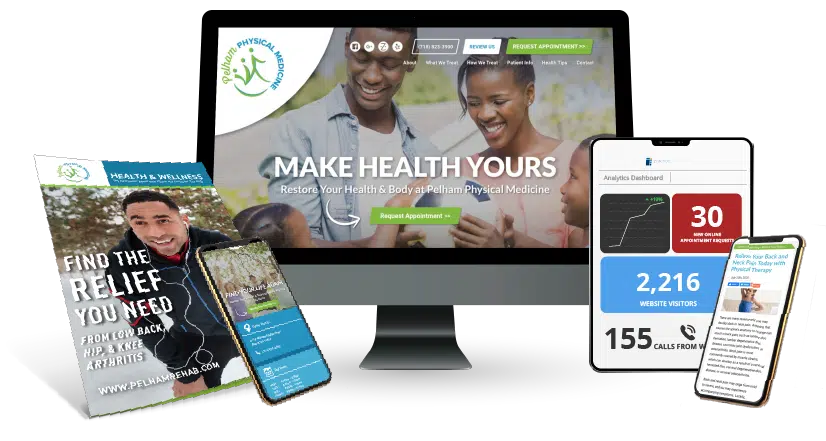









The way patients choose healthcare providers has changed. What once began with a referral from another doctor or a recommendation from family often starts today with a search on a smartphone.
Someone experiencing back pain, knee discomfort, or persistent headaches rarely starts by asking a neighbor for a clinic recommendation. Instead, they open Google and type a question such as “physical therapy near me” or “treatment for lower back pain.”
This shift has changed how practices must think about growth.
Traditional marketing methods like billboards, newspaper ads, and mailers still exist, but they have two major problems. First, they are difficult to measure. Second, many patients simply ignore them. A billboard may create awareness, but it does not capture a patient at the exact moment they are searching for care.
That is where healthcare digital marketing changes the equation.
A well-structured digital marketing strategy for healthcare professionals helps practices connect with patients when they are actively seeking treatment. Instead of hoping a patient notices your advertisement, digital marketing places your practice directly in front of people who are already searching for help.
When done correctly, digital healthcare marketing does more than bring in traffic. It helps turn online searches into scheduled appointments, giving your practice a clear advantage in a competitive local market.
What Is Healthcare Digital Marketing?

Healthcare digital marketing refers to the online strategies medical practices use to attract, educate, and convert potential patients. Instead of relying only on traditional advertising, digital marketing allows clinics to reach people when they are actively searching for care.
In practice, it works as a connected system rather than a single tactic. Your website, search rankings, online reviews, paid ads, and patient communication tools all work together to guide someone from an online search to a scheduled appointment.
Several components usually make up a strong digital marketing for healthcare strategy, including the following:
- Medical SEO (Search Engine Optimization): This helps your practice appear in Google when someone searches for services like “chiropractor near me” or “sports injury treatment.”
- Google Ads and paid search campaigns: Paid advertising places your clinic at the top of search results for high-intent searches related to conditions or treatments.
- Patient reviews and reputation management: Positive reviews on platforms like Google build trust and influence whether a patient chooses your practice or a competitor.
- HIPAA-compliant email and SMS communication: Automated reminders, follow-ups, and newsletters help practices stay connected with both new and existing patients.
When these elements work together, the goal becomes clear: move a person from “searching for help” to “booking an appointment” with as little friction as possible.
This is where a strong digital strategy gives practices a real advantage over competitors who still rely mainly on traditional marketing.
How Healthcare Digital Marketing Creates a Competitive Advantage
Below are five ways digital marketing for healthcare professionals can strengthen visibility, attract new patients, and support long-term practice growth.
1. Dominate the “Local 3-Pack” with Medical SEO
When patients search for a healthcare provider, Google usually shows a small map with three local businesses at the top of the results. This section is known as the Local 3-Pack, and it often receives the majority of clicks.
For medical practices, appearing in the Local 3-Pack can significantly improve patient acquisition. These listings appear above the standard search results and include a map, contact information, reviews, and directions. In other words, they are often the first options patients see when looking for care.
Because of that placement, most people never scroll further. So if your practice does not appear in those top local results, patients are far more likely to click on a competing clinic that does.
The following can help improve local search visibility:
- Use location-specific keywords: Instead of targeting general phrases, optimize pages for searches such as “physical therapy in [city name]” or “sports injury clinic near me.”
- Optimize your Google Business Profile: Your profile should include accurate contact information, updated photos, office hours, and a clear description of your services.
- Encourage patient reviews: Positive reviews help build trust and also signal to Google that your practice is active and reputable.
- Keep information consistent across directories: Your clinic’s name, address, and phone number should match across all online listings to strengthen search visibility.
When these elements are properly managed, your practice becomes easier to find online. That visibility often translates directly into more website visits, more phone calls, and more scheduled appointments.
2. Capture High-Intent Leads with Healthcare Google Ads
While medical SEO helps your practice build long-term visibility, Google Ads works much faster. Paid search campaigns can place your clinic at the very top of search results almost immediately.
This matters because timing is everything when someone is looking for healthcare. Patients who search online for treatment are often trying to solve a problem right away. If your practice appears at the top of the page in that moment, the chance of earning that appointment increases.
That is why digital healthcare marketing through pay-per-click (PPC) is often compared to a sprint, while SEO is more like a marathon. SEO builds lasting visibility over time. PPC, on the other hand, creates immediate exposure when patients are actively searching.
A strong Google Ads strategy focuses on the types of searches that show clear patient intent.
Below are examples of the types of keywords practices often target:
- Condition-based searches: Keywords such as “sciatica treatment,” “knee pain therapy,” or “sports injury specialist” often indicate that the person is actively looking for care.
- Location-specific searches: Searches like “physical therapist near me” or “chiropractor in [city name]” show that a patient is ready to find a provider nearby.
- Treatment-focused searches: Phrases such as “shockwave therapy clinic” or “ACL rehabilitation program” often signal strong interest in a specific service.
When campaigns focus on these types of searches, digital marketing for healthcare professionals becomes far more effective. Instead of attracting general traffic, your practice connects with people who are already looking for treatment and ready to schedule care.
3. Leverage Content Authority to Build Patient Trust
Before patients schedule an appointment, many of them spend time researching symptoms, treatments, and providers online. During this stage, the content they find can help them make an informed decision.
This is where content marketing becomes a powerful part of healthcare digital marketing.
When your practice publishes helpful articles, treatment guides, or educational videos, potential patients begin to see your clinic as a trusted source of information. Instead of discovering your expertise during the first visit, they experience it while researching their condition.
The most effective healthcare content focuses on solving real patient problems. Rather than writing broad wellness tips, strong content answers specific questions patients are already asking online.
Examples include topics such as:
- Condition-based guidance: Articles like “What Causes Sciatica Pain?” or “When Should You See a Physical Therapist for Knee Pain?”
- Practical treatment advice: Content such as “3 Exercises to Reduce Lower Back Pain at Your Desk.”
- Recovery and prevention insights: Posts explaining how to prevent sports injuries or improve mobility after treatment.
This type of content builds credibility over time. Patients begin to recognize your practice as knowledgeable and helpful, which often increases the likelihood that they will choose your clinic when they are ready to schedule care.
4. Automated Patient Engagement and Retention
Attracting new patients is important, but keeping existing patients engaged is just as valuable. In fact, research consistently shows that retaining a patient costs far less than acquiring a new one.
Digital healthcare marketing helps practices stay connected with patients even after their first visit.
Instead of relying on manual follow-ups, many clinics now use automated communication tools. These tools help practices send reminders, share updates, and maintain ongoing relationships with patients.
Here are some common examples:
- SMS appointment reminders: Automated text reminders help reduce missed appointments and keep schedules full.
- Email newsletters and follow-ups: Practices can share recovery tips, seasonal health advice, or updates about new services.
- Online scheduling tools: Many patients now expect to book appointments online without calling the office.
Convenience plays a major role in patient satisfaction. In fact, a growing number of patients prefer practices that offer online scheduling and digital communication options.
When clinics make it easy for patients to book appointments, receive reminders, and stay informed, they create a smoother experience that encourages patients to return when they need care again.
5. Data-Driven Decisions: The End of Guesswork
One major advantage of healthcare digital marketing is the ability to measure results. Traditional advertising rarely provides clear answers about what actually brought a patient into the clinic.
For example, a billboard may create awareness, but it is difficult to know how many appointments came directly from that ad.
Digital marketing works differently. Online campaigns allow practices to see exactly which efforts lead to website visits, phone calls, and scheduled appointments.
This level of visibility allows clinics to make better marketing decisions.
For example, practices can track metrics such as:
- Patient acquisition cost (PAC): How much it costs to bring in a new patient through a specific campaign.
- Conversion rates: How many website visitors schedule appointments.
- Campaign performance: Which ads, keywords, or pages generate the most patient inquiries.
When practices review this data regularly, they can quickly adjust their strategy. If one campaign is performing well, they can increase the budget. If another is underperforming, they can redirect resources to more effective channels.
Over time, this approach allows healthcare providers to invest their marketing budget more efficiently while continuing to grow their patient base.
When Is the Right Time to Invest?
Many healthcare practices know digital marketing is important, but they are not always sure when to prioritize it. In reality, there are several moments when investing in healthcare digital marketing becomes especially valuable.
Here are some common situations where a strong digital strategy can make a noticeable difference:
- Opening a new location: A new clinic needs visibility right away. Digital marketing can help your practice appear in search results from day one so potential patients can find you quickly.
- Declining patient evaluations: If appointment requests begin to slow down, digital marketing can help rebuild visibility and attract new patients who are actively searching for care.
- Increasing local competition: When a large healthcare group or hospital system enters your area, competition for patients increases. A strong digital presence helps independent practices remain visible and competitive.
In each of these situations, digital marketing helps practices reach patients who are already looking for treatment, making it easier to keep schedules full and maintain steady growth.
Conclusion: The Future of Your Practice Is Digital
Today’s patient journey often begins with a search online. Practices that invest in healthcare digital marketing are more likely to appear when potential patients are actively looking for treatment.
Strategies such as medical SEO, targeted advertising, helpful educational content, and automated patient communication can help practices improve visibility and strengthen patient engagement.
In many ways, your digital presence now functions as a second front door for your clinic.If you want to strengthen your online visibility and attract more qualified patient inquiries, our team at Practice Promotions can help you build a strategy tailored to your practice.