











Do you feel like sometimes you’re the only one who’s thinking about the direction your clinic is heading?
Our CEO Neil Trickett interviewed owner of Kaizen Physical Therapy, Colin Sisco, to talk about how you can empower your staff, relinquish some control, and turn your staff into marketers:

Undoing Bad Habits
Neil: So you walked into a business that was quite good rather than start your clinic from scratch. This was an established practice so they had a list of patients, how many were on that list that you could start with?
Colin: Yeah that was an important part of the buy & sell agreement. There was probably 1,000 physical addresses to start and maybe 250 emails associated with those. We did a big mailing prior to taking over just announcing the transition, emails as well. I felt like it was a good list to build off of, that certainly has helped us grow– more than 20% despite the pandemic year.
Neil: That was smart. You’re buying that list, that potential for business right away so that gets things moving quicker for you. There are plenty of opportunities out there right now where PTs are looking to transition out or want to build more locations. Your customer list is the biggest value in the sale, that’s the number one thing. The equipment isn’t that much when you look at total sale price, it’s the value of the list that you have. Something you do well is you leverage and work that list, I imagine you have quite a few come back for care?

Colin: Definitely! The team I have in place right now is a great core of clinical and admins. I try to emphasize that if people are coming back, then that is a compliment to your skill set as a therapist. I don’t know if you’ve encountered this before, but I run into a few therapists who think that “I’ve discharged you, now hopefully you don’t come back”. I cringe when I hear that! No, it’s good that they come back. We emphasize the direct access to patients a lot .
Neil: Some people don’t know what direct access means, you need to train your staff to have those conversations with patients. I think it’s a bad habit that is taught to us in school— if you get a patient better, they will never need you again. As owners we need to undo that bad habit with our team and really let them know we’re here for the patients. We should be the mechanics of their body. I always made sure with our therapists that they knew they don’t work for the insurance companies, they work for the patients.
Winning Patient Newsletters
Neil: Obviously you do a lot to keep in touch with your past patients, what are some of the median things you do?
Colin: The best thing is a monthly newsletter that hits their mailboxes a couple days before the beginning of the month. We get the most feedback on that, patients like the cover story. I’ve had to get used to opening up more and letting people get to know more about me, but they like the articles. There are sections for recipes that patients have told us they save every single one.
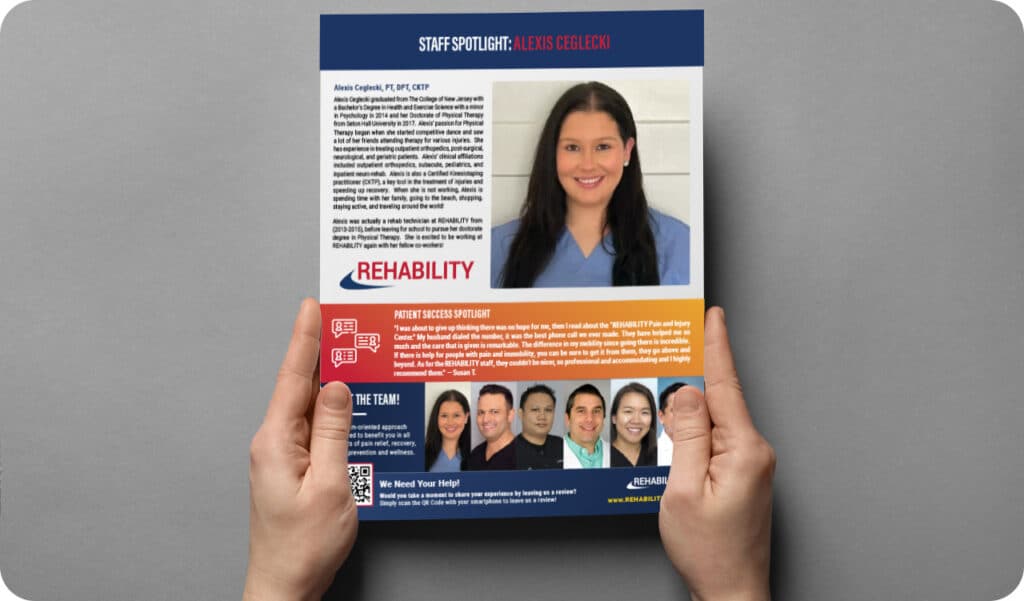
Neil: It’s amazing what a newsletter can do. It should really be one of the fundamentals of what you’re sending out to communicate to past patients. It’s a platform where you can communicate what’s going on in your practice, to stay emotionally connected with that patient, and to continue to provide value in the future that you are the expert to turn to. That constant state of reminding with sending patients your branding and information.
Colin: We have inserts inside that highlight something we’re promoting that month. A new treatment, maybe we’re doing a fundraiser, the newsletter is really awesome. We email our patients a couple times a month, announcing new therapy or free exams, those are major winners for us. When patients are done we send a handwritten letter acknowledging the hard work they did during PT. Through all these different touch points we’re asking if they can refer someone to use or if any new pain is bothering them.
A lot of patients come in with multiple pains and aches at the same time, we don’t always have the time to address more than one. So depending on the insurance visits and how many they have left, we will move onto the next body part and work with them. That’s one thing that helps us keep our schedule full, just saying “If you want to take a break and we can come back and address this other area or we can take care of it now”.
How To Enhance The Patient Experience
Neil: I like how you approach working and training your therapists. Knowing they need to be instilled with some marketing knowledge and what they should be asking for from patients. Therapists are extremely talented at what they do, but they didn’t go to school for marketing. They sell a plan of care, but they don’t know how to sell the services or opportunities for that patient or family better. Some are naturally better than others so it’s being able to identify on your team who is strong in these areas and who needs help. I can see you’ve done that a lot with your team which is fantastic.

Colin: Yeah, it’s a lot of fun. There is a lot of work and behind the scenes that go into it. Identifying, prepping, painting the picture for the team members and then presenting it to them. Help get the point across that gets them to take action, I’ve found it to be quite rewarding. The stuff that no one really sees makes a difference in the long run for the practice.
Neil: Everyone in your practice should be able to answer “whose job is marketing?” It’s everyone’s job! Think of that fantastic patient you’ve had the opportunity to work with, now wouldn’t it be great if they replaced themselves with someone just like that? You can imagine having a clinic just like that patient who is enthusiastic, happy, doing their home exercises. We can have more of those patients, we just need to ask for them. Simple scripts and phrases your staff can say creates a rich experience throughout their plan of care. Then they know what to say to friends and colleagues to get them to come on in.
Colin: At our weekly staff meeting there is normally some discussion along what people have done to improve that experience in the past week. We definitely make a point to acknowledge that, the staff appreciates that. It makes them feel like they’re really contributing to the growth of the clinic.

Neil: There is a lot of difficulty with clinics with hiring and retention. One of the things to help with that is when a therapist or staff member feels like they belong. The way they feel like they belong is not just them showing up and treating, it’s that they’re part of a lot of decision making. They’re contributing to lots of different things being successful at the clinic. If you’re empowering and training them to participate in what they’ve done to help bring more new patients, reviews generated, number of plan of cares completed. Then they feel it’s not just numbers, but they’re really helping the company do well. It helps with retention and longevity with team members for sure.
Lessons Learned
Neil: What are some things you’ve learned about being a PT owner & entrepreneur over the last 3 years?
Colin: It’s funny. I talk to my neighbors and they ask how things are going and I joke “yeah, wasn’t the best to buy into a clinic a year or so before a pandemic”. That wasn’t the most fun to have no business marketing experience ahead of time & navigate that. We’re thriving again and I’m thankful, but looking back it was a crazy time.
Neil: Well, the good news is that you aren’t alone. There are many, many other practice owners in the same boat, but it’s amazing that you were able to survive probably one of the hardest times of being a business owner in history. You’re stronger for it and now the future is wide open.
Colin: I think the main thing I learned is that PTs are generally afraid of the word marketing, or the idea of selling themselves. It seems to be this thought “I want to get paid, but I would gladly give my services away for free”. I’ve done a good job of getting the team on board and changing that view point. A lot of PTs don’t view their services as valuable, they know they’re helpful. They put all this time, money, and effort into developing their skills. But, they don’t always see what they do as valuable to the patients from a financial perspective.
I say all the time that patients are paying for the long-term outcome they’re getting from you. There is a financial value to the service you’re providing. PTs don’t really know metrics that well or how those go into the financial stability of a practice, so there are some key metrics that we share with the clinic that gets everyone on board with a goal. The PTs here know the clinic cost per visit & why it’s important to have close to a 20% profit margin if possible. What happens if that dips too low and what are the consequences of that? They know how to help out to make sure we’re reaching our profit margins. I’ve learned a lot of PTs just don’t know, so I’ve been working with my team on explaining why they’re important.
Neil: I think what you’re saying is important for many practice owners out there. Have transparency in your business, sometimes we’re afraid to share some of the financials with the team. But, realize in the absence of data people make things up. So if you’re not being transparent or sharing a decent amount of financial information in how the business is doing that team is part of. They might think you’re doing great and can ask for that raise now, but it leads to internal conflict.
You’re trying to create loyalty, longevity with therapists, and have them grow with you. They need to know how what they’re doing contributes to the financial aspect. When I had my practice we worked a lot with the staff to show them what it cost per visit to actually run the clinic.

Colin: Yeah there is this thought that if you’re just the PT or the admin staff that the owners rake in all this money. No, here’s our cost per visit, all the expenses, what went into it, then they get it.
Neil: Relate it to if you went to see your orthopedic or cancer specialist, you would pay for it because you need that. Your patients need what you give. A lot of the time you’re going to have to repeat that.
Colin: Yeah that’s another thing I’ve learned. The onboarding experience you do with new hires has to be continuous. Even the staff you’ve had for years, just do a review on things. I’ve learned you can’t just say it once. We have quarterly “quizzes” on certain procedures, like how to ask for a Google review, why do we do this? I was surprised sometimes thinking they would say what I’m expecting them to and I’m totally off. I realize I have some work to do to get them back on the same page to help them understand what we’re doing here.
Keys To Motivating Your Staff & Relinquishing Control

Neil: That’s valuable for any practice owner out there, just realizing you’re marketing and selling your team all the time. The bigger your team gets, the more you need to market and sell what you’re doing. Repetition is the key in marketing, the same goes with your team and people get on board at different times. What are some of the key things you do to help motivate your staff?
Colin: The main thing is pointing out their wins and recognitions on a weekly basis. Any new Google reviews or Wall of Fame testimonials that go up I will read to staff. Sometimes when the reviews come in a therapist won’t see that, so it really helps them to read those out. We like to have a quarterly outing that the staff decides on, we give a couple extra days off if we hit metrics. Little things here and there.
Neil: That main thing you’re talking about is bringing them back to the clinic, aligning them back to the purpose of helping people. Like you said the billing person isn’t going to see a Google review or testimonial, so the more that is shared on a weekly basis the more they feel like they’re really helping people. So in closing, any results you’re proud of you would love to share?
Colin: I would say from being a fairly new owner I’m just proud of being able to step back and not micro-manage my staff. I empower my team to take ownership of their roles. To be an entrepreneur and business owner you need to mentally budget for different things. Knowing that mistakes are going to happen, but keeping things positive and not reactionary. I feel proud of getting my team on board to understand the bigger picture.

Neil: It’s clear from your success that you really empower your staff. That’s the only winning way forward is to build & empower your team then let go. That buys you time, freedom, and opportunities as a business owner. You don’t want to be the person that makes everything go, you need a team to help so you can enjoy the fruits of your labor.
Colin: Definitely. I found that when I originally took over that a lot of people did what they were told and didn’t question things. That was sort of the culture here that I walked into. I realized I couldn’t be the one that always came up with the answers to every situation or have everyone come to me with every little fire. I took it upon myself to step back, take my time and know it wasn’t going to happen overnight. Methodically get people on board to take ownership over things so that when something comes up they tell me what we should do.
It’s something I had to emphasize on a monthly basis which is if you take a stab at something and it doesn’t work out, you aren’t going to get fired. Even if it doesn’t go well, we can regroup, strategize and move forward.
Neil: The bigger your clinic gets, the more you’re going to need team members to make good decisions that can’t all be on your shoulders. Any parting words?
Colin: In a nutshell– market like crazy to however big your past patient list. Do that in as many forms as media as you can and reactivate those past patients to new plans of care. Ask them to refer other people to you, it’s the easiest thing to do. Tell them they don’t necessarily need a referral depending on your state. Just be super creative with generating as many word-of-mouth referrals as you can.
Listen to Neil and Matt’s full conversation on the PT Marketing Power Hour! Found wherever podcasts are found.