









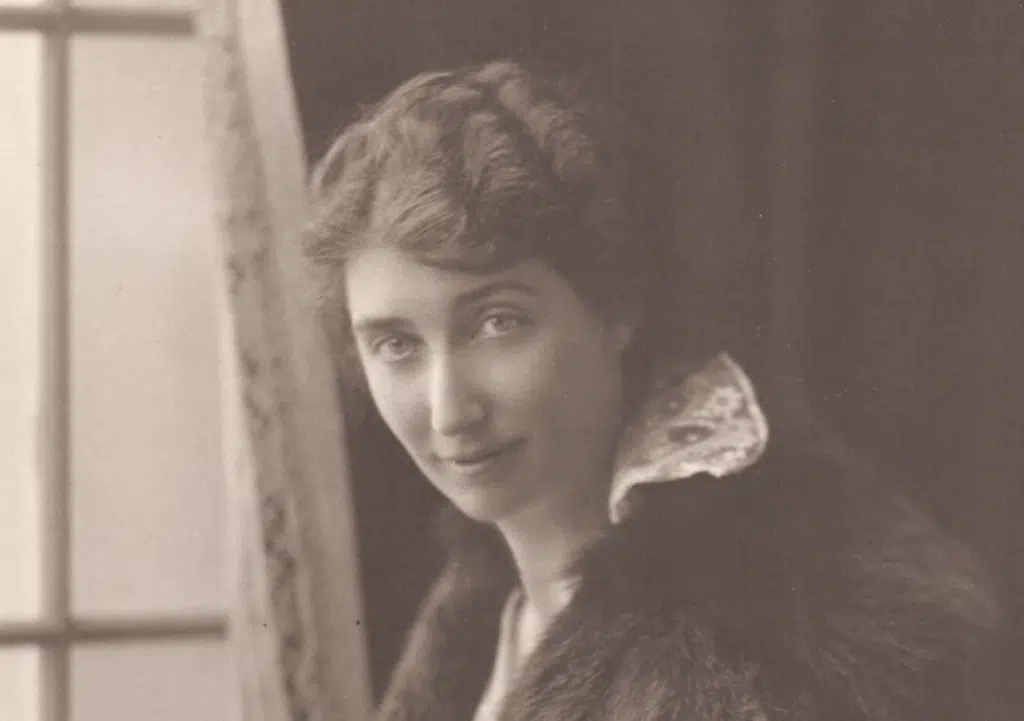
If you went to physical therapy school, you probably remember Mary McMillan. Often known as the “Mother of Physical Therapy,” Mary McMillan was the founder and first President of the American Women’s Physical Therapeutic Association (AWPT) in 1921. Later, the name was changed to–you guessed it–the American Physical Therapy Association (APTA).
But did you know that McMillan was a prisoner of war in World War II? Did you know that she spent 11 years in China?
This Women’s History Month, take a few minutes to learn 10 things you didn’t know about Mary McMillan, Mother of Physical Therapy.
1. Mary traced her desire to help the suffering to her early loss of her sister and mother.
Mary McMillan was born to Scottish parents in Hyde Park, Massachusetts. But when Mary was just four years old, her infant sister died of tuberculosis. A year later, Mary’s mother died from complications due to childbirth. Mary was sent to live with her aunt in England, where she would eventually study physiology, massage therapy, and rehabilitation exercises.
In Mary’s letters, she writes that these early sufferings sparked a desire to help others through physical therapy.
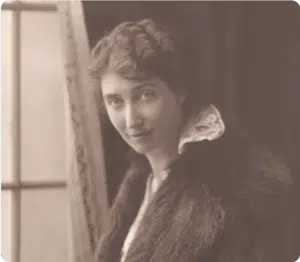
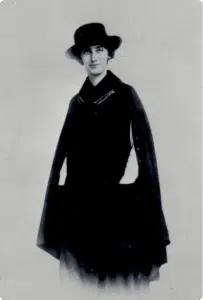
Mary McMillan in her early twenties.
2. Before Mary treated wounded veterans in World War I, she used massage therapy to help pediatric polio patients.
Many people attribute the rise of physical therapy to the advent of World War I and the need to rehabilitate hundreds of thousands of wounded soldiers. That’s true!
But the rise of polio epidemics in the early-to-mid 1900’s also contributed to the growth of physical therapy. Polio is an infectious disease caused by the poliovirus; in roughly 0.5% of cases, polio causes severe muscle paralysis. In the early 1900s, polio was treated by splinting and casting the affected limbs or spine, plus bedrest for months at a time. Naturally, this led to extreme muscle weakness, reduced flexibility, and a longer rehabilitation period.
Mary provided massage and exercise therapy for orthopaedic patients at the Children’s Hospital in Boston–before there was even a discipline called “physical therapy” in the United States!
3. Mary saw her service to others as a religious vocational calling.
Mary was raised by her aunt to be strong, resilient, and self-reliant. Her biography, written based on her letters and diaries, also recounts that Mary was a woman of faith:
“As a child, Mary learned from the scriptures that each person has a special role in this world, and they should listen to that call. She yearned to be astute and pay attention to what her heart was telling her, which was not always easy. Even though following my vocation would be difficult, especially since she was a single woman, Mary would now be responsible for herself and follow her own destiny wherever it led her–and because of that, she risked it because she believed her efforts could truly make a difference in the world.”
Her biography continues, based on her letters:
“I had a rare gift and knew how to help physicians in the areas of anatomy, physiology, muscle movement, and a myriad of healing techniques. It was clear after much prayer that my unwavering passion to help those in need and my talent as a therapist was unique and could be used to help many victims of the impending battle. Simply put, I knew nothing of what the future held, but intuitively believed I was ordained to devote my life to this work. At any personal cost, I followed my destiny that was waiting for me in America” (Mary McMillan, Mother of Physical Therapy, pages 37-38).
4. Mary was the first physical therapy aide to be sworn into service in World War I, making her the first recognized physical therapist in the United States.
World War I was the tipping point for physical therapy. In the United States alone, 200,000 wounded soldiers came home after World War I, many of whom needed extensive rehabilitation after years of trench warfare. Mary was the first physical therapy aide sworn into the US army in World War I, making her the US’s first physical therapist! She was a member of the United States Medical Corps, and worked as the Head Reconstruction Aide at Walter Reed General Hospital in Washington, DC.
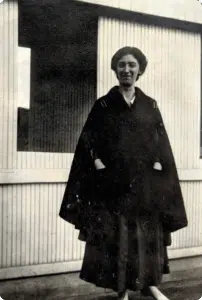
Mary is sworn in as a Reconstruction Aide in the United States Medical Corps.

5. Mary had to “sell” her services as a physical therapist to physicians during World War I…using prescription pads. (Sound familiar?)
As Head Reconstruction Aide at Walter Reed General Hospital, Mary was tasked setting up a new physical therapy department. There was just one problem.
No one knew what physical therapy was!
Mary recalled having to “sell” her healing technique to the doctors and patients. She decided to make “a sort of calling card” for the doctors to use to direct their patients to her, so “she had some prescription forms printed up and took them around the hospitals…Mary told the doctors and nurses to fill out the forms as if they were prescribing the work she was doing, just like medicine.”
Although at first the doctors were skeptical (“as if she was a snake salesman selling secret potions”), Mary eventually won the respect of the physicians around her.
If you’re like most physical therapists, this story should sound familiar to you. Custom prescription pads are still a highly effective way to increase physician referrals!
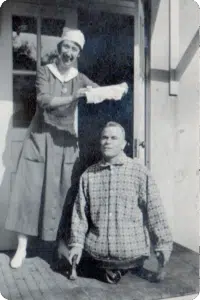
Mary McMillan with Captain Fletcher, a double amputee patient at Reed College who was wounded in World War I.
6. Mary’s 1921 book, Massage and Therapeutic Exercise, was the first comprehensive medical text written by an American physical therapist.
While Mary worked at Walter Reed General Hospital, she didn’t just treat patients and set up a physical therapy department. She also taught physical therapy students and worked on a medical textbook! Massage and Therapeutic Exercise has been published in multiple editions and is still in print today.

7. Mary had serious concerns that the American Women’s Physical Therapeutics Association (AWPT) would be “a let down.”
When Mary decided to create a national organization for physical therapy, she had major fears that it would be “a let down.” In other words, she was afraid it would flop!
Of course, the AWPT–later the APTA–did not flop!
Mary’s goal was to form a national organization that would standardize physical therapy practices and would provide professionally trained women therapists the ability to practice in general hospitals and clinics.
“The easy path in the lowland has nothing grand or new, but a toilsome ascent leads on to a glorious view,” said Mary at her first presidential address to the AWPT.
Let that be an encouragement to you in your PT practice today.

Women played a major role in the establishment of physical therapy as a discipline after World War I.
8. Mary established the first physical therapy training center in China at Peking Union Medical College! She lived in China from 1933 to 1941.
At age 50, Mary set forth on her next adventure–to China! She served as the Acting Director and Chief Physiotherapist at Peking Union Medical College. She studied the Chinese language every day and “fell in love with China” and the Chinese people.
However, as Imperial Japan set its sights on Northern China, Mary was increasingly drawn into the crosshairs of war…
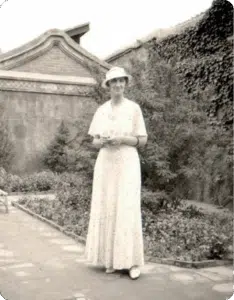
Mary in the gardens in her home in Beijing.

9. Mary was held as a prisoner of war in the Philippines and China during World War II in Santo Tomas Internment Camp…where she still performed PT services.
Having seen the signs of the impending war, Mary tried to get back to the United States in 1941. She travelled from Beijing to Manila in December 1941. However, she was too late.
Japan launched an attack on the Philippines, then a US colony, on December 8, 1941, just ten hours after the attack on Pearl Harbor. Within three weeks, Japan conquered the Philippines. Along with many other foreigners, Mary was sent to Santo Tomas Internment Camp in the Philippines. Japanese prisoner of war camps were rife with dysentery, malaria, and dengue fever; prisoners also suffered from malnutrition and exposure to the sun.
Yet true to form, Mary took charge. She led the committee that created a camp hospital, and soon set up her own physiotherapy shop in the internment camp. When she fell sick with pneumonia at age 61, she was sent to a hospital in Shanghai, and then to Chapei Internment Camp. She was released in 1943.
Her biography writes, in Mary’s voice:
“I did not realize then that the physical therapy work I did in the internment camps would be my swan song. While it was one of the most difficult and challenging times of my life, the one outstanding joy during that time was the enjoyment of helping others and providing service for no money and without price or equipment, performing without adequate food to keep our bodies’ fires burning and with little comfort, clothes, or hope.”
Mary’s health suffered due to the poor treatment in the POW camps. She died in 1959 of metastatic melanoma due to long hours of overexposure during the camps.
10. Mary strongly believed that your mental attitude was crucial to improving your physical health.
As a PT, you know it’s not all about the physical. The patients who get well are the ones who are invested in their treatment and are optimistic about their recovery.
As we close this blog on Mary McMillan, I want to quote Mary directly. In her speech on the 25th Anniversary of the American Physical Therapy Association, “Physical Therapy on Three Continents, Mary recounted this story from her days in the Japanese internment camps:
“A girl about fourteen was referred to physical therapy from the camp clinic in the Santo Tomas Internment Camp with a diagnosis of painful tender feet. She was an adolescent girl whose whole appearance registered unhappiness. I tried to get her body in a little better alignment and she came in daily for treatments.
“One day she confided in me how she was feeling. I replied, ‘I see by your actions and reactions that you are filled with bitterness and jealousy. You are a very pretty girl, but you don’t look pretty, because your face reveals envy and bitterness.’ I shared that psychiatrists had proven that these states of mind react unfavorably upon the physical body. Then I shared, ‘There is not much use in working to improve your body until your mental attitude is changed toward your life.’ I suggested that I needed someone to help me in my work and asked if she would help me. She said she would like to do so.
“Later, I was able to find work for her in the children’s department of the hospital. She loved children and they adored her. Shortly thereafter, I left Santo Tomas for another internment camp.
“I wondered many times what had happened to the youngster. About eighteen months later, when I was aboard the ship, the MS Gripsholm, a very lovely girl came up to me and asked, with a sparkle in her eye, ‘Have I improved any?’ I replied, ‘Natalie, I hardly recognized you.’ Then she put her arms around me and hugged me, then said, ‘I don’t know what I would have done without you.’”
Happy Women’s History Month
With a heart for the suffering, a dedication to excellence, and deep courage in adversity, Mary changed the world for good.
We are fortunate to have Mary McMillan as an example: as a woman and as a physical therapist.
Happy Women’s History Month!
Source for this blog: Mary McMillan – The Mother of Physical Therapy, by Mary Farrell and Marta Mobley