







Many healthcare newsletters end up ignored because they focus too much on practice updates instead of patient needs. When every issue talks about staff news, office announcements, or equipment upgrades, readers quickly lose interest. Strong patient engagement strategies shift the focus toward solving real problems patients face.
A newsletter should help patients manage pain, prevent injuries, and stay active between visits. When the content provides clear value, readers begin to see your practice as a trusted source of guidance. That trust often leads to referrals and new appointments.
Today, effective marketing strategies and patient engagement use a hybrid approach. Print newsletters create a physical reminder patients can keep, while email newsletters provide fast access and measurable engagement. Together, they form a simple system for staying connected with your patient community.
The Science of Newsletter Engagement: Why Consistency Wins
One simple habit drives strong newsletter engagement: consistency. When a practice sends a newsletter on a predictable schedule, patients begin to expect it. Over time, it becomes familiar, much like a magazine that arrives every month. That routine keeps your clinic present in a patient’s mind, even when they are not currently in treatment.
Consistency also supports long-term patient engagement strategies healthcare practices rely on. Patients often return months after a previous visit when pain comes back or a new injury appears. If your newsletter has been arriving regularly with helpful advice, your clinic is the first place they think to call.
A helpful structure is the Rule of Three. Each issue should include three clear elements:
- Solve a problem: share a short tip or exercise that helps patients manage a common condition.
- Share a win: highlight a patient success story or treatment outcome.
- Offer a next step: invite readers to schedule a screening, book an evaluation, or share the newsletter with a friend.
This structure keeps every issue useful, easy to read, and focused on helping patients take action.
Content That Hooks: Beyond the “Staff Spotlight”
Many practice newsletters open with updates about the clinic. While those updates have a place, they rarely drive strong newsletter engagement. Patients care more about information that helps them manage pain, recover faster, or stay active.
A stronger approach is to lead with condition-first content. Instead of talking about what the practice did this month, focus on common problems patients experience in daily life.
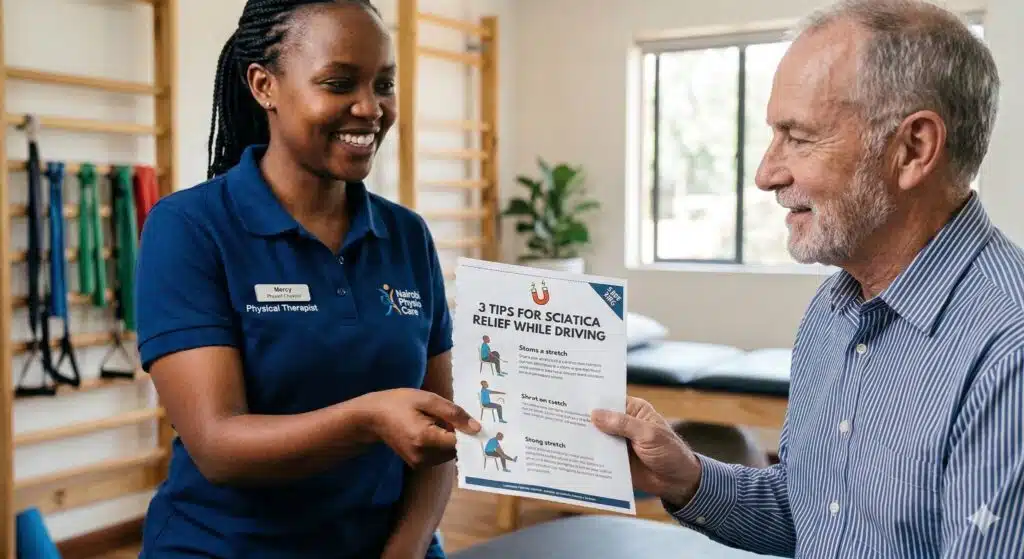
For example, a headline like “3 Tips for Sciatica Relief While Driving” speaks directly to a real issue. Patients dealing with back or leg pain during long drives are much more likely to read that than a general clinic update.
Effective patient-focused newsletter content often includes:
- Condition-first articles: Short tips that address common issues such as knee pain, sciatica, or shoulder stiffness.
- Practical advice: Guidance patients can apply at home between therapy sessions.
- Quick-read sections: Clear, simple information that can be understood in a few minutes.
Another strong feature for print newsletters is a “Save This” exercise section. A small home exercise guide that patients can tear out or keep on the fridge turns the newsletter into a useful resource.
When newsletters consistently deliver helpful clinical insights, they strengthen patient engagement strategies healthcare practices rely on. Patients begin to view the clinic as a trusted source of guidance, making your practice the first place they call when a new injury appears.
Social Proof & Community Building

Trust plays a big role in patient engagement strategies that healthcare practices use. Many patients feel unsure before their first visit. They want to know that others have had a positive experience and that the clinic understands their concerns. Your newsletter can help build that trust by sharing real stories and creating a sense of community around the practice.
One effective approach is highlighting patient journeys. A Patient of the Month feature works best when it tells a simple story of progress. Instead of just naming the patient, show how they moved from pain or limitation to improved movement and confidence.
For example, you might describe how a runner returned to training after knee pain or how a patient regained shoulder mobility after struggling with daily activities.
These stories make your services easier to understand and help readers picture their own recovery, which is why many clinics include patient stories as part of their broader physical therapy marketing strategy.
A newsletter can also strengthen community connections by including small features such as:
- Patient success stories: Short accounts of patients who improved their mobility, returned to sports, or resumed normal daily activities.
- “Pass this to a friend” cards: A small printed referral card that encourages patients to share the newsletter with someone experiencing similar pain.
- Staff introductions: Brief profiles that help patients recognize the voice on the phone or the therapist they may meet at their first visit.
These elements help readers feel connected to the people behind the practice. Over time, this sense of familiarity encourages referrals and helps turn a simple newsletter into a powerful tool for marketing strategies and patient engagement.
Email Newsletter Strategy: The Digital “Second Act”
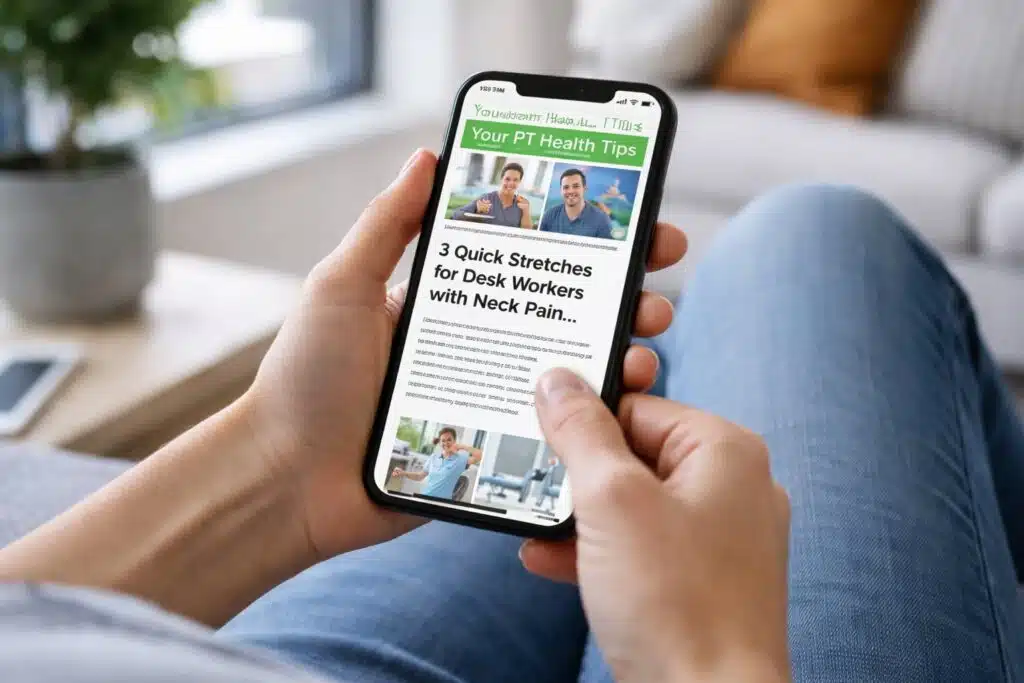
While print newsletters help create a physical reminder of your practice, email adds speed, reach, and measurable results. A strong email newsletter strategy helps clinics stay connected with patients between visits and guide them to book their next appointment.
The first step is writing subject lines that spark curiosity and speak to patient concerns. Generic titles like “October Newsletter” are easy to ignore. A subject line that highlights a problem or question patients recognize is far more likely to be opened.
For example:
- “Is Your Back Pain Seasonal? What to Watch For This Fall”
- “3 Quick Stretches for Desk Workers with Neck Pain”
- “Why Knee Pain Returns After Long Walks”
Design also plays a major role in newsletter engagement. Many patients will read your email on a mobile device, so the layout must stay simple and easy to scan.
A patient-friendly email newsletter should include:
- Short paragraphs: Keep sections easy to read on smaller screens.
- Clear buttons: Use visible call-to-action buttons that guide patients to take the next step.
- Simple formatting: Large text, clear spacing, and minimal clutter help readers focus on the message.
Finally, follow the “One Click” rule. Every digital newsletter should guide readers toward one clear action, such as scheduling an evaluation or booking a screening.
- Primary CTA example: “Book Your Free Injury Screening.”
- Secondary option: “Schedule Your Evaluation Online.”
When print newsletters build familiarity, and email provides quick access to booking, the two together support stronger patient engagement strategies and help turn regular communication into new appointments.
Data-Driven Segmentation for Healthcare
Not every patient needs the same information. Sending identical content to everyone often lowers newsletter engagement because the advice may not apply to the reader’s situation. A smarter approach is to use simple segmentation as part of your email newsletter strategy.
Segmentation allows practices to send more relevant content to different patient groups. When patients receive advice that fits their needs, they are more likely to read the newsletter and take action.
Many clinics can create useful segments using the information already stored in their CRM or patient management system. For example:
- Past patients – Reactivation focus: Share injury prevention tips, seasonal health advice, and reminders to schedule a screening if pain returns.
- Current patients – Compliance focus: Send guidance that supports recovery, such as exercise reminders or mobility tips that reinforce treatment plans.
- Professional referrals – Authority focus: Provide clinical insights, treatment updates, or success stories that reinforce your expertise.
This type of targeted communication strengthens patient engagement strategies healthcare providers rely on because the content is personal and relevant. Instead of sending the same newsletter to everyone, your practice delivers information that reflects each patient’s stage of care.
Over time, better targeting improves open rates, encourages more responses, and helps turn newsletters into a stronger channel for patient retention and referrals.
Avoiding the “Inbox Filler” Traps
Even well-designed newsletters can lose impact when a few common mistakes appear. Many clinics send newsletters regularly, but the content ends up looking like filler rather than something patients want to read. Avoiding these pitfalls helps improve newsletter engagement and strengthens your overall patient engagement strategies.
One common issue is overwhelming readers with too much text. Many patients usually scan a newsletter quickly, often on their phones. When they are met with long blocks of information, the message can become heavy and difficult to follow.
To keep newsletters readable:
- Use short sections: Break information into small paragraphs that are easy to scan.
- Add bullet points: Highlight key advice so patients can quickly spot useful tips.
- Leave white space: A clean layout helps readers stay focused on the message.
Another frequent problem is missing or unclear calls to action. A newsletter should always guide patients toward the next step. Without that direction, readers may enjoy the content but never take action.
A strong newsletter should include a clear step, such as:
- Schedule a free injury screening
- Book a physical therapy evaluation
- Share the newsletter with a friend experiencing pain
Finally, practices should pay attention to engagement data. Tracking basic metrics helps you understand what patients actually respond to.
Helpful metrics to review include:
- Email open rates: Shows which subject lines capture attention.
- Click-to-call or booking clicks: Indicates when readers take action.
- Content performance: Reveals which topics resonate most with your patient community.
By avoiding these traps and reviewing simple engagement data, practices can refine their newsletters over time and strengthen their marketing strategies and patient engagement.
Conclusion: From Newsletter to New Patients
A well-planned newsletter is more than a communication tool. It becomes one of the most reliable patient engagement strategies healthcare practices can use to stay connected with their community.
When newsletters focus on patient solutions, consistent education, and clear next steps, they begin to support real growth. Helpful articles, patient stories, and practical exercise guidance build trust over time. That trust often leads to repeat visits, stronger referrals, and new patients who already feel familiar with your practice.
The most effective marketing strategies and patient engagement efforts start by providing value before asking for an appointment. When your newsletter consistently helps patients understand their bodies, prevent injuries, and stay active, your practice becomes the first place they turn when care is needed.
If your current newsletter is not driving engagement, or your practice does not have one yet, it may be time to rethink the approach. Our team at Practice Promotions helps clinics create newsletters that educate patients, strengthen referrals, and support consistent patient growth.
Learn more about our physical therapy newsletter services and how the right strategy can help turn your newsletter into a reliable source of new patients.