








Marketing a physical therapy clinic in 2026 looks very different from just a few years ago. Competition is higher, patient behaviors are shifting toward online research, and referral patterns are changing as healthcare systems consolidate. For many clinics, the challenge isn’t providing excellent care; it’s getting in front of the right patients at the right time.
Today’s most successful PT practices use a mix of digital marketing, patient education, local outreach, and conversion-focused content to stay top-of-mind and grow consistently.
This guide breaks down 20 physical therapy marketing ideas that actually work in 2026 – strategies that combine proven healthcare marketing principles with modern digital tools that drive measurable results.
We’re going to show you proven, trackable strategies used by the top 10% of PT clinics to generate more patients, boost retention, and finally take control of your growth.
Key Takeaways
- Modern PT marketing requires a blend of digital strategies, local visibility, and consistent patient communication.
- A strong physiotherapy marketing strategy starts with branding, a high-performing website, and SEO fundamentals.
- Google Business Profile optimization and online reviews are now critical for winning local patients.
- Direct physician referrals still matter, but digital channels like PPC, social media, and educational content now drive faster results.
- A complete marketing system creates predictable new patient flow and supports long-term retention and reactivation.
Why Physical Therapy Marketing Matters More Than Ever
Inconsistent patient volume, unclear ROI, and wasted marketing dollars have become the norm for too many PT clinics. You’re not alone if you feel like you’ve tried “marketing” before, only to get burned by agencies, gimmicks, or platforms that over-promised and under-delivered.
The reality? Growing a practice in today’s healthcare landscape takes strategy, consistency, and tools that are actually built for physical therapy businesses.
A strong physical therapy marketing strategy ensures your clinic:
- Stands out in search results
- Builds trust before a patient ever calls
- Communicates your expertise clearly
- Generates consistent new evaluations
- Retains past patients and drives reactivations
- Strengthens physician relationships
Patients now take a more consumer-like approach to choosing care. They compare clinics, read reviews, look for educational content, and judge a PT’s credibility based on online presence. Without a strategic approach, even great clinics struggle with inconsistent schedules and stalled growth.
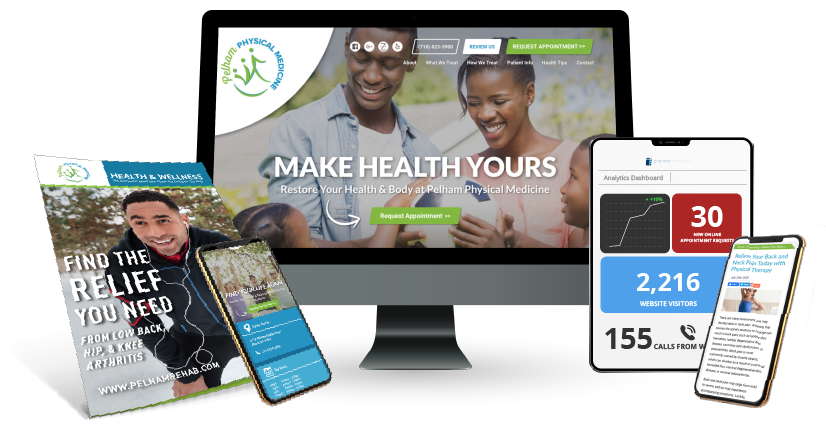
Practice Promotions provides powerful marketing services for physical therapy clinics, including:

What Role Does SEO Play in a Physiotherapy Marketing Strategy?
SEO (Search Engine Optimization) helps your clinic appear when people search for terms like “physical therapist near me,” “back pain treatment,” or “sports injury rehab.” Since most patients start their journey on Google, SEO is one of the most important long-term growth channels.
Key SEO elements include:
- On-page optimization: H1 headings, keywords, meta descriptions, etc.
- Local SEO: Google Business Profile, local citations, proximity targeting
- Backlinks: Earning links from local organizations, healthcare sites, and news outlets
- Content: Publishing blogs, guides, and FAQs that answer common patient questions
- Technical SEO: Site speed, mobile responsiveness, accessibility
20 Physical Therapy Marketing Ideas That Actually Work in 2026
The following marketing ideas combine proven physical therapy marketing strategies with modern digital tactics designed to increase visibility, strengthen patient trust, and drive consistent new evaluations. These are the approaches PT clinics are using right now to grow in 2026.
1. Define Your Brand, Message, and Ideal Patient

Before you invest another dollar, get crystal clear on who you serve and why they should choose you. Too many clinics blend into the background with generic messaging.
Build Clear Patient Personas
Develop 3–5 patient personas representing the groups you want to attract:
- Post-surgical adults
- Athletes
- Seniors with balance issues
- Workers with repetitive strain injuries
For each persona, document:
- Age range
- Pain points
- Insurance preferences
- Goals (e.g., return to sport, avoid surgery, improve mobility)
- Barriers (cost, time, fear of pain, past poor experience)
Identify Your Unique Selling Points (USPs)
Ask: “Why should someone choose our clinic instead of the clinic two blocks away?”
Examples of USPs:
- Faster return-to-sport programs
- Extended one-on-one treatment sessions
- Advanced technology (e.g., AlterG, blood flow restriction)
- Bilingual therapists
- Same-week evaluations
Craft Your Patient-Facing One-Liner
Create a simple phrase that communicates your value clearly:
Examples:
- “We help active adults recover faster and stay pain-free—without unnecessary surgeries.”
- “One-on-one physical therapy that puts your progress first.”
- “Evidence-based care designed to get you back to what you love.”
Use this one-liner on your homepage, service pages, email signatures, and Google Business Profile.
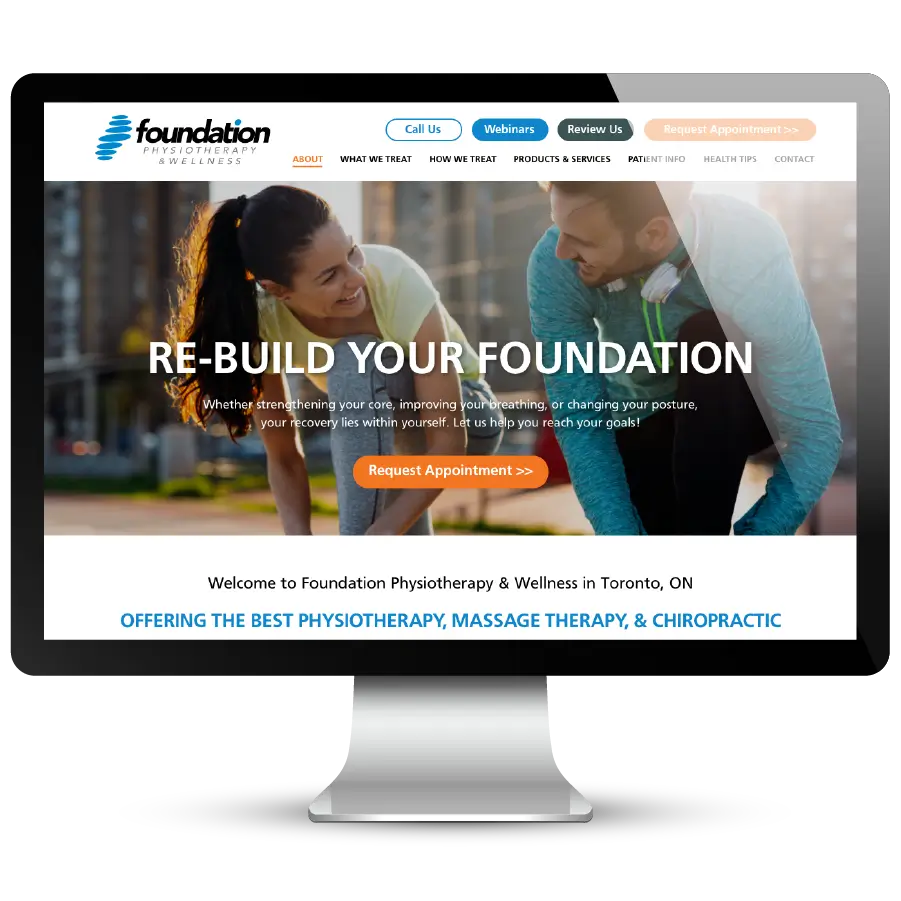
2. Build a High-Converting Physical Therapy Website
If you’re not getting leads from your site weekly, it’s not doing its job.
Your website is your clinic’s strongest digital asset. It’s the first impression most patients will have of your practice, and in 2026, patients judge your credibility heavily based on your website’s quality.
SEE PRACTICE PROMOTIONS PORTFOLIO >
Website Must-Have Checklist
Every PT website should include:
- Home page
- Individual service pages (orthopedic, balance, vestibular, sports rehab, etc.)
- Dedicated blog
- Contact page + Google Map embed
- Online scheduling or appointment request form
- Testimonials and success stories
- Insurance information
- Lead magnets (guides, downloadable content)
Add Trust Signals Everywhere
Patients need reassurance that they are choosing qualified clinicians. Include:
- APTA or state association badges
- Certifications (OCS, CSCS, FAAOMPT, etc.)
- HIPAA compliance statements
- Testimonials
- Success stories
- Before/after outcomes where appropriate
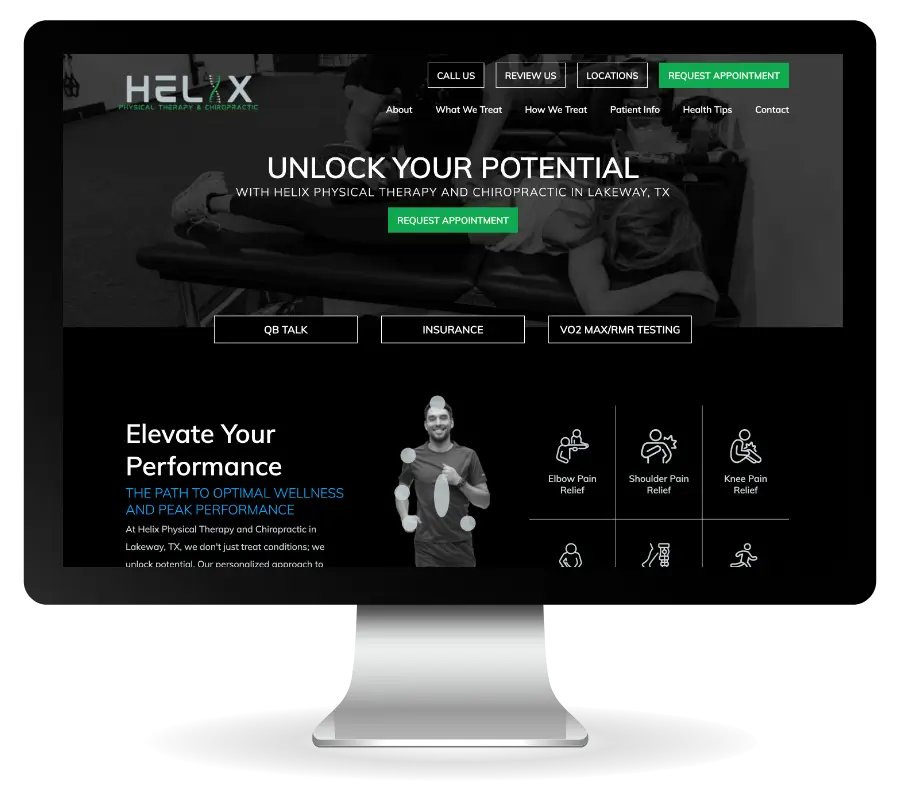
Practice Promotions Website Design
3. Implement Search Engine Optimization (SEO)

SEO is one of the most powerful long-term physical therapy marketing strategies because it helps you rank organically for searches such as:
- “physical therapy near me”
- “back pain specialist”
- “vestibular therapy”
- “sports rehab clinic”
| SEO Element | What It Covers |
|---|---|
| On-page SEO | Optimizing headings, content structure, keyword placement, metadata, and internal links to improve relevance and clarity. |
| Local SEO | Enhancing your Google Business Profile, ensuring consistent NAP citations across directories, and strengthening map pack visibility. |
| Content SEO | Creating blogs, FAQs, condition guides, and educational resources that answer patient questions and position your clinic as a trusted expert. |
| Backlinks | Earning links from local businesses, medical sites, community organizations, and reputable directories to build domain authority. |
| Technical SEO | Improving site speed, mobile responsiveness, security (HTTPS), accessibility, and overall crawlability for search engines. |
By implementing SEO across your website and content strategy, you create a sustainable pipeline of new patients.

4. Dominate Local SEO & Optimize Your Google Business Profile
One of the most popular searches for patients is “physical therapy near me.” If you’re not showing up in the map pack, you’re invisible.
Start by claiming and optimizing your Google Business Profile. Make sure it includes up-to-date business hours, a service list, and quality images.
Key Elements of Local SEO
- Google Business Profile optimization
- Consistent NAP (Name, Address, Phone)
- Local citations on directories
- Location-specific landing pages
- Reviews and star ratings
- Photos and service attributes
- Regular Google Posts
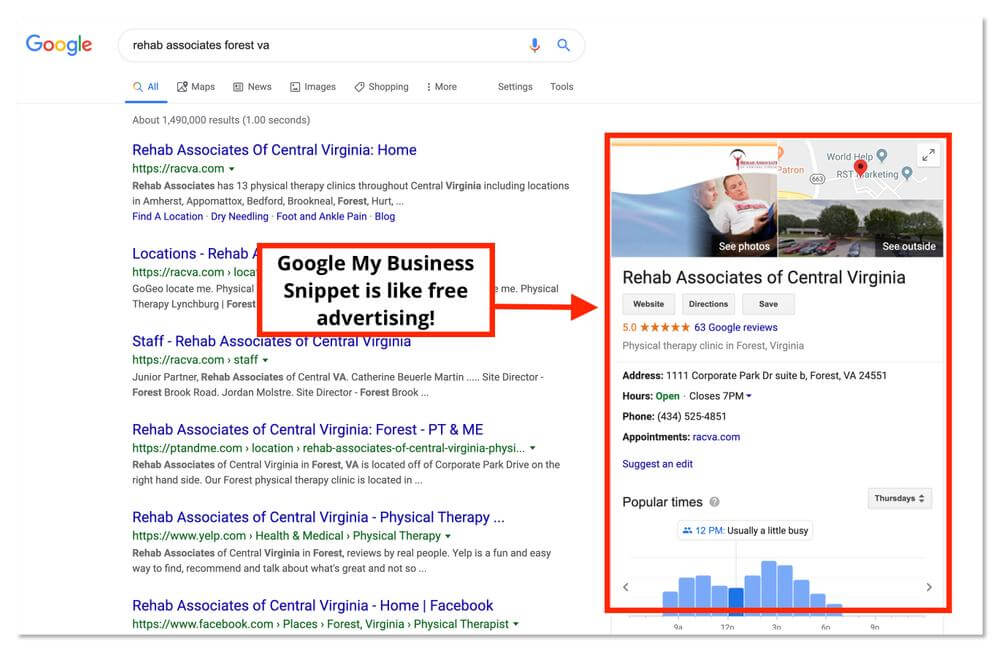
How to Optimize Your Google Business Profile in 2026
| Optimization Area | What to Do |
|---|---|
| Service Categories | Select accurate primary and secondary categories such as Physical Therapist, Sports Medicine Clinic, or Rehabilitation Center so Google understands your specialty. |
| Visual Content | Add professional team photos, clinic interiors, and simple before-and-after visuals that reflect real outcomes and build trust with potential patients. |
| Google Posts | Publish short weekly updates featuring promotions, new services, seasonal tips, or blog highlights to keep your profile active and visible. |
| Booking & Scheduling Links | Connect your appointment request page so patients can schedule directly from search results without extra steps. |
| Service Listings | List each therapy service individually with short, keyword-supported descriptions that help Google match your clinic to more search queries. |
| Business Description | Write a concise, patient-friendly description that naturally includes phrases like physical therapy, rehabilitation, and the conditions you treat. |
| Review Management | Respond promptly to all reviews, thanking positive reviewers and addressing concerns in a professional, HIPAA-safe way. |
👉If you want help optimizing your Google Business Profile so it consistently ranks in the local map pack and drives high-quality patient evaluations, the Practice Promotions team can manage it for you as part of a complete digital marketing system.
5. Publish Helpful Blog & Educational Content
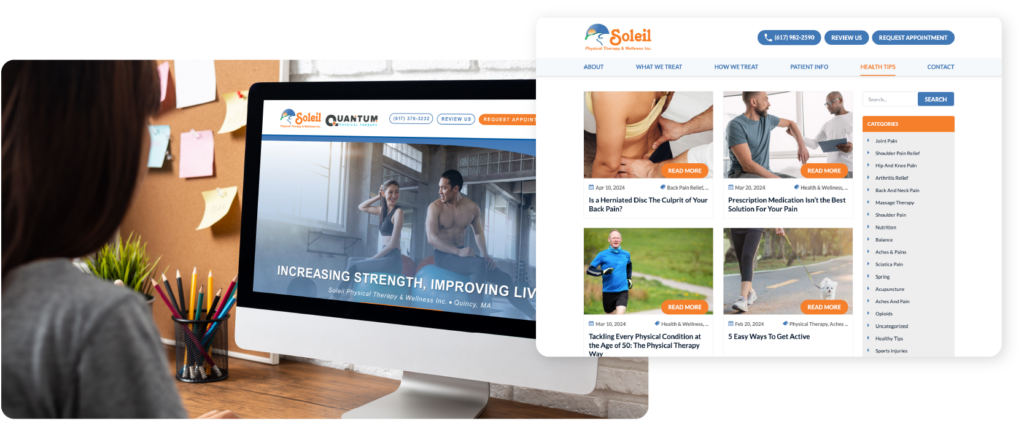
Educational content positions your clinic as the trusted expert in your community. It also improves SEO and gives patients the confidence to choose your clinic.
Remember, to resonate with potential patients, your site content must speak to their aches and pains. They need to know you understand what they’re going through and feel confident you can help. A powerful way to foster this connection is through content and blog marketing.
Posting Frequency Guidelines
- Minimum: 2 posts per month
- Ideal: 4 posts per month
- Best-in-class: Weekly posts + monthly long-form guides
Topics That Perform Well in 2026
- Pain-specific guides (back, neck, knee)
- “When to see a physical therapist” articles
- Post-surgical recovery timelines
- Exercise safety guides
- Fall prevention and balance resources
- Sports injury prevention tips
- Evidence-based explanations of PT techniques
Link to Authoritative Sources
When you reference credible medical organizations throughout your educational content, you strengthen trust with both patients and search engines. Instead of relying solely on internal explanations, include links to respected authorities such as APTA, major hospital systems like the Mayo Clinic or Cleveland Clinic, and government-backed institutions like the NIH.
6. Run Google Ads (PPC) for Fast New Patient Growth
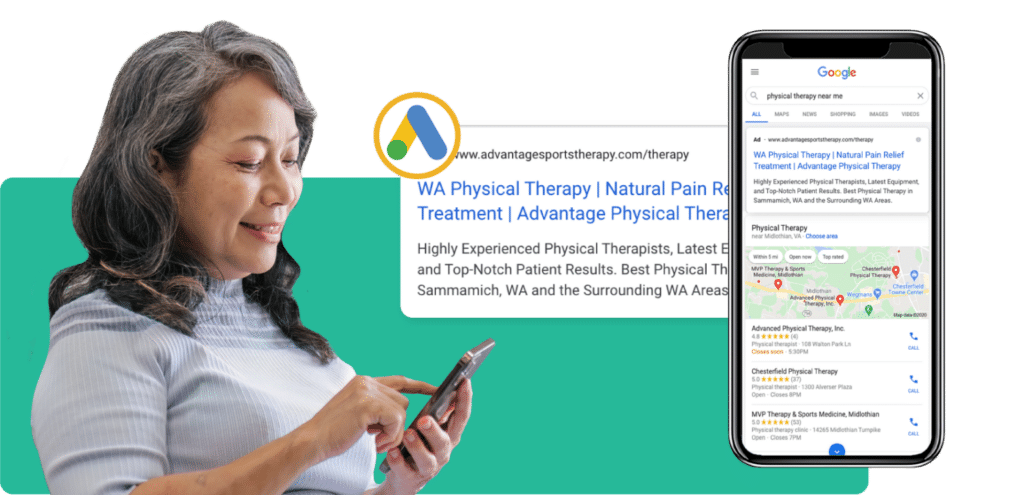
While SEO builds long-term visibility, Google Ads deliver immediate exposure to people actively searching for physical therapy in your area.
How PPC Works for Physical Therapy Clinics
| Component | Explanation |
|---|---|
| Geographic Targeting | Ads are shown only to people within your service radius, ensuring clicks come from individuals who can realistically schedule an appointment. |
| Audience Segmentation | Campaigns can target groups like post-surgical patients, athletes, or older adults with balance issues, each receiving tailored messaging. |
| Search Intent Alignment | Ads trigger when someone types high-intent terms such as “physical therapy near me,” “sports injury rehab,” or “back pain treatment.” |
| Conversion-Focused Landing Pages | Clicking an ad sends patients to a page built to convert traffic into scheduled evaluations through strong messaging and clear calls to action. |
| Support for Local SEO | PPC maintains Page 1 visibility while your organic rankings develop, ensuring steady patient flow even in competitive markets. |
👉 For clinics looking to scale confidently and predictably using paid search, Practice Promotions offers a fully managed Google Ads service.
7. Build Trust With Online Reviews
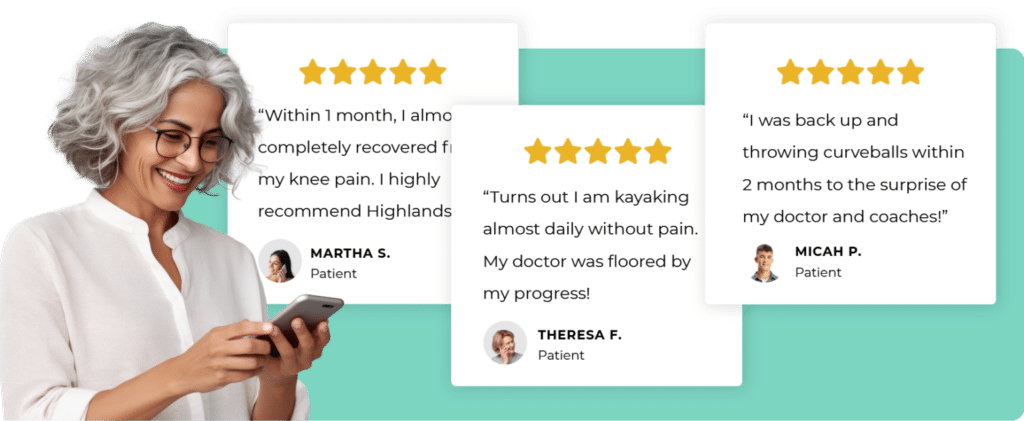
Customer reviews play a pivotal role in shaping the perception of your clinic online: 98% of consumers feel that reviews are an essential resource when making purchase decisions (PowerReviews).
But how to manage online reviews?
⭐ Example of How to Respond to Positive Reviews
“Thank you so much for your kind words. Our team is committed to helping patients feel better and move better, and we’re grateful you chose our clinic. If you ever need anything in the future, we’re here for you.”
⚠️ Example of How to Respond to Negative Reviews (HIPAA-Safe)
“Thank you for your feedback. We’re sorry to hear about your experience. Because we take patient care seriously, we’d appreciate the opportunity to speak with you directly and learn more. Please contact us at your convenience so we can help resolve the issue.”
Why These Responses Work
- They avoid mentioning any private health information, symptoms, or treatment details (HIPAA compliance).
- They demonstrate professionalism, empathy, and accountability.
- They redirect the discussion offline, where concerns can be addressed privately.
They show future patients reading the reviews that you take concerns seriously.
8. Create Engaging Social Media Content
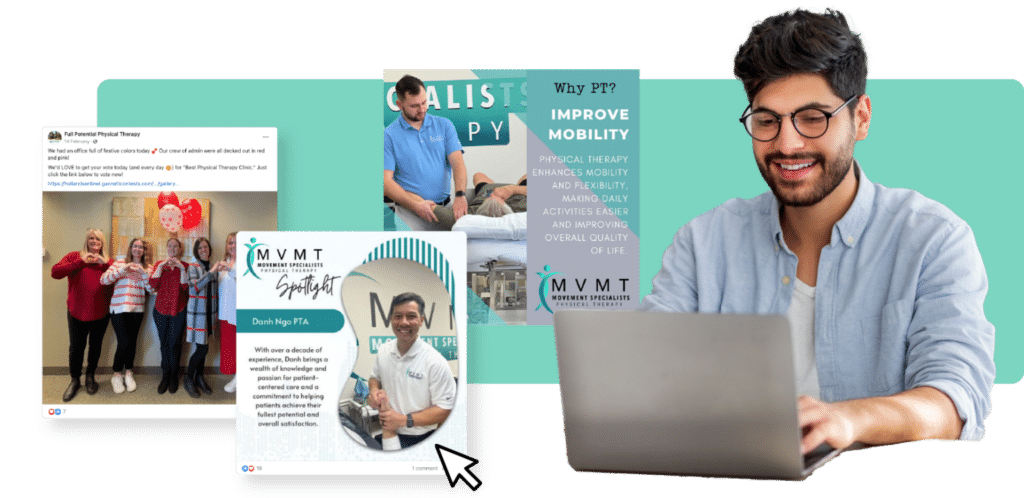
While SEO and Google Ads drive most new patient acquisition, you can leverage social media content to:
- Engage with your existing followers and patients
- Showcase your clinic’s personality
- Educate and inform patients
You can also capitalize on seasonal content. For instance, as the leaves change in fall, you could share tips on maintaining joint health in cooler weather.
Social Media Strategy for PT Clinics
| Content Type | Explanation |
|---|---|
| Short Educational Videos | Quick demonstrations of stretches, posture tips, or exercise modifications perform well and highlight clinical expertise. |
| Patient Stories | Sharing real success stories (with permission) humanizes your clinic and builds emotional connection. |
| Therapist Spotlights | Introducing your team helps new patients feel comfortable before walking through the door. |
| Clinic Culture Posts | Photos or videos of team activities, events, or fun moments create relatability and trust. |
| Organic vs. Paid Social | Organic content builds community, while paid campaigns push workshops, new services, or location announcements to wider audiences. |
9. Launch Email Marketing Campaigns

Despite overstuffed inboxes and overeager spam filters, email marketing remains an effective communication channel, especially for physiotherapy clinics, and is a cornerstone among physical therapy marketing ideas.
Email Marketing That Works for Physical Therapists
| Email Element | Explanation |
|---|---|
| Welcome Messages | Introduce your clinic’s philosophy, highlight key services, and set expectations for future communication. |
| Educational Sequences | Provide recovery tips, movement advice, or condition-specific guidance to build trust and position your therapists as experts. |
| Seasonal Updates | Highlight weather-related injury risks, back-to-school sports programs, or end-of-year insurance reminders. |
| Subject Line Optimization | Clear, curiosity-driven subject lines increase open rates (e.g., “Is your shoulder pain slowing you down?”). |
| Action Links | Appointments, downloadable guides, and blog articles should be accessible from every email to encourage continued engagement. |
👉 For help creating automated patient-nurture systems, newsletters, and reactivation campaigns, see:
Email Marketing with Practice Promotions
10. Offer Free Workshops or Virtual Events

Workshops are one of the most effective outreach tools for PT clinics because they demonstrate expertise in a high-trust environment. Online or in-person sessions help new patients understand the value of therapy before committing to an evaluation.
How Workshops Drive Patient Growth
| Workshop Component | Explanation |
|---|---|
| Educational Topic Selection | Focus on common concerns such as back pain, fall prevention, running form, or post-surgical recovery. |
| Promotion Strategy | Announce events through email, social media, your website, and local community groups to maximize attendance. |
| Partnership Opportunities | Collaborating with gyms, senior centers, or sports clubs expands your reach and introduces your team to new audiences. |
| Recording & Follow-Up | Sending a replay and key takeaways after the event increases trust and drives conversions. |
| Next-Step CTA | Offering a free consultation or screening immediately after the event helps attendees transition into active patients. |
11. Use Lead Magnets (Free Guides & eBooks)

Lead magnets help convert website visitors into contacts you can nurture. When a patient downloads a free resource, they exchange their email for valuable education, giving your clinic an opportunity to build trust over time.
Examples of Effective Lead Magnet Strategies
| Lead Magnet Type | How It Helps Your Clinic |
|---|---|
| PDF Guides | Short guides like “5 Ways to Reduce Back Pain at Home” or “Fall Prevention Checklist” attract patients who are researching symptoms and need expert advice. |
| Video Series | A sequence of brief educational videos creates an immediate connection and demonstrates your therapists’ communication style and expertise. |
| Exercise Checklists | Simple, printable routines encourage engagement and position your clinicians as helpful resources beyond the clinic. |
| Condition-Specific eBooks | Longer resources on topics like shoulder impingement or ACL rehab help high-intent patients understand their condition and the role of PT. |
| Landing Page CTAs | Lead magnets placed within blog posts or service pages naturally capture readers already interested in learning more. |
Once a patient downloads a lead magnet, the real value comes from what happens next. Every download should automatically capture the patient’s email address and place them into a nurture sequence. A simple drip campaign (usually a series of short, educational emails) helps guide the patient from mild curiosity to scheduling an evaluation.
12. Start a Past-Patient Reactivation System

A large percentage of new patient volume in successful clinics comes from past patients returning when new issues arise. A structured reactivation system helps people who already trust your clinic reconnect at the right time.
How Reactivation Systems Work
| Reactivation Element | Explanation |
|---|---|
| Timing | Clinics typically reach out monthly or quarterly to past patients, depending on volume and specialty. |
| Message Style | Friendly, conversational emails such as: “It’s been a while since we last saw you. Are you still experiencing knee discomfort or stiffness?” |
| Purpose | These messages remind former patients that returning for updated treatment is normal, encouraged, and often necessary. |
| Follow-Up | Links to book appointments or request screenings make it easy for patients to take the next step. |
| Expanded Value | Including blog posts or seasonal tips adds educational value beyond the appointment request. |
13. Use Direct Mail Newsletters

Many PT owners think that direct mailing newsletters as part of their physio marketing is expensive and ineffective. But direct mail isn’t dead! 90% of direct mail is seen by its intended recipients, compared to less than 30% of emails.
A well-designed print newsletter builds familiarity, reinforces your clinic’s expertise, and drives repeat visits.
Newsletter Structure and Purpose
| Newsletter Element | Explanation |
|---|---|
| Seasonal Education | Topics such as preparing for winter, gardening injury prevention, or back-to-school sports tips connect with patients’ daily lives. |
| Patient Stories | Spotlighting real success cases helps readers connect with your clinic emotionally and builds trust. |
| Clinic Updates | Announcements about new therapists, new programs, or upcoming events keep your practice top-of-mind in the community. |
| Call to Action | Each issue includes a clear prompt, such as scheduling an evaluation or attending an educational workshop. |
14. Use Direct Mail Postcards for Fast Wins

Postcards are ideal for quick bursts of visibility. When designed and timed well, they can rapidly boost new patient evaluations, especially when promoting seasonal services or special programs.
How Physical Therapy Postcards Drive Results
| Postcard Type | Effectiveness Factors |
|---|---|
| Seasonal Promotions | Cards for themes like “Spring Back Pain Relief” or “Holiday Injury Prevention Tips” resonate because they reflect timely concerns. |
| New Program Announcements | Postcards help launch new balance programs, running assessments, or post-surgical rehab tracks. |
| Image and Headline Strategy | Clear photography and bold main headlines capture attention immediately. |
| Printing Quality | High-quality cardstock and clean design reinforce a sense of professionalism. |
| Tracking Results | Unique URLs or phone numbers help measure response rates and evaluate ROI. |
15. Strengthen Physician Referral Relationships

Even as patients increasingly search online, physician referrals remain a major source of new evaluations. The strongest PT clinics use a structured approach to nurturing, educating, and staying connected with local medical providers.
Approaches to Physician Referral Development
| Referral Strategy | Explanation |
|---|---|
| Referral Packets | Providing simple brochures, therapist bios, and referral forms makes it easy for physicians to direct patients your way. |
| Lunch-and-Learns | Hosting short educational sessions introduces your team, demonstrates clinical expertise, and fosters collaborative relationships. |
| Outcome Reporting | Sending concise progress updates positions your clinic as a professional partner who values communication. |
| Scheduling Access | Making it easy for referred patients to get same-week evaluations encourages providers to trust your responsiveness. |
| Referral Tracking | Monitoring which physicians refer consistently helps you prioritize outreach and identify emerging opportunities. |
16. Highlight Patient Success Stories Everywhere

Patient stories are one of the strongest forms of social proof available to a PT clinic. When prospective patients see someone with similar goals or challenges make real progress, it becomes easier for them to trust your clinic and take the next step.
How to Use Patient Success Stories Effectively
| Success Story Element | Explanation |
|---|---|
| Before/After Narrative | Describe the patient’s starting point, their challenges, and how therapy improved their function or quality of life (without revealing identifiable medical details). |
| Real Voices | Short quotes from the patient help humanize the story and convey authentic emotion and relief. |
| Video Testimonials | Simple, natural videos create a stronger emotional connection than text alone, even if filmed on a smartphone. |
| Photographs | A friendly photo of the patient with their therapist makes the story relatable and visually engaging. |
| Placement Across Channels | Stories can be used on service pages, social media, Google Posts, email newsletters, and print materials. |
17. Add Clear, Compelling Calls-to-Action
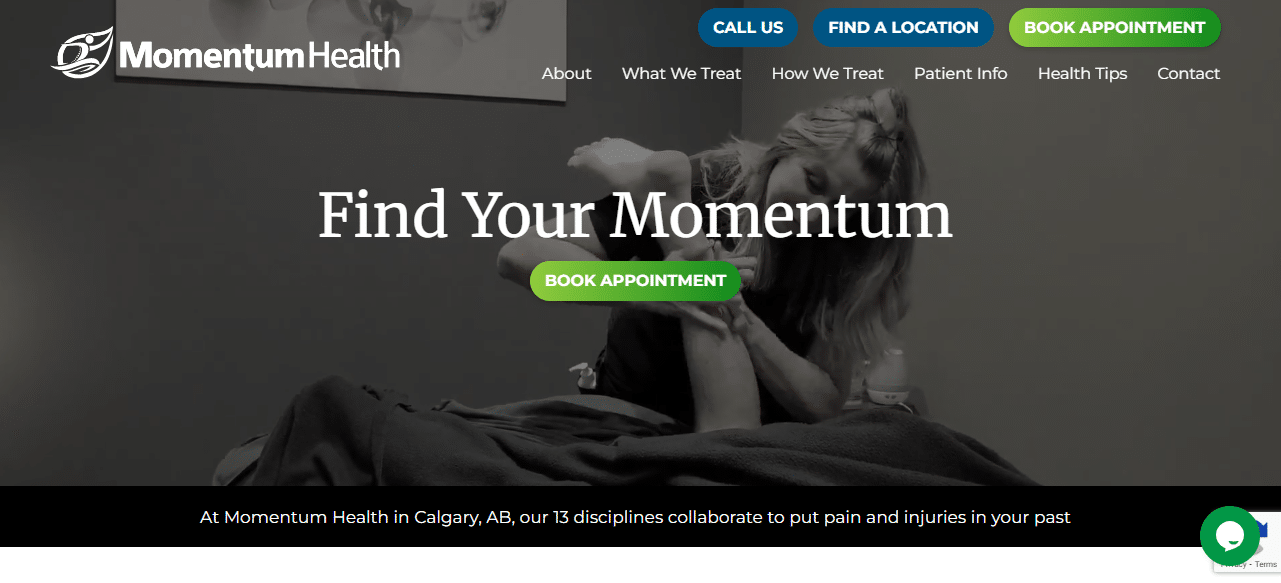
Calls-to-action (CTAs) guide prospective patients toward taking the next step. Without clear direction, many people simply read your content and leave, even if they’re interested in care.
Examples of Effective PT Clinic CTAs
| CTA Type | Explanation |
|---|---|
| Appointment-Based CTAs | Prompts such as “Schedule Your Evaluation Today” or “Request a Consultation” make the path forward obvious and immediate. |
| Educational CTAs | Offering downloadable guides or resources helps nurture patients who are still researching their symptoms. |
| Service-Specific CTAs | Links like “Learn More About Knee Pain Treatment” allow users to explore the exact type of care they need. |
| Visual Button Design | Buttons should stand out through color contrast and placement at the top of the page, mid-page, and again at the bottom. |
| Follow-Up Placement | Adding CTAs after blog posts and within email sequences encourages action when interest is highest. |
18. Use Patient-Friendly Video Content
Video is one of the most effective ways to educate, build trust, and showcase your clinic’s personality. Patients feel more comfortable when they can see and hear the clinicians they may work with.
High-Performing PT Video Styles
| Video Type | Explanation |
|---|---|
| Exercise Tutorials | Demonstrations of stretching routines, mobility drills, or strengthening exercises help patients understand your clinical approach. |
| FAQ Videos | Addressing common questions such as “How many sessions will I need?” or “What should I wear to PT?” reduces anxiety before the first visit. |
| Clinic Tours | Short walkthroughs help new patients visualize the space and feel more at ease before arriving. |
| Condition Explainers | Simple explanations of back pain, shoulder impingement, or knee problems build authority and educate viewers. |
| Platform Adaptation | Short clips work well for TikTok and Instagram Reels, while longer videos (three to five minutes) fit YouTube and your website. |
19. Track Your Marketing Metrics
Measuring your marketing performance ensures you’re investing in the tactics that bring in real patients and eliminating those that waste time or resources. The strongest clinics review their data monthly and make small adjustments that lead to steady growth.
Important Metrics for PT Marketing
| Metric Category | Explanation |
|---|---|
| Website Traffic | Shows how many people find your clinic through Google, articles, or direct search. |
| Lead Volume | Tracks how many patients filled out forms, called, or requested appointments. |
| Conversion Rate | Measures how many leads actually schedule evaluations, highlighting the effectiveness of your website and intake process. |
| Cost per Lead / Cost per Eval | Helps determine whether PPC, social ads, or print campaigns are producing ROI. |
| Patient Source Tracking | Reveals whether your growth is coming from SEO, referrals, workshops, ads, or past-patient reactivation. |
Clinics usually monitor these metrics using tools such as Google Analytics, call tracking platforms, CRM systems, or the Practice Promotions Marketing Dashboard.
20. Outsource to a PT-Focused Marketing Agency

Many clinics reach a point where managing marketing internally becomes overwhelming. Outsourcing to an agency that specializes in physical therapy ensures your marketing is executed consistently and strategically by people who understand the clinical landscape.
What to Look for in a PT Marketing Partner
| Agency Feature | Why It Matters |
|---|---|
| PT Industry Experience | Agencies that work exclusively with PT clinics understand your patient journey, referral patterns, insurance challenges, and competitive landscape. |
| Integrated Services | A combination of SEO, website design, PPC, social media, email marketing, and print campaigns ensures your branding and messaging stay consistent. |
| Strong Case Studies | Demonstrated success, such as improved patient volume, better rankings, or stronger referral relationships, shows the agency can deliver results. |
| Clear Reporting | Transparent dashboards and monthly reviews help you track growth and understand exactly what’s working. |
| Scalable Systems | The best agencies support clinics as they grow, whether you’re adding therapists, opening new locations, or expanding service lines. |
A natural next step is to schedule a conversation with a PT-focused marketing partner who can audit your current strategy and create a plan tailored to your clinic’s goals.
If you’re ready to see what this could look like for your clinic, schedule a consultation or browse the Practice Promotions portfolio for real examples.
How Can Practice Promotions Help with Physiotherapy Marketing?
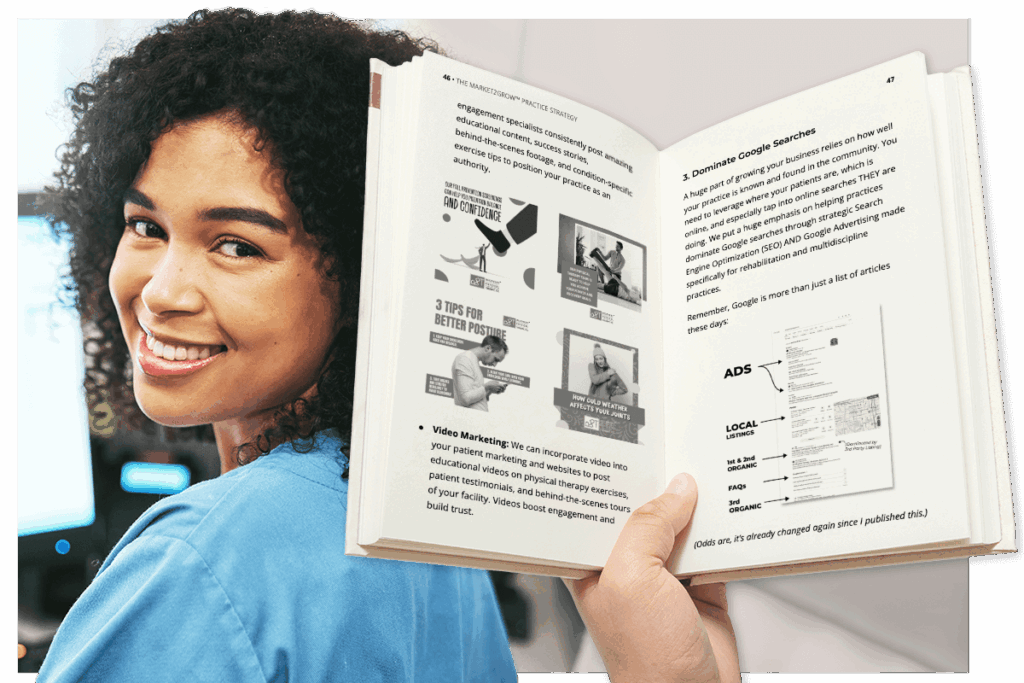
Practice Promotions specializes in helping physical therapy clinics grow faster and attract more of the right patients through a complete, done-for-you marketing system.
Instead of managing fragmented tools or guessing what works, clinics get a proven framework combining website design, SEO, Google Ads, email marketing, social media, and direct-mail campaigns – all tailored specifically to PT practices.
If you want predictable new evaluations, a stronger digital presence, and a marketing partner who understands the PT industry inside and out, you can book a free marketing demo to see what’s possible.
Final Thoughts
Growing a physical therapy clinic in 2026 requires more than one good tactic. The most successful practices employ an integrated strategy, combining strong branding, a high-converting website, local SEO, digital advertising, social content, email nurturing, and consistent patient reactivation. When these pieces work together, clinics experience steady patient flow, stronger community presence, and long-term stability.
Explore the Ultimate PT Marketing System
Frequently Asked Questions
How do I market my PT clinic without physician referrals?
Direct access plays a major role. Strong local SEO, symptom-focused content, and targeted Google Ads help patients find you on their own. Partnerships with gyms, schools, coaches, and community organizations expand your reach beyond traditional medical referrals.
What’s the most cost-effective marketing channel for PT clinics?
Local SEO and email marketing usually deliver the highest long-term ROI because they continue generating patient demand without ongoing ad spend. For clinics that want predictable growth, Google Ads offer the clearest “spend X to get Y new evals” model.
What if I’ve been burned by marketing agencies before?
It’s more common than you think. The key is choosing a partner that provides transparent reporting, measurable data, and clear accountability, not vague promises. Reliable marketing is never guesswork; it’s systems, tracking, and consistency.
Should I hire a PT marketing agency or try to do it myself?
If marketing isn’t your full-time job, outsourcing saves time and produces stronger results. At Practice Promotions, we know the PT landscape, understand compliance, and already have systems built to generate new evaluations quickly.
How long does it take to see results?
Timelines vary by channel. SEO usually takes 6–12 months to show strong results. Google Ads can deliver new evaluations in 2–3 months. Email and direct mail can drive immediate engagement when the content is relevant and consistent. Websites only generate results when supported by ongoing traffic and promotion.
Should I use retargeting in my Google or Facebook ads?
Retargeting is effective in many industries, but in healthcare, it creates serious HIPAA compliance risks. Any remarketing tactic that targets individuals based on past website visits is considered a violation. A PT-specialized marketing partner can help you run high-performing campaigns safely without risking penalties.
Your Next Step
If you’re ready to grow your patient volume, strengthen your online visibility, and build a marketing system that works every month – not just during busy seasons – the next step is simple. Book a free strategy call to see exactly what’s holding your clinic back and what a custom marketing plan could look like.
— Neil Trickett, PT
Founder & CEO, Practice Promotions