








Clinic owners are resourceful. You solve problems every day and lead teams. You manage schedules, paperwork, patient care, and operations. So when you see Google Ads with its simple setup screens and friendly prompts, it looks like something you can handle on your own.
Google Ads may appear simple and automated at first, but in reality, it requires a clear strategy, a structured setup, and ongoing attention to perform effectively for clinic owners.
This blog gives you the full view of what DIY campaigns really involve. You will understand where clinics run into trouble, what a strong campaign actually requires, and how to decide whether self management is the right fit for your goals.
Table of contents
- Why So Many Clinic Owners Try to Manage Google Ads Themselves
- The Biggest Challenges of DIY Google Ads for PT Clinics
- What a Successful Google Ads Campaign Actually Requires
- Why Many Clinic Owners Say They Wish They Had Hired a PT Specific Google Ads Agency First
- How Much Time DIY Google Ads Really Require
- Case Studies: What Happens When Clinics Move Away from DIY Ads
- Should You Keep Managing Google Ads Yourself?
- Final Takeaway: Google Ads Can Work, but Not on Autopilot
Why So Many Clinic Owners Try to Manage Google Ads Themselves

Every owner starts with good intentions. You want more evaluations, steady volume, and predictable new patient flow. And at first, DIY ads feel like the fastest path to that growth.
Most owners take the leap for a few familiar reasons.
- You want to save money; It feels logical to avoid agency fees and do it yourself.
- You want to stay in control; If you are hands-on by nature, DIY feels empowering.
- You trust Google’s automated setup; The platform keeps telling you that Smart Campaigns are easy (hint: they aren’t. But we’ll get to that later).
- You want immediate visibility; Ads are one of the fastest ways to be seen by people who are actively searching.
- You believe Google will guide you correctly. The interface makes it sound like a friendly partner guiding your clinic toward success.
But here is the catch.
Google Ads shows you the surface. It hides the parts that actually determine results. That is what turns DIY ads into a challenge for clinics.
The Biggest Challenges of DIY Google Ads for PT Clinics

When clinics try to run Google Ads without training or experience, the same problems show up again and again. The documents you provided highlight these challenges clearly, and the patterns are universal.
This section is built around what clinic owners often discover the hard way.
1. Uncontrolled Ad Spend
The simplest DIY mistake comes from the lack of daily monitoring. Google Ads spends your budget whether leads come in or not. If a campaign is flawed, your money keeps flowing out with no benefit.
What this looks like in the real world:
- Budgets max out every day without results
- You pay for clicks from outside your service area
- You see fewer evaluations even with higher ad costs
Without tight monitoring, even the best setup loses money quickly.
2. Compliance Risks
A BIG RISK to DIY Google Ads is that they must follow legal guidelines. This includes how patient information is collected, how tracking tools operate, and how landing pages are built. DIY campaigns often miss important compliance details.
This can result in:
- ad disapprovals
- wasted budget
- account suspensions
- risk to patient privacy
For example, due to HIPAA, you are NOT allowed to retarget patients online with Google Ads.
Also, if you offer alternative treatments like stem-cell therapy, you are NOT legally allowed to run any Google Ads at all, for ANY condition! There are ways of getting around this, but this is a detail that only a PT-specific Marketing Agency would know.
Compliance is not optional in healthcare marketing. Doing your Google Ads yourself may get you in big trouble.
3. Overuse of Broad Match Keywords
Broad match keywords may seem appealing because they promise maximum reach, but reach is not the goal for PT clinics. What matters is attracting qualified patients…people who are actively searching for the specific care your clinic provides. Broad match often triggers irrelevant searches, which can waste your budget and reduce campaign performance.
Common issues with broad match keywords:
- Ads showing for unrelated searches: weight loss programs, athletic trainers, gyms, massage products
- Clicks from outside your service area
- Higher ad spend without a corresponding increase in booked evaluations
- Difficulty determining which keywords actually drive patient conversions
Examples of risky broad match searches that might trigger your ads:
- Physical therapy near me → could trigger searches for courses or PT jobs
- Back pain exercises → may attract people looking for free advice, not treatment
- Rehab centers → could include unrelated facilities or locations outside your service area
- Personal training → targets fitness enthusiasts, not patients needing PT care
Better approach:
- Use phrase match or exact match keywords to narrow focus
- Combine with a well-maintained negative keyword list to block irrelevant traffic
- Focus on high-intent search terms like post-surgery physical therapy [city] or sports injury PT [location]
4. Another DIY Mistake: Following Google’s Recommendations
Using broad match without controls is one of the fastest ways DIY campaigns lose money. Targeted keyword strategy paired with negative keywords ensures your ads reach the right patients, increasing conversions and reducing wasted spend.
Google pushes alerts that say you should broaden your targeting, raise your budgets, or switch to automation. Those recommendations increase Google’s revenue more than your res ults. Just to make it clear… Google wants you to SPEND MORE MONEY for results that just aren’t worth it.
When owners accept these suggestions without analysis, they usually end up with:
- A diluted keyword strategy
- Too many AI features
- Ads showing for unrelated services
- Wasted spend on searches that never convert
Google wants volume and for you to spend as much money as possible. Clinic owners need qualified patient leads. These goals are not the same.
5. Poor or Missing Conversion Tracking
One of the biggest reasons DIY Google Ads fall short is poor or incomplete conversion tracking. When tracking is unclear, it becomes nearly impossible to tell what is actually driving patient growth.
A few reminders worth repeating:
- Clicks ARE NOT patients
- Website visits are not evaluations
- Call volume without context does not equal success
Many DIY clinics track general actions instead of real outcomes. This often includes:
- Page views counted as conversions
- Button clicks with no follow-up
- Phone calls logged regardless of length or quality
The result is inflated metrics that make campaigns look productive while patient volume stays the same.
When conversion tracking is missing or inaccurate, clinics lose visibility into what matters most:
- Which keywords lead to real patient conversations
- Which ads result in booked appointments
- Which services actually drive demand
- Where ad spend is being wasted
This lack of clarity creates ongoing problems:
- Budgets continue flowing into underperforming campaigns
- Weak keywords stay active because nothing appears broken
- High intent opportunities are overlooked
- Growth decisions are based on assumptions instead of data
Accurate conversion tracking connects ad activity to real patient outcomes. Without it, Google Ads becomes a system that measures motion instead of progress.
6. Another DIY Mistake PT Owners Make: No Negative Keywords
Negative keywords are essential for clinics. They prevent your ads from showing for searches that are irrelevant or unlikely to convert, saving your budget and ensuring your campaigns target only potential patients. Without them, your ads can appear for nearly every variation of your main keyword, which can quickly become costly.
The consequences of not using negative keywords effectively include:
- Paying for job seekers searching for “physical therapy jobs near me” (If you want to target job seekers, you should run a separate ads campaign just for that)
- Paying for gym members or fitness enthusiasts looking for “personal training”
- Paying for unrelated services, like massage therapy unrelated to rehabilitation
- Showing ads to students looking for “PT schools” or “physical therapy courses”
Adding negative keywords keeps your campaigns focused, prevents wasted spend, and improves the quality of traffic your ads attract.
Examples of Negative Keywords PT Clinics Should Consider:
- Jobs/Careers: Jobs, Careers, Hiring, Internship
- Education/Training: School, Course, Degree, Certification, Classes
- Fitness/Personal Training: Gym, Personal Trainer, Mobility, Bootcamp
- Products/Equipment: Exercise Bands, Massage Gun, Foam Roller
- General Info/Free Advice: Tips, At-Home Exercise, Consultation
By carefully maintaining and expanding a negative keyword list, clinics avoid irrelevant clicks, reduce wasted budget, and ensure every ad impression is more likely to reach a patient who is ready to book an evaluation. Many DIY campaigns fail to use negative keywords correctly, which is one of the most common reasons for underperforming ads despite consistent traffic.
7. Underperforming AI Campaign Types
Smart Campaigns and Performance Max tools are popular because they seem easy to set up and promise quick results. But in reality, they are designed primarily for e-commerce and general consumer businesses, not healthcare.
Healthcare marketing requires:
- Specific targeting to reach patients actively seeking treatment
- Precise messaging that addresses patient concerns and builds trust
- Strict compliance with privacy and advertising regulations
Knowing what to do about AI campaign types is a challenge for many clinic owners. These automated tools take control away from you—they limit visibility into search terms, ad placements, landing page performance, and ad variations. The result is campaigns that appear active but offer little insight into what’s actually driving patient inquiries.
Google’s platform frequently prompts recommendations like increasing budgets, enabling automation, or expanding targeting. While these suggestions may feel helpful, they are designed to maximize Google’s revenue, not your results. Following them blindly can quickly dilute your keyword strategy, inflate ad spend, and deliver clicks from people who are not qualified patients.
For clinics, the question isn’t whether AI campaigns can run; they can, but whether they run effectively. Without careful oversight and strategic adjustments, these automated campaigns often waste money while giving the illusion of progress. In healthcare, relying on AI without expert management is a shortcut that rarely pays off.
What a Successful Google Ads Campaign Actually Requires

Once you understand the common pitfalls, the next step is seeing what a high performing campaign includes. This is where most DIY setups fall short.
A strong campaign is never random.
It is structured, layered, and intentional.
Here are the foundations you need:
1. A Multi-Layered Structure
One of the biggest differences between high performing Google Ads accounts and struggling DIY campaigns is structure. Strong results do not come from a single campaign with dozens of mixed keywords. They come from a clear, intentional setup where every piece has a specific role.
Successful accounts are built in layers. Each layer adds clarity, control, and performance insight. When structure is missing, ads compete with each other, budgets get diluted, and it becomes difficult to understand what is actually working.
A well structured Google Ads account typically includes:
- Separate campaigns organized by clinic location or primary growth goal
- Focused ad groups within each campaign that target one service or condition at a time
- High intent keywords that match exactly how patients search for care
- Relevant landing pages that align directly with the keyword and ad message
This structure allows you to control budgets at the right level, write more relevant ads, and send patients to the most appropriate page based on their search.
Example for Trilogy PT:
Instead of running one broad campaign, the account is broken down by location. Each location has its own campaign so performance and spend can be managed independently.
Within each location campaign, ad groups are built around intent:
- General physical therapy
- TMJ treatment
- Vestibular therapy
- Pelvic health
Each ad group contains tightly themed keywords. For example, general PT keywords might include:
- Physical Therapy Buffalo
- Amherst physical therapy
- physical therapy clinics
TMJ specific ad groups focus only on searches related to that condition, such as:
- TMJ physical therapy
- myofascial release TMJ
Every ad group sends traffic to a matching landing page. Someone searching for TMJ treatment is sent to a TMJ specific page. Someone searching for general physical therapy is sent to a general PT page. This alignment improves relevance, lowers wasted spend, and significantly increases conversion rates.
A multi layered structure also makes ongoing optimization easier. You can see which services perform best, adjust budgets by location or condition, and scale what is working without disrupting the entire account. This level of control is almost impossible to achieve in loosely structured or automated campaign setups.
2. A Patient Intent Keyword Strategy
Your keywords need to match how patients actually search. People in pain are looking for solutions, not generic treatment names. High-intent keywords focus on what patients want and how they describe their issues, rather than broad or vague terms.
High-intent keywords target:
- Specific conditions: “TMJ physical therapy [city]”, “vestibular rehab [location]”, “pelvic floor therapy [city]”
- Post-surgical needs: “knee replacement PT [city]”, “hip replacement rehabilitation [location]”, “rotator cuff surgery recovery [city]”
- Mobility or functional limitations: “difficulty walking after stroke [city]”, “balance therapy for seniors [location]”, “gait training physical therapy [city]”
- Pain patterns: “chronic back pain PT [location]”, “neck pain therapy [city]”, “sciatica treatment near me”
- Location-based searches: “physical therapy in Buffalo”, “best PT clinic Amherst NY”, “downtown Buffalo sports rehab”
For example, Trilogy PT structures campaigns around specific conditions. Instead of targeting “physical therapy,” they create campaigns for:
- Parkinson’s disease rehabilitation: Keywords include “Parkinson’s physical therapy,” “fine motor therapy for Parkinson’s,” and “Parkinson’s balance therapy [city].”
- TMJ disorder: “TMJ physical therapy near me,” “jaw pain treatment [location],” “TMJ exercises PT.”
- Vestibular disorders: “vertigo physical therapy,” “balance therapy for dizziness [city],” “vestibular rehab PT clinic.”
The more narrowly focused your keywords are on patient intent, the higher your conversion rate will be. Patients respond to language that mirrors their own concerns, and when they find what they’re searching for immediately, trust and engagement increase. By building campaigns around precise, condition-specific search terms, your ads reach the right patients at the exact moment they are ready to take action.
3. Condition-Specific Pages
Your homepage cannot support every keyword or every patient intent. It is designed to introduce your practice, not to convert someone searching for a very specific problem. When all ad traffic is sent to a general page, potential patients are forced to search for answers, and many leave before taking action.
High performing Google Ads campaigns send users to landing pages that speak directly to why they searched in the first place. These pages are built around one condition, one service, or one primary goal. When patients immediately see language that matches their concern, trust increases and hesitation drops.
Strong landing pages are designed to remove friction and guide the next step clearly. They typically include:
- Simple explanations that address the patient’s problem in plain language
- Clear benefits that explain how your clinic can help and what makes your approach different
- Strong calls to action that tell visitors exactly what to do next
- Quick load times that prevent drop off on mobile devices
- Direct and easy paths to schedule an appointment or request a call
Take a look at Trilogy PT’s website:
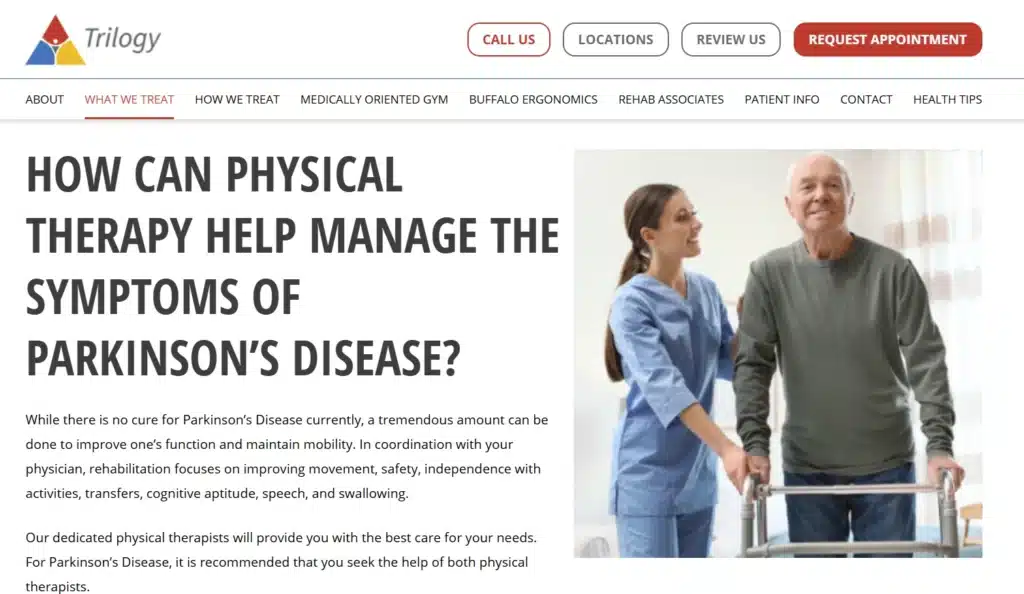
This clinic has their own page for Parkinson’s disease and details on how it can effect both gross and fine motor skills. They also provide information on how to treat and manage the conditions that come along with Parkinson’s.
4. Accurate Conversion Tracking
If you are running Google Ads, you need to know what happens after the click. Not just that someone visited your site or made a quick call, but whether that interaction turned into a real patient opportunity.
This is where many DIY campaigns break down. Most self managed setups track surface level actions such as page views, button clicks, or very short phone calls. Those numbers can look impressive, but they rarely reflect actual patient intent. A click is not a scheduled evaluation, and a brief call does not mean a qualified lead.
Accurate conversion tracking connects every meaningful action to its source. Each call and form submission is tied back to a specific keyword, ad, and campaign so you can see what is truly driving patient inquiries.
At Practice Promotions, we track verified and quotable leads. Using advanced call tracking and AI powered analysis, we review calls to confirm that they are genuine patient inquiries rather than wrong numbers or non patient conversations. This creates a level of clarity most clinics never have on their own.
With proper conversion tracking, you can:
- Identify which keywords generate real patient conversations
- Stop spending on search terms that do not convert
- See which services attract the highest intent traffic
- Shift budget toward ads and campaigns that consistently produce leads
Without accurate tracking, Google Ads becomes guesswork. With it, every decision is guided by real data and real patient outcomes.
5. Regular Optimization
Google Ads is not a one time setup. It requires continuous adjustment. Strong campaigns evolve every week.
Winning clinics commit to:
- Reviewing search terms
- Adding new negative keywords
- Adjusting budgets
- Testing new ad copy
- Analyzing patient intent trends
The more consistent your updates, the stronger your campaign becomes.
Why Many Clinic Owners Say They Wish They Had Hired a PT Specific Google Ads Agency First
Choosing who manages your Google Ads is not just a marketing decision. It directly affects patient volume, budget efficiency, and how confident you feel in your growth strategy. This is where working with a PT specific agency makes a meaningful difference.
Practice Promotions focuses exclusively on physical therapy and physiotherapy clinics. That specialization is not a tagline. It shapes every decision made inside your campaigns.
Here is what that focus delivers:
- Google Ads management for more than 270 PT clinics representing over 500 clinic locations across North America
- More than 30 million dollars in managed ad spend, providing real data on what works at scale
- An average cost per call under 50 dollars, achieved through tight targeting and consistent optimization
- A team of Google Ads PPC specialists who work only with PT and physiotherapy clinics every day
This depth of experience removes guesswork. Instead of testing theories, campaigns are built on patterns proven across hundreds of clinics. Keyword strategies reflect real patient search behavior. Budgets are allocated with confidence. Tracking is designed to measure genuine patient inquiries rather than surface level activity.
Working with a PT specific Google Ads agency also means staying ahead of platform changes. Google Ads evolves constantly, especially as AI continues to reshape paid search. A team that lives in this space every day is already planning for those shifts so your campaigns remain stable and competitive.
For many clinic owners, the realization comes later than they would like. Google Ads works best when managed by specialists who understand your industry, your patients, and your growth goals from day one.
How Much Time DIY Google Ads Really Require
Many owners believe Google Ads only needs attention once a week. In reality, successful campaigns involve a steady schedule.
1. Daily Monitoring
You must check your spend, search terms, and impressions. You must ensure nothing unusual is happening in your account. Even one day of poorly matched searches can burn a significant amount of budget.
2. Weekly Optimization
Each week you should review your keywords, edit your ad copy, add negative keywords, and check the performance of your landing pages. This weekly rhythm keeps your account aligned with patient behavior.
3. Monthly Strategy Adjustments
Monthly reviews help you identify long term trends. This is when you shift budgets, refine messages, adjust landing pages, and plan for seasonal changes. Clinics that skip monthly strategy work often plateau or decline.
Case Studies: What Happens When Clinics Move Away from DIY Ads
1. Prevail Physical Therapy
Before they hired Practice Promotions, Prevail relied on several Smart Campaigns that delivered inflated numbers without clarity. Their tracking counted clicks instead of genuine leads. They had limited insight into what was working.
But after hiring Practice Promotions, we restructured their Google Ads Campaigns! Prevail gained accurate call tracking, detailed keyword data, and clear visibility into every patient inquiry. Their conversion rate improved, click-through rate increased, and cost per patient dropped. They shifted from guesswork to reliable growth.
Now, check out their results:
| OLD Campaign | Practice Promotions | |
| Conversion Rate | 1.96% | 12.81% |
| Conversions | 6 | 292 |
| Cost per conversion | $113.24 | $33.06 |
| Impressions | 61,983 | 49,120 |
Key results
- Average cost per lead has been MORE than cut in half: from $113 to $33 with Practice Promotions
- Volume is way up – 292 patient calls vs only 6
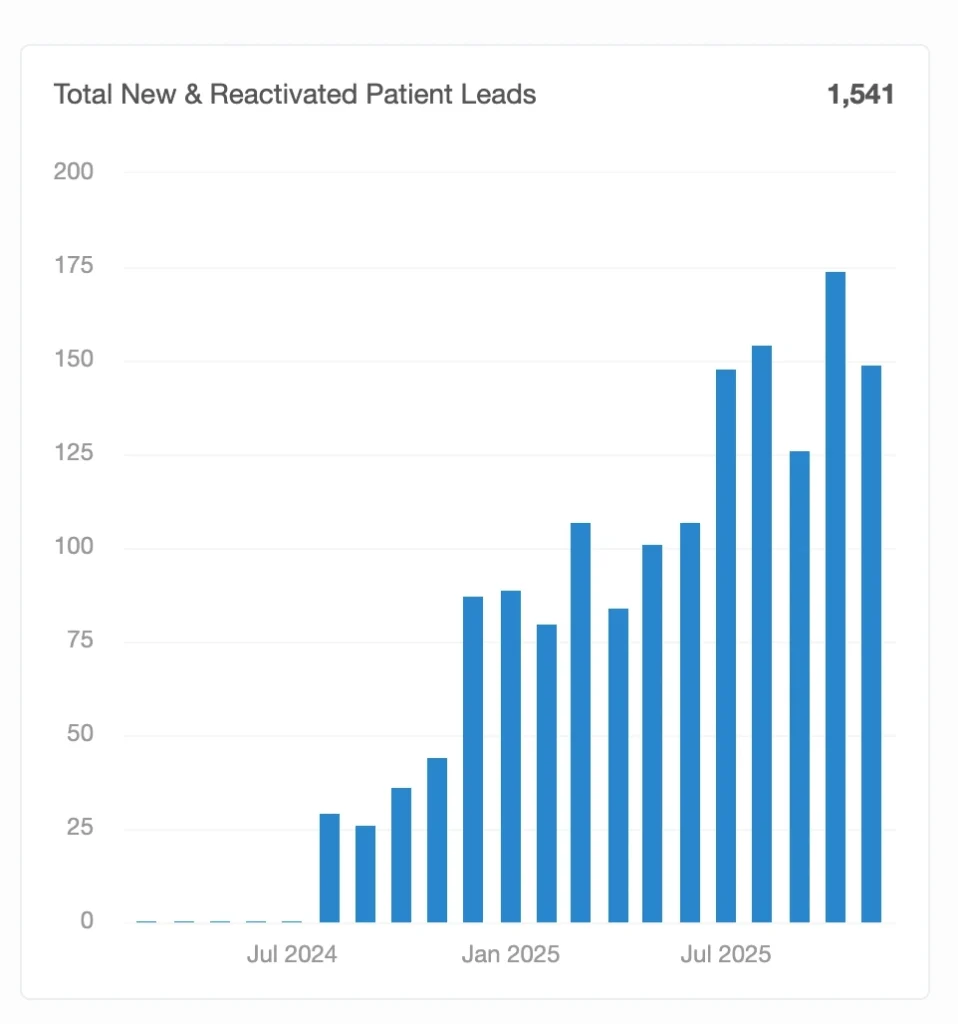
- 3x increase in patient calls – In November 2025, they got 149 new & returning patient calls, vs only 44 in November 2024
2. The Fitness LAB
Before hiring Practice Promotions, the Fitness LAB ran Google Ads campaigns that targeted all their locations at once. Their budget was stretched across a wide radius. They had no idea which clinic produced which lead.
Once they signed on with Practice Promotions for website design, SEO, and Google Ads services, we rebuilt their Google Ads Campaign!
We rebuilt the Google Ads with location specific campaigns and stronger tracking – and everything changed.
- Conversion rates multiplied!
- Cost per lead fell to just $29.66 per patient call
- They gained precise insight into each clinic’s performance, which means they can run Google Ads for the clinic locations that need it the most
These case studies show a clear pattern. Structure beats simplicity. Real tracking beats inflated metrics. Focused targeting beats automated setups.
Should You Keep Managing Google Ads Yourself?
Some clinic owners truly can succeed with DIY Google Ads. Self management can make sense if you are willing to invest the time, build the skills, and stay deeply involved in the platform.
DIY Google Ads may be a good fit if you:
- Have 5 to 10 hours each week to actively manage and review campaigns
- Understand keyword strategy and how patient intent differs from general search behavior
- Feel comfortable analyzing performance data and making decisions based on trends
- Can build, test, and optimize landing pages for conversions
- Understand healthcare compliance requirements and how they affect tracking and ads
- Are genuinely interested in learning how Google Ads will evolve as AI becomes more integrated into paid search, especially with major changes expected in the coming years
For clinic owners who enjoy marketing, data, and experimentation, this hands on approach can be both educational and effective.
However, DIY Google Ads becomes risky when the demands of the platform exceed the time or expertise you realistically have available.
DIY may no longer be the right path if you:
- Rely heavily on Google’s automation without fully understanding how it allocates spend
- Cannot clearly track actual patient inquiries from ads
- Have seen little to no improvement after months of effort
- Struggle to find time for daily monitoring or weekly optimization
- Feel unsure when reviewing search terms, keyword data, or performance reports
- Have a lingering sense that hundreds or even thousands of dollars have already been spent with little to show for it
This is often the point where clinics benefit from partnering with a PT-focused Google Ads agency that has a proven track record.
A specialized agency brings more than convenience. It brings experience at scale. When your campaigns are managed by a team that oversees more than thirty million dollars in ad spend for over two hundred successful physical therapy and physiotherapy clinics across North America, decisions are grounded in real data, not guesswork.
Working with a Certified Google Ads partner that focuses exclusively on PT, like Practice Promotions, means your campaigns are handled by specialists who work in this space every day. They understand patient search behavior and they understand compliance. They understand which strategies consistently produce qualified leads and which ones quietly waste budget.
Just as importantly, experienced PT Google Ads teams are already planning for how paid search will change as AI continues to reshape Google’s advertising ecosystem. Clinics that stay ahead of these shifts are better positioned to protect performance and maintain consistent patient growth.
Honest evaluation leads to better decisions. Whether you continue managing ads yourself or choose expert support, clarity is what ultimately drives results.
Final Takeaway: Google Ads Can Work, but Not on Autopilot
Google Ads remains one of the most effective growth tools available to physical therapy clinics when it is used correctly. It allows you to reach patients at the exact moment they are searching for care and gives your practice the ability to grow in a controlled, measurable way.
When built and managed with intention, Google Ads can help your clinic:
- Capture high intent searches from patients actively looking for treatment
- Increase new patient inquiries without relying on long waitlists or referrals alone
- Control where and how your marketing budget is spent
- Focus growth on specific services, conditions, or locations
- Track performance clearly so you know what is driving real patient growth
- Scale predictably as your clinic expands
However, Google Ads does not perform well on autopilot, especially in healthcare. Campaigns that rely too heavily on automation or simplified setups often lose focus quickly. Budgets get spread too thin. Ads begin showing for irrelevant searches. Tracking becomes unclear. Over time, clinics end up paying for activity instead of outcomes.
The risks of an autopilot approach:
- Wasted ad spend on broad or unrelated searches
- Inflated metrics that hide poor lead quality
- Limited visibility into which ads actually generate patients
- Missed compliance considerations that can create long term issues
- Stagnant performance that never improves month over month
Google Ads rewards clinics that stay engaged, review performance regularly, and make adjustments driven by data. Without that level of attention, even campaigns that started off strong can drift away from what actually works.
Practice Promotions is the PT-Specific Google Ads Agency that you’ll WISH you hired first! Here’s why…
- We run ads for 270 PT clinics, which equals 500+ clinic locations across North America
- We handle $30 Million in ad spend
- Our average cost per call is under $50
- Every single one of our Google Ads PPC specialists works only with PT or physiotherapy Google Ads
If you want to take the guesswork out of your campaigns, schedule a FREE strategy call with our team!
We can help turn your DIY Google Ads from a headache to a consistent source of new patient calls.