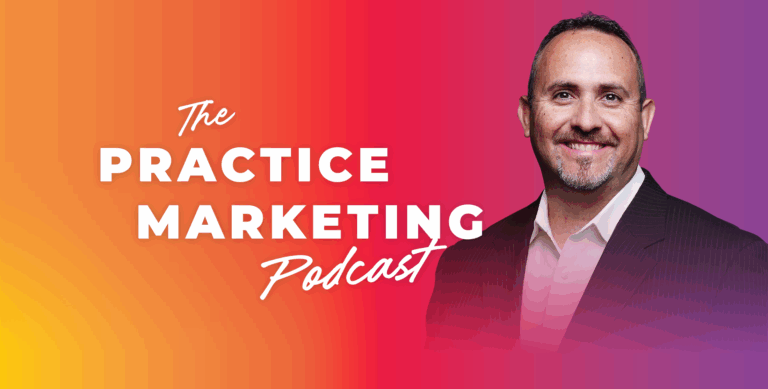
There is a point in many growing practices where hard work stops paying off. The owner is hustling harder than ever and the business still will not budge. If you are asking how to avoid burnout as a physical therapy practice owner, this episode starts with an idea that may change how you answer: it may not be a motivation problem, it may be a systems problem, and pushing harder only speeds up the burnout.
In this episode of the Practice Marketing Podcast, host Neil Trickett talks with Dr. Adam Robin, CEO of a three-location practice in Picayune, Mississippi, and a business coach with the Private Practice Owners Club, about getting off the treadmill. They cover why scalable systems matter, why Adam says to manage your energy instead of your time, how to find the one problem hurting your business most, and the mindset shift he wishes every owner would make. Neil also shares why he almost went bankrupt in his own practice.
Free Stuff!
✅ Download Practice Owner’s Manual by the Private Practice Owner’s Club. Want to simplify your practice management? Download this manual to get step-by-step checklists, designed for practice success. Click here to download.
📚 Claim Your Free Market2Grow Book by Neil Trickett, PT. What do the top 10% of PT clinics do to grow, hire, and profit better than anyone else? Learn when you claim your FREE Market2Grow book (for PT and Rehab owners only). Click here to claim yours: Market2Grow.Net
Episode Highlights
- → Why hustle stops working, and what replaces it
- → The power of systems and doing less
- → Energy management vs. time management, and delegating by energy
- → Finding and fixing your biggest pain point
- → Why an outside coach sees what you can’t
- → The mindset shift: your finances matter as much as your people
- → Where PT is heading: efficiency and cash-pay
Guest Bio
Dr. Adam Robin is the CEO and owner of Southern Physical Therapy & Pediatric Clinic, which Neil introduces as a successful three-location practice in Picayune, Mississippi, and a business coach with the Private Practice Owners Club, where Neil notes he coaches alongside Nathan Shields. The clinic’s website lists him as CEO/Owner, PT, DPT. Adam helps practice owners build a business that supports the life they really want, and in this episode he walks through some of the most common struggles he hears from the PT owners he coaches.
Key Takeaways for Practice Owners
- Hustle has a ceiling. Adam says hustle can carry a practice for a while, but eventually things become so complex that it stops moving the needle, which is where he sees owners get burned out.
- Start by doing less. Adam calls growth “a game of subtraction”: remove what no longer earns its place on your plate before you add anything new.
- Manage energy, not just time. Adam says things changed for him when he stopped managing his time and started managing his energy, and he suggests putting a dollar sign next to what makes money and a negative sign next to what drains you.
- Fix the biggest pain first. His rule for where to start: tackle the problem that is costing you the most sleep at night.
- Get objective on money. Adam says finance is usually the first challenge owners face, and that tracking the numbers beats making emotional decisions.
- Bring in an outside eye. Neil says you can’t be the expert yourself, and that people outside your business can see what is right in front of your face.
When Hustle Stops Working: How to Avoid Burnout as a Physical Therapy Practice Owner
Neil asks Adam what brings practice owners to him for business advice, and Adam says the answer is a very obvious one: owners lack scalable business systems inside their organization. Anyone who has owned a practice for a couple of years knows what it is like to hustle and grind, he says, getting new patients and getting things done through effort and energy.
“Eventually things become so complex that hustle won’t move the needle for your business anymore.” — Adam Robin
That, Adam says, is usually where he sees owners getting burned out and frustrated, working too many hours, and sacrificing their health and their time with family. It is also when they start looking for new strategies to grow. Neil agrees that this is the law of business: there is only so far your own hustle can go. To do more you need people on your team, and for them to work well together you need systems. Neil adds that the complexity of the systems changes as you scale, both in his practice and at Practice Promotions.
Neil then asks what Adam says to owners who have that aha moment. Adam answers that the owner has to be ready for change, and that change is hard because what got you to where you are is usually a lot of hard work. People may think that hiring an outsourced solution, or someone like him, will fix everything, he says, but what he is really looking for is not working less hard. It is taking the energy you already have and pointing it in a different direction.
Systems and Doing Less
Adam’s first step is a surprising one. Growing the business is not about doing more stuff, he says, and he used to tell himself the opposite: if he did more things, more things would get done.
“The first step is actually doing less: recognizing what is currently on your plate that no longer deserves to be there.” — Adam Robin
Adam says to take the things that no longer move the needle for you, bottle them up, and build a delegation strategy around them. “The game is about subtraction,” he says, so that you can step into something new. Do less first, he says, so that you can do something different instead of doing more.
Neil says the common sense of this is not so common, and that he did not know it growing up, when he assumed that growing a business was just about working hard. Adam explains why owners get stuck. We fill our schedules with busy work, he says, things we have already mastered and that are easy to get done, and we leave no room for what he calls cognitively intense, challenging skill development work. In his view, that skill development is what lets you elevate your skills, implement systems, and actually move the needle.
Neil adds that this was true for him too. It took him a while to be okay with making time to think, to do the higher-level brainstorming, because he always felt he should be busy, and that time would get eaten by the many things clinic owners have to handle. He says it is a skill that is learned, and that he still struggles with it sometimes.
Then comes the common pushback, which Adam raises himself: “How am I supposed to do more stuff? I don’t have any time. How am I going to hire a coach?” His answer is that a full plate is the symptom of the real problem, not the real problem. Neil says he has had business coaches over the years too, and that you have to realize business coaching and implementing what you learn is itself an important part of growing the business, even though it takes time.
Energy Management Over Time Management
When Neil asks what Adam says to an owner whose practice is growing but who never feels they have enough time, Adam points to a distinction.
“There’s a difference between having no time as a circumstance of your situation versus being the designer of your schedule.” — Adam Robin
Part of being a CEO, he says, is being the designer of where you spend your time. His suggestion is a simple calendar audit. Look back over the last few weeks and write down everything on your calendar and your to-do lists. Then put a dollar sign next to the things that actually make you money and a negative sign next to the things that drain your energy and do not move the needle. Fill your calendar with the money-making things, he says, and find a way to get rid of the rest. The space that opens up is what lets you step into something new, and he describes it as a series of subtractions over and over that helps you grow as a leader.
Neil adds a scheduling tip from his own experience. Many owners are still treating patients, he says, and carving out business time in sporadic 45-minute gaps between patients makes it hard to switch gears. He has seen owners succeed by blocking their time instead, for example patient care from 8 a.m. until 11, then a three-hour block to work on the business.
When Neil asks about owners who feel burned out and “running on empty,” Adam says it comes back to the same conversation. A lot changed for him, he says, when he started managing his energy instead of his time. He suggests adding one more label to that list of activities: which of these things are really exciting and fill your cup? He compares it to taking kids to Disney World. They don’t have to be talked into being excited when they wake up, he says, because it is natural. Some things on your plate do that for you, Adam says, while a lot of other activity does the opposite, draining your energy and distracting you from your purpose and passion. Getting rid of what no longer makes money often means getting rid of what drains you, too, and he says that can help you reignite your passion and remember why you are doing what you do.
Neil builds on that with delegation. A lot of burnout, he says, comes from having so many things on your plate that you grasp at straws, and some of that is on us because we become the bottleneck and are afraid to hire the right person or to train work away to someone else. People have different personalities, he says. Some love doing the same organized, methodical task over and over, which is the kind of person you want in billing, while others are creative and cannot stand repetition, which may be your marketing person. If you are an owner who hates doing something over and over, such as the books, Neil says to delegate it, so you have time for the work that brings you joy.
Neil then asks where an owner with big goals should start. Adam says one of the greatest joys of his life is helping people recognize what they really want, because we are used to naming what we don’t want. He says it takes intentionality, and what helped him was asking, “What would excite me?” with a magic wand and three wishes, as in Aladdin. Tying the answer to feelings of excitement helped him paint a clearer picture of what he wanted from his business. Neil recommends The 4-Hour Work Week by Tim Ferriss for the same purpose, and says the practice should be the vehicle that helps you achieve what you want in life, not a chain.
Find and Fix the Biggest Pain Point
For owners with fires burning everywhere, Neil asks where to start diagnosing what is broken. Adam says there is a never-ending list of problems to solve in any business, so the question is how to prioritize. His answer is to tackle the one causing the most pain.
“Stop making emotional decisions and get objective.” — Adam Robin
Which problem is really causing you to lose sleep at night, he asks, whether it is anxiety, feeling lost, or feeling hopeless? Tackle that one first, he says, because solving it can open up the greatest amount of freedom and bandwidth on your schedule.
Adam also asks owners to look at three core areas of the business. The first is how you get business in the door, which is marketing and sales. The second is operations: running things smoothly so patients get excellent outcomes and tell other people about you. The third is finance: how money comes in, how it is managed, and how it is spent. If you can narrow your pain down to one of those three, he says, you can zoom in on it.
For Adam, the emotional trigger was money. He says he often felt out of control with it, and he remembers working hard and wondering where the paycheck was. It came back to the fact that he did not understand money management very well, he says, and he had to get better at it. Neil says he sucked at accounting too, and that owners have to get better at finance. Asked what he sees most, Adam says finance is probably the first challenge people experience, especially while trying to grow, when operational inefficiency and a lack of solid systems make it feel like a lot of work for a little pay. Once that is solved and there is a plan to scale, he says, it becomes a leadership issue: how to recruit, retain, and hold people accountable while still supporting them.
Neil points out that none of this is anyone’s fault. We are not taught money management in high school, he says, and physical therapy school builds great clinicians without business or financial training, so when you suddenly run a business handling hundreds of thousands of dollars, it can leak out the bottom without you knowing where it goes. Adam compares financial controls to bowling bumpers: you need filters for your money because you will spend to the boundaries you set, and without tight boundaries on the financial touch points in the practice, a dollar can become five cents by the time it reaches the bottom.
Adam says the mistakes he sees are ones he and Neil made too: not tracking the statistics that actually drive profit. His example is the front desk person everyone assumes is great at collecting over the counter. When he asks whether anyone is tracking that, he says, the answer is always no. Getting granular and objective with your decisions steps you off the hamster wheel, he says, and your business does not understand emotion. It understands numbers.
Get an Outside View: Neil’s Near-Bankruptcy Story
Neil shares a story from about halfway through his practice career, when he says he almost went bankrupt. Patients were coming in and money was coming in, he says, yet he kept borrowing here and there until he was about $100,000 in the red, including borrowing from retirement while his kids were young. He calls it a low point. His business coach, he says, kicked him into gear, and when they looked at the metrics they found a severe billing problem.
Neil says his office manager, a fantastic employee and a good friend, was going through a personal financial crisis and began making mistakes in the practice, and he says he eventually had to let them go, which was very difficult. He then hired a billing and collections person to get caught up, and in three months, he says, they turned it around. They found things like checks in folders that had never been cashed. Later he held weekly meetings with the billing and collections team to find bottlenecks, and he says that by around 2006 or 2007 the practice was collecting 95% of what it made within two weeks.
Adam responds that what stood out was how Neil became a student of the problem, took ownership, and studied it instead of throwing money at it and hoping it would get better. Neil says sometimes you need a coach to put your nose in the book and show you where to put your attention. He says he is a big proponent of coaches and still has them now, because you can’t be the expert yourself, and there are people on the outside who can see what is right in front of your face and you are not seeing.
“There are people that can see things from the outside that can be right in front of your face that you’re not seeing.” — Neil Trickett
The Mindset Shift: Your Finances Matter as Much as Your People
Neil asks for the one mindset shift Adam wishes every practice owner could make. Adam says this is an easy one and goes on what he calls a bit of a soapbox. What he loves about the profession is that therapists care so much about other people, which is why patients in pain choose to come in three times a week. But giving so much of ourselves can mean sacrificing ourselves, he says, which is why he is a big believer in entrepreneurship and thinks the profession needs a little more boldness.
“Team satisfaction and patient satisfaction are so important in business, but what’s just as important is the financial success of your business.” — Adam Robin
He is clear that financial success is not more important than the team and patients, and not less important either. The owners who do well, he says, hold all three as equally important, and that is when everybody wins. He sees people struggle when that is out of balance, when the only thing that matters is patients and team and whether the practice makes money is treated as unimportant. Neil says he respects the therapist heart but that owners need to find the balance. Sometimes the business has to lean out and someone has to be let go, he says, and if finances are not weighed equally with empathy, the whole ship eventually goes down.
Where PT Is Heading: Efficiency, Pay-for-Performance, and Cash-Pay
Neil describes the industry as being at a pivot point. Fifteen years ago, he says, it was all physician referrals, and over time insurers have paid less while more of the cost comes from the consumer, pushing clinics toward direct-to-consumer, cash-based, or hybrid models. Neil does not think insurance goes away entirely.
When asked what thriving clinics are doing right, Adam says first that they have scalable systems and leadership in place, which he calls the foundation. Beyond that, he says, clinics need to be more efficient and stop contracting blindly with every insurance network.
“Only the people that actually pivot will make it into the future.” — Adam Robin
Adam lists several ways to become more efficient: automating through the EMR, AI and documentation, a virtual front desk instead of a traditional one, and teams overseas for the back office. He also says pay-for-performance compensation models are really big, and that clinics should be more selective about which insurance networks they join and offer more cash-pay services. With more competitive contracts and operational efficiency, he says, a practice can scale.
Neil says that if he were running a practice today he would be very hybrid. He says the key is knowing your worth: what it costs to run a visit operationally, then the profit margin you want on top. Adam adds that clinics setting the bar high on patient experience can command higher prices, especially when they pair it with branding and effective marketing that positions them as the go-to clinic. He also says the health and wellness industry is exploding, and Neil points to businesses like StretchLab and Massage Envy where people willingly pay out of pocket. Adam says practices with strong digital presences, including SEO and a website built to convert, tend to do better than budget-friendly practices that stay mom-and-pop. Neil closes by saying that being the go-to clinic means you do not have to accept every patient, and that the revenue and profitability that come with it let you retain staff and use pay-for-performance models.
About Southern PT & the Private Practice Owners Club
Southern Physical Therapy & Pediatric Clinic is the practice Dr. Adam Robin leads. According to the clinic’s website, it offers physical, occupational, and speech therapy and lists locations in Picayune and Wiggins, Mississippi, and Slidell, Louisiana.
The Private Practice Owners Club is a coaching and consulting community for practice owners, where Adam serves as a business coach. According to its website, it offers coaching, annual strategic planning, events, and a podcast.
FAQs
What is the biggest challenge Adam Robin sees in the practice owners he coaches? Adam says it is a lack of scalable business systems inside the organization. He says hustle works for a while, then things get too complex for effort alone.
How can a physical therapy practice owner avoid burnout? According to Adam, start by doing less: audit your calendar, drop what no longer moves the needle, and delegate it. He also suggests managing your energy instead of your time by spending more of it on the work that excites you.
What does Adam mean by managing energy instead of time? He says to list everything on your plate and mark which items bring you energy and which drain it, alongside which ones make money. He says getting rid of what drains you can help you reignite your passion for the work.
Where should an overwhelmed owner start? Adam says to tackle the one problem causing the most pain, the one costing you sleep at night. He also suggests narrowing it to one of three areas: marketing and sales, operations, or finance.
Why does Adam say finance is often the first challenge? He says that as owners try to grow, operational inefficiency and a lack of solid systems can make it feel like a lot of work for little pay. Neil adds that physical therapy school gives clinicians little business or financial training.
What is the number one mindset shift Adam wants owners to make? He says team satisfaction and patient satisfaction matter, and so does the financial success of the business. He says owners who do well treat all three as equally important.
Related Episodes & Resources
- Get Un-Stuck in Your PT Business w/ Jamey Schrier, PT: the closest match for owner burnout and systems.
- Time Management for Practice Owners w/ Jamey Schrier, PT: more on the schedule and energy theme.
- Build a 7-Figure Practice w/ Darryl Yardley: scaling with systems and leadership.
- Physical Therapy Marketing Services: how Practice Promotions helps owners build the marketing system that lets them work on the business, not just in it.
View Full Episode Transcript (click to expand)
[0:01] [Music]
[0:18] Neil: Hello and welcome to the Practice Marketing Podcast, highlighting successful strategies from North America’s fastest growing clinics and experts so you can learn from their wins and power your practice growth. Hi, I’m your host, Neil Trickett, CEO of Practice Promotions. And today we’re going to talk about: are you running on empty? We’re going to have 30 minutes with our PT business coach, Dr. Adam Robin. And Adam is the CEO of Southern Physical Therapy and Pediatric Clinic, a successful three-location practice in Picayune, Mississippi. And Adam is also a business coach with the Private Practice Owner’s Club, along with Nathan Shields. He helps practice owners build a business that supports the life they really want. And today he’s going to walk us through some of the most common struggles he hears from PT owners as he coaches them. And you’re really going to get a lot out of today’s podcast, so buckle in. Adam, welcome to the podcast.
[1:09] Adam: Neil, thanks for having me, man. I’m excited.
[1:14] Neil: All right, let’s do this. Let’s give some great value here to our listeners. And you definitely work with lots of different types and sizes of clinics and practice owners. So, as you’ve coached different practice owners over the years here, what are some of the most common reasons that you’ve heard or seen that practice owners come to you for business advice?
[1:38] Adam: Yeah, that’s a good question, and I can tell you it’s a very obvious answer. The biggest challenge that we see is practice owners lacking systems, or scalable business systems, inside their organization. And so we’re all familiar with this: if you’re an entrepreneur, if you’ve been a practice owner for a couple of years, you know what it’s like to hustle and grind and hustle up some new patients and get things done through just effort and energy. And that can get you success for a little while, but then eventually things become so complex that no more hustle will move the needle for your business anymore. And that’s usually where we see owners getting burned out, frustrated, struggling, working too many hours, sacrificing their health, sacrificing time with their family. That’s when they come and look for some new strategies to grow their business.
[2:28] Neil: Makes total sense, because that’s basically like the laws of business, right? There’s only so far that you can go with your own hustle and being able to wear all the hats. And then there comes a point where, in order to do more, you need to have people on your team, and in order for them to work properly together and everything happening within the organization, it’s about those systems. I learned that a long time ago in business training and have worked hard to put those in, and I’m still putting those in, both in my practice and definitely here at Practice Promotions as we’ve scaled. The complexity of the systems does change as you grow. So as they come to you with that and they have that aha moment, like, “Oh yeah, I do need to put more systems in,” what are some of the things that you might say to them as you’re working with them?
[3:16] Adam: Yeah. Well, as I’m working with them, that’s a good question. I think there has to be a change. The owner must be ready for a change, and change is hard, because what got you to where you are today is usually a lot of hard work. And people think that maybe hiring some type of outsource solution, or hiring somebody like me, is going to solve all their problems, right? So really what we’re looking for is not to work less hard, but to take the energy that they have and put it in a different direction. The first thing we have to do is recognize that growing the business isn’t about doing more stuff. I used to tell myself that if I do more things, then things will get done. And really the first step, after getting to that stage, is actually doing less. It’s recognizing what is currently on your plate that no longer deserves to be there, that no longer is moving the needle for you like it used to. We bottle those things up and we create a delegation strategy, right? So really the game is about subtraction, so that you can step into new things. It’s do less first, so that you can do something different, as opposed to doing more.
[4:46] Neil: That makes total sense. The things you say no to, right?
[4:51] Adam: 100%.
[4:55] Neil: And you know, it’s like business 101, but the common sense isn’t so common anymore. I didn’t know that growing up. I was like, “Yeah, growing a business is just about working hard, right?”
[5:06] Adam: Yeah. But the problem is we fill our schedules with a lot of busy work, things that we’ve typically mastered, things that are easy to get done. And we don’t leave room on our schedule for that cognitively intense, challenging skill development work. And that’s really the reason why we get stuck. So that you can elevate your skills and implement the systems, that’s the thing that will actually move the needle forward.
[5:36] Neil: Yeah, I love that. It’s a skill that’s learned, right? And I think it takes some time to be able to realize this. It was true for me, I don’t know about other people, but it took me some time to be okay with making time for myself to have the think time, right? The cognitive, higher-level brainstorming. I’d always feel like I should be busy during that time, I should be doing something. As we know in our clinics, there’s always a gazillion things to handle, and that time would get sucked up with those things to handle, versus realizing that it was quite important time for me to think outside the box or look at a problem and handle it that way. So I think it’s a skill that you learn over time, and sometimes I still struggle with it to some extent because I’m a just-get-things-done kind of person.
[6:36] Adam: One of the pushbacks you get from that is, “Well, how am I supposed to do more stuff? I don’t have any time. How am I going to hire a coach or do other things? My plate is already full.” And it’s like, well, actually that’s the symptom of the real problem, right? That’s not the real problem. That’s the symptom of the problem.
[7:01] Neil: Yeah. I remember I had different business coaches over the years too, and they’re great systems, right? But then you’re like, “Oh, now I’ve got to have time to put the system into place or follow all the things that you have to do,” and then something else crops up that you try to handle immediately. So you’re right, because of all the different things that we have to do, you have to realize that business coaching is an important part of growing your business, and obviously so is the implementation of the things that you learn, which does take some time.
[7:34] Adam: Absolutely.
[7:39] Neil: So as you’re talking to practice owners, what would you say to a practice owner that says, “My practice is growing, but I feel like I never have enough time”? What’s some of the advice that you give them?
[7:48] Adam: Yeah, I’d say it kind of bounces back to what I was just talking about. There’s a difference between having no time as a circumstance of your situation versus being the designer of your schedule, right? And so part of being a CEO is actually being a designer of where you spend your time. It’s really recognizing what’s currently on your plate. If we just sat and audited our calendars, if we actually sat and looked at the last few weeks and looked at all the to-do lists that we have and wrote those things down and became more objective with them. And even cooler, if we said, “Hey, what if we put a dollar sign by all the things that actually make us money, versus maybe we put a negative sign by the things that actually drain us of our energy and don’t really move the needle?” Let’s fill our calendar with only the money-making things, and let’s figure out a way to get rid of the things that are no longer serving us. And that new space on your calendar, once you’re able to get those things off your plate, that new space and bandwidth is the thing that allows you to step into something new, right? So going back, it’s really a game of subtraction first, so that you can redesign what’s on your plate. And it’s a series of that, over and over, that allows you to grow as a leader and move the needle in the business.
[9:22] Neil: Yeah, I love that. And I think, obviously, for a lot of practice owners out there, they’re still treating patients, right? So it’s carving out the time that’s needed to work on the business or the admin side of it, and then you’re still having to treat and hold that side of it too. I think one of the challenging things can be if, in carving out that time, you do it sporadically versus in blocks, right? If you have a 10 a.m. patient and then an 11:30 patient, you’re like, “Oh, well, I’m going to work for 45 minutes here and work on something in the business.” It’s hard to switch gears mentally and have enough time to focus there. Versus if you say, “Okay, I’m going to do patient care from 8:00 in the morning until 11, and then I’m going to have a three-hour block where I’m working on the business, and have a lunch or something like that.” That’s definitely one thing I’ve seen as a success for practice owners: when they’re a bit better at time blocking in their schedule.
[10:21] Adam: Right. 100%.
[10:26] Neil: 100%. So you also work with all kinds of practice owners, and I’m sure you have the practice owner that connects with you that’s burned out, right? They feel like they’re running on empty. So what are some of the things that you talk to them about to shift that mentality, that feeling of being burnt out, and the direction they can go?
[10:50] Adam: Yeah, it’s still coming back to the same conversation, right? A lot of things changed for me when, instead of managing my time, I started managing my energy. And going back to that list of things that we wrote down, all the things that you’re doing, another objective label that you can place on those is: which one of those things is really exciting? Which of those items really bring you energy, fill your cup, things that are fun? It’s kind of like if you ever take your kids to Disney World. When they wake up in the morning, they don’t have to get excited. They’re just excited, right? It’s not manufactured. It’s just a natural deal. Well, there are a lot of things on your plate currently that will naturally do that for you. The problem is there’s also a ton of activity that you’re currently involved in that does the opposite. It’s draining your energy. It’s distracting you from your true purpose and passion, and it kind of beats you up. It beats you down, right? So part of getting rid of the things that are no longer making you money is also getting rid of the things that are draining your energy. And once you redefine your schedule and you start doing the things that bring you energy, that can often be the thing that helps you reignite your passion and remember why you’re doing what you’re doing.
[12:11] Neil: I love that. Yeah. Focus on what gives you energy, right, and take away the things that drain your energy. And 100%, as we operate a business, as we operate a practice, we have so many things coming at us, and it can just layer on confusion. I think that’s where a lot of burnout comes from: so many things on your plate and you’re just kind of grasping at straws sometimes to handle what’s coming at you. But some of that is also back on us, because we become the bottleneck in our business and we’re afraid sometimes to hire the right person who could help us clear away a lot of that, which would allow us to move forward. Or we’re not giving it away, or training it away, to someone that we could delegate to within the business. And I like what you’re talking about, where you really look at the things that maybe don’t bring you joy that could be delegated to someone who likes that. I think a good example is that no one’s the same, right? Everybody’s different and everybody has different personalities. Some people love doing the same thing over and over again. They’re very organizational, very methodical. That’s the kind of person you want in a billing department, right? Someone who just loves running it like a machine. Some people really enjoy that. That’s why there are accountants in the world. And then there are people that love to be super creative and can’t stand doing the same thing over again, and that might be someone on your marketing side of things, because it can be very creative. So it’s also looking at the talent on your team and who’s good at doing what. If you’re a practice owner and you hate doing things over and over again, or having to do something with, I don’t know, the books, delegate that out, right? And that can bring you some more joy, because then you can work on the things that bring you joy with the time that you have. And then you were also mentioning before that as you work with clients, they may have certain goals that they want to go after or hit, but they really don’t have an idea where to start. So what do you typically coach someone on for that? What should they look at?
[14:30] Adam: Yeah. Where do you start? I think one of the greatest joys in my life is whenever I can help people recognize what they really want. We’re very used to recognizing all the bad things. It’s like, “I don’t want this. I don’t want this. I don’t want this.” There’s a skill that you must develop to start getting more clear on what’s most important to you in your life, and that takes intentionality. So I like to play the game of, I don’t know if you’ve read The 4-Hour Work Week. Who wrote that book? Do you remember that guy’s name?
[15:11] Neil: I read that one. The 4-Hour Work Week. It’s a great book.
[15:19] Adam: It’s a great book. But really what helped me was asking myself the question, “What would excite me?” If all things were true and I had a magic wand, I don’t know if you’ve ever seen Aladdin, if I had three wishes, what would excite me? What would make me feel excited? And when I started tying that into my feelings of excitement, I started being able to paint a clearer picture of what I really wanted out of my business. And I think that’s a really good place to start.
[15:48] Neil: That’s a great place to start. Yeah. And I think often we don’t take enough time to write what we want, right? The goals. And sometimes it can be even just about the business, right? We’re not taking enough time to write what we want to achieve personally. And I certainly have been this way too. I remember being in practice, and you just get stuck in the practice and you are chained, like the genie in the lamp you’re mentioning, right, to the practice. And the practice should really be the vehicle to help you achieve what you want to achieve in life.
[16:21] Adam: Totally. Totally. And so that’s just a different mindset altogether, putting you in the position of, “Hey, this is supposed to serve me and help me do what I want to do, serve people, have the freedom to be with my family, and have financial freedom and all those good things that come with a successful business.”
[16:42] Neil: So Tim Ferriss was the author of that book, The 4-Hour Work Week. For those who are listening, I think the first couple of chapters will help you start recognizing what you really want to get out of your business. Love it. Awesome. And so then, sometimes you’re going to have a practice owner you’re probably talking with who has a lot of fires happening in their business. Where could a practice owner start to diagnose what’s really broken in their business? Different areas, front desk, marketing, themselves, operations. What are some of the things that you try to coach people toward there?
[17:22] Adam: So this is another fun topic. What I like to ask is, because here’s the thing, there’s never going to be an end to the list of problems to solve in the business. You’re never going to get to the bottom of it, right? So how do we prioritize which ones we solve first? And here’s how I like to do it. The one that is causing you the most pain, that’s the one that I like to tackle first. Which one of these things is really causing you to lose sleep at night the most? And it’s usually some type of emotional pain, some type of anxiety, depression, or feeling lost or feeling hopeless. Which one of those is really gripping you? Let’s tackle that one first, right? I think that is the thing. If we can tackle that one, that will open up the greatest amount of freedom and bandwidth on your schedule. So that’s where I like to start.
[18:08] Neil: Okay. Awesome. Yeah, I like that.
[18:13] [Mid-roll ad for the Practice Promotions free practice marketing sample kit (practicepromotions.net/kit), about 18:13 to 18:52. Not transcribed.]
[18:52] Neil: And now back to the show.
[18:56] Adam: Another thing that I like to help practice owners look at is that in your business, right, there are really three core areas that you can put attention on. The first one is: how are you getting business in the door? So that’s your marketing and sales, basically, right? That can fuel your business. And then operations, right? So how are we running things smoothly in the office so we’re delivering excellent outcomes and patients are super happy and telling other people about us? That’s the operations side. And then third is the finance. So how are you bringing the money in, how are you managing it, how are you spending it?
[19:32] Neil: And so if you can kind of nail it down to one of those three areas, and then obviously what’s the biggest emotional pain, like you were saying, the biggest emotional pain for you or what’s keeping you up at night. Maybe it’s finance, right, and you’ve got to get your billing all together. Or maybe you realize, like, I sucked at accounting. That was never my forte in school or any of that kind of stuff. So it took some learning over time, and you have to get better at just finance, right, as a business owner.
[20:00] Adam: I often felt out of control with money, right? And that was, for me, the emotional trigger: “I’m working my ass off here and basically, at the end of the day, where’s the paycheck?”
[20:17] Neil: Correct.
[20:19] Adam: But that really came back to the fact that I didn’t understand money management very well, and then I had to get better at doing that.
[20:27] Neil: Yeah.
[20:29] Adam: And so whenever we say, “Oh, everything’s really chaotic,” it’s all chaotic, but if we can get down to, “If I just figured out this money situation, my life would be so much better.” Boom. Zoom in on finance. Let’s get busy, right? That’s kind of how I like to do it.
[20:45] Neil: Yeah. I’m curious, as you talk with people, is that something that’s more common? People have concern over finance, or is it the people in their business, managing people? What are you typically seeing?
[21:00] Adam: Yeah, I think finance is probably the first challenge that people experience, especially as they’re trying to grow, when there’s so much operational inefficiency and there aren’t a lot of solid systems in place to help you funnel profits down to the bottom line. It can feel like a lot of work for a little bit of pay.
[21:23] Neil: Yeah. And it’s because it’s true, right? Like you mentioned, there are holes in the bucket.
[21:30] Adam: So I’d say that’s probably a very early stage-one problem. They haven’t operationalized the model that makes them feel comfortable. And once that’s figured out, and assuming that you have a plan to scale and you feel good about your financial scale plan, it really just becomes more of a leadership issue, right? It’s the people component. How do I recruit? How do I retain? How do I get people? How do I hold them accountable and maintain good relationships, but also challenge people and support them? It’s like, how do I handle the people in the business? That becomes the next big challenge.
[22:07] Neil: Yeah, absolutely. That’s curious, because I kind of figured that, but it was good to hear it from you, that the finance side is something you commonly see. And I just think that’s, you know, not anybody’s fault. I mean, if you think about it, even in high school we’re not taught finance, right? We’re not taught money management at all. It’s something we have to figure out as we go. And then we go to physical therapy school and we become great clinicians, but we don’t get the business training. We don’t get especially the financial training. And then all of a sudden, wow, you’re operating this business with hundreds of thousands of dollars, and it’s easy for the money to come in in some instances, and then if you’re not managing it well, like you say, it just leaks out the bottom, right? And then you’re wondering, where’s it going? Why can’t I make more? I’d be making more if I was working at a hospital than at my own clinic, right?
[22:58] Adam: Yeah. You have to have those safety nets. It’s kind of like, I don’t know if you’re a good bowler, but if you’re a bad bowler like me, you’ve got to put the bumpers on, right? And you’ve got to have some filters for your money, because you know you’re going to spend to the boundaries that you set. And if you don’t have tight boundaries on these financial touch points inside the practice, you’re going to lose money here, lose money there, and by the time that dollar gets to the bottom, it’s not a dollar anymore. Maybe it’s only five cents. And then that impacts your household. And now we’re all in trouble, right?
[23:30] Neil: Yeah. Definitely. And so as you’re talking with practice owners, obviously there are different scales and different issues with businesses, but where do you commonly see businesses that are doing okay and then all of a sudden go off the rails? What do you suggest to get them back into control of their business?
[23:50] Adam: I’d say finance is probably a key. And I’m sure you’re aware, it’s the same mistakes I made and the ones that you made. We work really hard, we treat some patients, but we’re not tracking things appropriately. We’re not really measuring the statistics around the things that actually drive profits. Like that over-the-counter button: we all think, “Oh yeah, Miss Sally up front, she’s doing a really good job. She always collects over the counter.” And then my next question is, “Well, are you tracking that?” And the answer is always no. I’m like, well, you’re probably not doing as good a job as you think, and there’s actually a big needle mover there. That’s just an example, right? Getting more granular and objective with the decisions that you’re making takes you off the hamster wheel and gets you measuring what matters. Stop making emotional decisions and get objective. I think that’s where we have to reel owners in and get them into that world.
[24:48] Neil: Yeah. And the numbers help you make decisions, right? And sometimes they’re hard decisions.
[24:55] Adam: For sure. Exactly. Otherwise it becomes an emotional game. It’s like, “Oh, well, Neil’s real nice, so I’ve got to give him a break here.” It’s like, your business doesn’t understand that language. It understands numbers. And so we have to talk that language if we’re going to win that business.
[25:11] Neil: Yeah. I remember a time halfway through my practice career when we almost went bankrupt. It was awful.
[25:17] Adam: Totally. I’ve been there, man.
[25:21] Neil: And you’re treating patients, you’re seeing patients, the money’s coming in, and you’re like, “What the heck? Why are we struggling to pay expenses here?” And you’re having to keep borrowing a little bit here, borrow a little bit there, and before you know it, you’re $100,000 in the red. I remember that day. I was with my wife, we had really young kids at the time, and we were having to borrow some money from retirement, from the bank. That was really a low point for me in the business. But what happened was, my business coach kind of kicked my butt at that point. So, okay, come back in here, let’s get things figured out. And then we really looked at the metrics and we understood that we were having a severe billing problem, right?
[26:08] Adam: Totally.
[26:10] Neil: So what had happened is that we started to look, and our office manager, who was fantastic and even a good friend, right, and this is kind of where our decisions come into play, was a good friend but started to have problems in their personal life, where their husband’s business went bankrupt. And so now they had all this financial stress. Their mind was not in place, so they were making mistakes in our practice. And we came to a point where we said, “I’m sorry, but we have to let you go.” And that was a very difficult situation. But once that was done, I got right in there. We ended up hiring a billing and collections person to get caught up. In three months we turned it around. We found things like checks in folders that had never been cashed, right? There were all these things that started to happen. So it’s really interesting: you can be going along really well in your business, and then things happen in life, and the people in your business, things might happen to them, and all of a sudden you’re having issues. It can be quite dynamic. But what you said is so true, in that if you’re able to really run your business more by the metrics, you can make better-informed decisions or catch things earlier before they get to that level.
[27:22] Adam: Yeah. And what really caught my attention as you told that story, Neil, was that it sounds like you became a student of this problem, right? You were working with your coach and you decided, “I need to take my attention and put it into this thing, and I need to study this situation and understand how this is actually affecting things.” And you taking ownership of that and actually being the student, you elevated your skills and solved the problem, right? As opposed to just throwing money at the situation and hoping that it’ll get better, right?
[27:59] Neil: Yeah. Sometimes you need that coach to really put your nose in that book and say, “Hey, this is where you need to put your attention right now.”
[28:04] Adam: Yeah, absolutely.
[28:06] Neil: And I’m always a big proponent of coaches. If you don’t have one, whether you’ve had one in the past or you’ve never had one before, I think it’s a really good thing. I still have coaches right now, right? And we’re approaching eight figures. It’s one of the things that’s really important, because you can’t be the expert yourself, right? And there are people that can see things from the outside that can be right in front of your face that you’re not seeing. So I think it’s really important to have coaches there. And you’re right, in that particular situation with me, I did become the student, because again, I was really terrible with money management. I did not really understand that much about the billing process and the collection process, but I got really good at it after that. I had weekly meetings with the billing and collections team and really got to understand where the bottlenecks were, the processing problems, stuff like that. We got to a point where we were collecting, I mean, this is back in 2006, 2007, 95% of what we made within two weeks, which was fantastic at that time, right? But it took some time and some effort and some hard work to get there, and becoming a student myself to make that happen. So that was a great point that you made there.
[29:26] Adam: Mhm.
[29:29] Neil: And so with practice owners, there are obviously the mechanics of business and things that you coach them on, but there’s also the mindset, right, which I’m sure you have to coach through. So what would you say is the number one mindset shift that you wish every practice owner could make?
[29:44] Adam: Oh man, this is an easy one. All right, I’m going to go on a little bit of a soapbox. This is what I love about our profession: we care so much about other people, and we pour our heart and soul into people, and that’s why people like us for the most part. The people in pain choose to come three times a week to hang out with us because we’re just all about other people. It’s also a challenge, when we give so much of ourselves to other people, that we sacrifice ourselves, right? And so I really wish, and that’s why I’m such a big believer in entrepreneurship, because I believe our profession needs a little bit more boldness. And so what I like to paint as a model is that team satisfaction and patient satisfaction are so important in business, but what’s just as important is the financial success of your business. It’s not more important, it’s not less important, but the owners that do well hold that business success as just as important as the team and the patients. And when we can make that connection, where all three are just as important, that’s when everybody wins. I see people struggle whenever that’s out of balance, whenever the only thing that matters is the patients and the team, and whether we make money or not isn’t that important. That’s a really hard thing to get over.
[31:15] Neil: Yeah. It’s so true. We’ve all had that. We’ve got that fear, that therapist heart, and I respect that and I love that. But there’s also a balance that we need to try to find if we’re going to win in our business as well. And I hear you so much on that, because there are times when you have to make those hard calls, when maybe the business needs to lean out a little bit and we have to let someone go, unfortunately, right? Or maybe that person wasn’t fully doing their job, but they’re such a nice person. That’s where our hearts can sometimes get in the way of our minds, right? And like you said, if we’re not putting the finances of the business equal to our empathy for others, then in the long run everybody suffers, right? Because the whole ship goes down. We decide to close or sell it off, or whatever happens, right?
[32:17] Adam: Yeah.
[32:19] Neil: And so there’s a lot of strain, a lot of struggles happening right now in our industry. I think it’s a pivot point, a change in how we operate. If we think about where we were 15 years ago, it was all physician referrals, and a lot had to happen there, and slowly over time we’ve been getting paid less and less by insurance companies. More is coming out of the pocket of the consumer, and we’re having to go from that referral model to being more of a direct-to-consumer, cash-based, or hybrid business, if you will. I don’t think we’re going to completely get rid of insurance, but there are a lot of good things happening too. And as you work with clinics, are you seeing some PT clinics that are really thriving and growing? What do you think they’re doing right?
[33:07] Adam: Yeah, really, number one, they’ve got to have the scalable systems and the leadership in place. That’s the foundation. But as far as scaling their model, we need to become more efficient, and the traditional “I’m just going to be in network with everybody and take contracts blindly,” we’ve got to let that go as well.
[33:27] Neil: Yeah, totally agree.
[33:30] Adam: There’s automation inside practices, so many ways to automate things, like through your EMR and AI and documentation, right? There are now people that are doing no front desk, a virtual front desk, and people building teams overseas to handle the back office. So there are a lot of ways we can become more efficient. We can also become creative with how we compensate our team. Pay-for-performance models are really, really big. So that’s the operational side. We have to pivot the way we’re delivering care, and we also need to be more selective about who we decide to be in network with and provide more cash-pay services. If we can do that, and increase the income with more competitive contracts, and become operationally efficient, then we can scale. But only the people that actually pivot will make it into the future.
[34:30] Neil: And so the old way of doing things is not going to work forever.
[34:35] Adam: No, it’s not. It’s already changed a lot.
[34:37] Neil: Correct. Because shoot, I don’t know how many years I’ve been in PT now, but 1998 was when I graduated PT school, working in hospitals and acute care and outpatient for most of that time. It’s changed so much, right? And if I was running a practice today, I would definitely be very hybrid. I think the key is, like you were talking about, you’ve got to know your worth. What does it cost you to operationally run, per visit, for a patient, and then set what your profit margin should be beyond that, right? If you know what you should be making profit-wise, then you know what you should be making for a patient visit. And then, okay, well, there are going to be some insurances that I am not going to take, because it’s not worth this HMO where I’m going to kill myself having to see three people at one time in order to make the same revenue that I might make from someone who’s coming in paying cash, right, or out of network.
[35:33] Adam: And I see businesses where the key to this, what you’re saying, is going to be the operational experience for the patient within the clinic. The clinics that are setting the bar high in their overall experience are the ones that are able to command a higher price. And the clinics that combine that with branding and effective marketing that positions them as the go-to clinics in their area are what helps them command a higher price. So if you’re able to do that, you’re able to set more of that price that you want and need to be at, and you’re able to attract people who are willing to pay that. And, oh my god, the health and wellness industry as a whole is exploding, right? People want to take care of themselves better than ever before.
[36:30] Neil: I agree. And you look at all the StretchLab and Massage Envy businesses, where people are willing to go and pay out of pocket. If you’re not positioning yourself in that health and wellness sphere, then you have people coming to you and they’re crying about a $10 copay or a $20 copay, right? So I think it really comes down to those key things that you were just discussing there, and then also from a branding and marketing position.
[37:04] Adam: Yeah. I definitely like what you guys are doing, the way you help practices. I think it’s incredible. There’s a very clear correlation: the practice owners who have strong digital presences always do better, right? They have some SEO in place, a nice convertible website, and they’re doing a lot of outreach with their patients. They tend to do well. That’s what great practices do, versus the budget-friendly practices that stay mom and pop and don’t like to brand themselves as an authority. They typically always kind of struggle.
[37:42] Neil: Yeah, it makes sense. And the thing I see there too is, if you can really position yourself, you’re going to be that go-to clinic. And what I see for clinics too is it’s not about accepting every patient, right? I think it’s kind of hard as a PT, because we want to help everybody, right? But we can say, “I’m sorry, we don’t take that insurance, or we’re out of network. If you’d like to pay cash, we’re very happy to treat you.” And if that person says no, we say, “Okay, here’s a place down the street that does take your insurance.” And having the volume of patients coming in where you can make that decision puts you in a position of power, right? Because then you can command those rates that you want to achieve. And when you have that kind of revenue, that kind of profitability in your business, everybody wins, right? Because you can retain staff, because you can do those pay-for-performance models. Why shouldn’t you be paying your therapists at a higher rate? They’re going to stay around. They’re going to perform better. They’re going to make sure that patients show up and don’t cancel, and they’re filling their schedules. If they get a cancellation, because they want to be full, there’s a lot of beauty in that. When you can have the right finances and the right money coming in, you can really make the rest of the business go. Well, thank you, Adam, for all your great insights today. And check out the Private Practice Owner’s Club. Great resource, tons and tons of resources on their website too. It’s great to jump on that. Obviously a great podcast and community there for you to connect with, so definitely check that out. And thank you again to everybody for being on the podcast. Don’t forget to subscribe, and also check out our YouTube channel with tons of advice on marketing, where you can get tips and advice. So subscribe to our YouTube channel, and practicepromotions.net has a bunch of free resources for you to elevate the marketing for your practice. So, big thanks again to Adam and to our listeners, and this is Neil Trickett from the Practice Marketing Podcast, wishing you much success in your practice.
[39:49] [Outro inviting listeners to leave a five-star rating and review on Apple Podcasts, about 39:49 to the end. Not transcribed.]
Don’t Forget To Subscribe!
You can listen to this episode and subscribe to others anywhere you get your podcasts by clicking here. Or, if you prefer, watch full episodes on YouTube! Go to playlist
PS –
See how the right marketing ideas can help you grow your Physical Therapy or Chiropractic clinic