









Most physical therapy clinics don’t have a patient acquisition problem. They have a patient leakage problem.
New patients are actively searching for help. Marketing dollars are being spent. Phones are ringing. Yet practices still experience a steady physical therapy loss of patients at every stage of the journey.
The reason is simple: if your marketing and operations function like a leaky bucket, pouring more money into advertising only accelerates the loss.
This guide breaks down the seven most common leaks causing clinics to lose patients, revenue, and growth momentum, along with practical, proven ways to fix them.
Leak #1: You’re a “Ghost” on Google (SEO Failure)

When patients experience pain, they search online first. But if your clinic does not appear prominently in search results, you may as well not exist.
According to Backlinko’s 2024 organic CTR study, 54.4% of all clicks go to the top three Google results, while results outside the first page receive less than 1% of traffic.1
This means clinics ranking on page two are invisible to patients actively seeking care.
Why this causes patient loss
Patients rarely scroll. Research indicates that the top organic result on Google achieves an average click-through rate(CTR) of 27.6%.1 People trust Google’s top results to signal quality and relevance. If competitors dominate the Map Pack and organic listings, they absorb demand that could have been yours.
The fix: from ranking to dominance
Effective SEO today goes beyond keywords. Clinics must:
- Own the local Map Pack
- Build service- and location-specific authority
- Align site structure with patient intent
SEO stops being optional when organic search becomes your primary patient acquisition channel.
Leak #2: Your Website Is a Maze, Not a Funnel

Traffic alone does not create appointments.
According to Unbounce’s analysis of medical and healthcare landing pages, the median patient conversion rate is just 3.6%, while the average conversion rate sits at 7.4%.2
The average looks healthy on paper, but it is heavily skewed by a small group of top performers. In fact, the top 25% of healthcare landing pages convert at 20.4%, pulling the overall average upward and masking how most clinics actually perform.2
For the majority of practices, this means:
Roughly 96 out of every 100 visitors still leave without booking
Common causes of website leakage
| Issue | Impact on Patients |
| No clear “Book Now” CTA | Decision paralysis |
| Slow load times | High bounce rates |
| Poor mobile usability | Lost smartphone users |
| Generic messaging | Low trust |
The fix: conversion-first design
High-performing clinic websites are built around a single goal: guiding visitors toward scheduling care. Practices using structured CTAs, mobile optimization, and clear value messaging have much higher chance of reaching 6–8% conversion rates, dramatically reducing patient loss.
A website should not explain everything. It should move patients forward.
🔹 Stop Website Patient Loss with Conversion-First DesignYour website should do more than look good. It should fill your schedule.Practice Promotions builds physical therapy websites that convert up to 4× the industry median, helping clinics turn more visitors into booked patients instead of lost opportunities.We design patient acquisition system built specifically for physical therapy clinics.👉 Explore High-Performing Practice Websites |
Leak #3: Ignoring Symptoms (Condition-Based Marketing)

Patients do not search for “physical therapist near me” first. They search for answers to pain.
According to recent data, 54% of consumers in the United States—over half of the population—have used online information to self-diagnose a medical condition.
If your website does not address conditions directly, you miss patients at their highest intent moment.
Why this matters
A patient searching “sciatica pain relief” is not shopping. They are seeking help now. Without dedicated condition pages, the patient lands elsewhere.
The fix: symptom-first content
High-performing clinics create focused pages for conditions such as:
- Back and neck pain
- Sciatica
- Rotator cuff injuries
- Whiplash and post-accident care
Condition pages meet patients at the moment of concern and guide them toward treatment, reducing early-stage patient loss.
Leak #4: The “One and Done” Trap (Poor Patient Reactivation)
Most practices assume that great care guarantees loyalty. It does not.
Harvard Business Review reports that increasing customer retention by just 5% can increase profits by 25–95%, yet healthcare businesses consistently underinvest in reactivation.4
Why past patients disappear
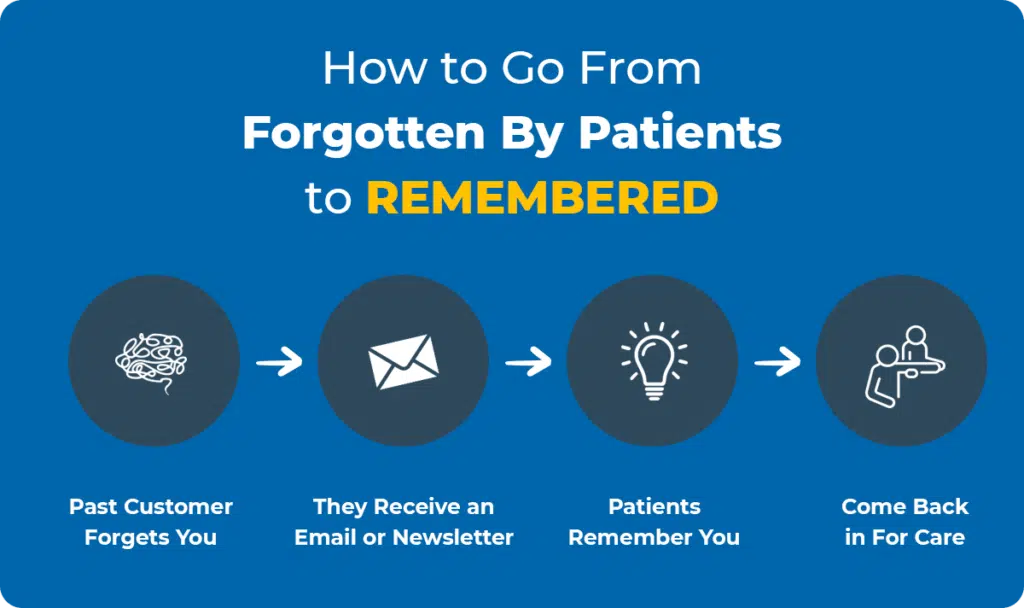
Without reminders, patients forget where they received care and default back to Google the next time symptoms return.
The fix: staying top of mind
Simple, educational communication solves this.
- Periodic emails explaining common flare-ups, seasonal injury risks, or preventative exercises remind past patients why they trusted you in the first place.
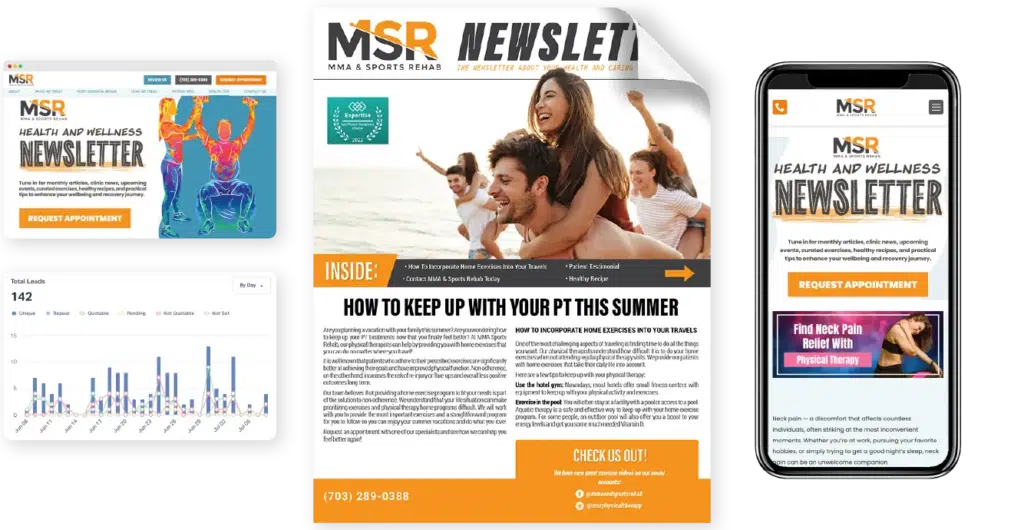
- Newsletters that share recovery tips, clinic updates, or short patient success stories reinforce expertise without feeling promotional.
- Well-timed check-ins are especially powerful. A message sent three to six months after discharge asking how a patient is feeling or offering guidance for maintaining progress can reopen the door to care before symptoms worsen.
Leak #5: Incomplete Plans of Care (The Dropout Rate)
Patient loss does not end after the first visit.
Consider this example:
| Scenario | Revenue Outcome |
| 10 visits at $75 | $750 |
| Patient drops after 5 visits | $375 lost |
Multiply that across dozens of patients each month, and the revenue impact becomes substantial.
Why patients drop out
Dropouts rarely stem from clinical failure. They stem from:
- Poor expectation setting
- Lack of perceived progress
- Weak reinforcement of treatment value
The fix: value reinforcement
Practices that use in-clinic education, structured onboarding, and automated welcome email sequences see higher completion rates. When patients understand why care matters, they stay.
That’s where patient journey mapping becomes invaluable.
Patient journey mapping helps you visualize and optimise every meaningful interaction a person has with your practice: from the moment they first search for relief, through scheduling, treatment, follow-ups, and even reactivation months later. When you intentionally design experiences that reduce friction and reinforce value at every stage, patient engagement and completion rates improve dramatically.
Mapping your patient journey allows you to:
- Identify critical touchpoints where patients commonly drop off
- Tailor communications to meet patients’ emotional and informational needs
- Anticipate barriers and proactively address them
- Align your website, front desk, and clinical communications around consistent, confidence-building messaging
👉 Read The Ultimate Guide to Patient Journey Mapping for Physical Therapy Practices to learn how to map and optimise every step of your patient experience.
Leak #6: The Front Desk “Black Hole”

Marketing generates interest. The front desk converts it.
CallRail’s 2025 benchmark report notes a 32% missed call rate (highest among industries), implying many inbound opportunities are lost before staff interaction.5
Why this leak is costly
Every unconverted call represents:
- Lost marketing spend
- Lost patient trust
- Lost revenue opportunity
The fix: measurable conversion systems
High-performing clinics track call-to-appointment ratios and train staff to confidently address objections. Front desks are not administrative roles. They are revenue-critical touchpoints.
Leak #7: Practitioner vs CEO Mindset
The most expensive loss is opportunity loss.
Many clinicians view marketing as an expense rather than an investment. That mindset limits growth.
The math tells a different story
| Investment | Outcome |
| $1,000 in ads | 8 patients |
| Avg patient value | $1,000 |
| Revenue generated | $8,000 |
| Net gain | $7,000 |
Refusing the investment does not save money. It forfeits growth.
The fix: strategic thinking
Clinics that scale treat marketing like infrastructure, not a gamble. Decisions are guided by ROI, not fear.
If you’ve ever wondered what a “normal” marketing spend looks like — and whether your clinic is investing enough to grow — a simple starting point is the 7–8% revenue benchmark.
Spend strategically within this range, and you begin to:
- Increase visibility in high-intent search and local results
- Generate reliable patient acquisition systems instead of sporadic leads
- Build repeat and referral business through ongoing engagement programs
- Scale predictably rather than reactively
Our star client Raj Suppiah, puts it this way:

👉 Learn more about setting the right marketing budget for your practice:
The Importance of the Right Marketing Budget for Physical Therapy Clinics
Summary: How to Patch the Leaks
Physical therapy loss of patients rarely stems from a single issue. It happens when multiple weak points compound across the patient journey:
- Invisible search presence
- Low-converting websites
- Missing condition content
- Forgotten past patients
- Care dropouts
- Untrained front desks
- Short-term thinking
Fixing one leak helps. Fixing the system changes everything.
Ready to Stop Losing Patients?
At Practice Promotions, we help clinics replace leaky marketing with structured growth systems that work together, not in isolation.
If you want to see how your clinic compares, schedule a strategy call with us and uncover where patient loss is happening in your practice.
SCHEDULE YOUR STRATEGY CALL NOW
References:
- Dean, Brian. “We Analyzed 5 Million Google Search Results. Here’s What We Learned about Organic CTR.” Backlinko, 2025, backlinko.com/google-ctr-stats.
- Moudden, Tami. “What’s a Good Conversion Rate for Medical Practices?” Linkedin.com, 19 Nov. 2024, www.linkedin.com/pulse/whats-good-conversion-rate-medical-practices-tami-moudden-brtue/. Accessed 16 Feb. 2026.
- “The 2024 U.S. Healthcare Consumer: How the Internet and Social Media Are Affecting Patient Choices.” Researchandmarkets.com, 2024, www.researchandmarkets.com/reports/5981962/the-u-s-healthcare-consumer-the-internet. Accessed 16 Feb. 2026.
- K J, Jaby. “100 Stats on Customer Satisfaction, Retention, & Loyalty.” SurveySparrow, 21 June 2023, surveysparrow.com/blog/customer-satisfaction-stats/.
- “Grow Your Patient Base and Revenue: How Voice Assist Maximizes Healthcare Marketing ROI.” Callrail.com, 10 Nov. 2025, www.callrail.com/blog/voice-assist-maximizes-healthcare-marketing-roi. Accessed 16 Feb. 2026.