
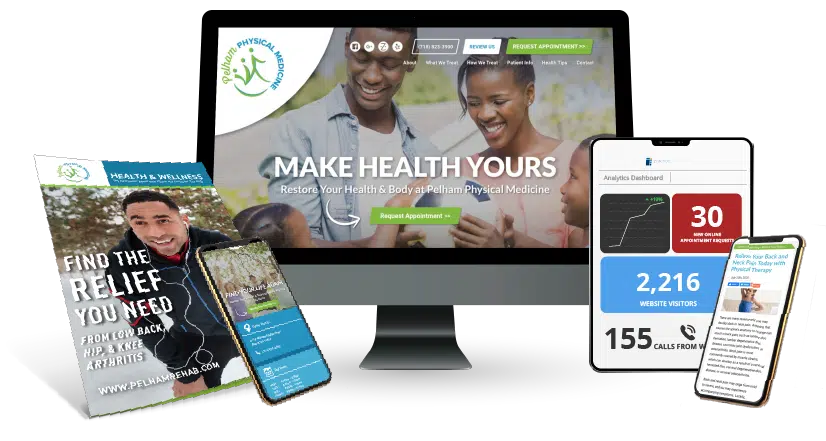








The best physical therapy website design does more than look professional. It helps patients understand your services, builds trust before the first visit, and guides people toward booking an appointment with ease. A clinic’s website often becomes the first real interaction a patient has with a private practice.
When someone searches for physical therapy, they are usually dealing with pain, limited movement, or recovery concerns. A clear, professional website helps answer early questions and shows that your clinic is prepared to help. Design choices such as layout, page speed, mobile usability, and content structure all influence how long visitors stay and whether they take action.
Website design also supports visibility. Search engines favor fast, well-structured sites with clear content, which means design directly affects SEO performance. At the same time, patients expect a smooth experience across devices. If a site loads slowly or feels confusing on a phone, trust drops quickly.
In this article, you’ll see what defines the best physical therapy website design for private practices. We’ll cover essential features, real-world design examples, common mistakes to avoid, and practical ways to improve patient engagement and bookings through smarter website design.
Key Takeaways
✔️ Website design influences early trust and helps patients understand services before contacting a clinic
✔️ Mobile speed and usability affect how long visitors stay and whether they engage
✔️ Search visibility improves when site structure, load time, and content work together
✔️ Clear calls to action make it easier for patients to book appointments
✔️ A well-structured website supports consistent growth by attracting better-fit patients
Why Your Physical Therapy Website Design Matters
A physical therapy website often influences a patient’s decision before any phone call or visit. Visitors usually want clear information, reassurance, and an easy way to move forward. When the website is clear and easy to use, patients are more likely to stay and engage.
Website design also has a strong impact on search visibility. Search engines favor sites that load quickly, work well on mobile devices, and present content in a clear layout. When design and SEO align, clinics improve their chances of appearing in local search results where patients are actively looking for care.
Beyond visibility, design affects conversion. Simple navigation, clear service pages, and visible booking options help patients move from interest to action. When pages appear confusing or outdated, visitors often leave without contacting the site.
Strong website design also supports trust over time. Consistent visuals, professional layouts, and clear messaging reinforce credibility and help clinics stand out in competitive markets. Many of the clinics featured in the Practice Promotions portfolio show how thoughtful design supports both patient confidence and sustained growth.
Key Features of the Best Physical Therapy Websites
The best physical therapy website design combines clarity, speed, and purpose. Each element works together to help patients find information quickly, trust the clinic, and take the next action without confusion.
Below are the core features that consistently show up in high-performing physical therapy websites.
Mobile-Friendly & Fast Loading
Many patients browse clinic websites across different devices throughout the day, so performance needs to stay consistent everywhere. A site that loads quickly and adjusts smoothly across screen sizes keeps visitors focused on the content rather than the technology.
Some practical ways strong sites support performance include:
✔️ Pages that load quickly without heavy scripts
✔️ Layouts that adjust cleanly on phones and tablets
✔️ Text that stays readable without zooming or scrolling sideways
✔️ Buttons that are easy to tap without frustration
When speed and usability work together, patients spend more time engaging instead of leaving early.
Clear Calls-to-Action (Book Appointment)
Once patients understand your services, the next step should be obvious. Clear calls to action guide visitors toward booking without confusion or extra effort.
Effective call-to-action placement usually includes:
✔️ Appointment buttons placed near service explanations
✔️ Simple language that explains what happens next
✔️ Booking links that stay visible as users scroll
✔️ Forms that ask only for essential information
SEO-Optimized Content
Website design supports visibility best when content and structure align. Pages that follow clear formatting and focus on patient-focused language help search engines and visitors at the same time.
Well-optimized sites often include:
✔️ Service pages written around real patient questions
✔️ Clear headings that organize information logically
✔️ Location-focused content for local searches
✔️ Internal links that guide visitors naturally
When SEO supports design, clinics attract patients who are actively searching for care.
HIPAA-Compliant Forms
Online forms play a central role in patient communication, so security and clarity need equal attention. Forms should protect patient information while remaining easy to complete.
Strong form design typically includes:
✔️ Secure data handling that follows compliance standards
✔️ Clear instructions for each required field
✔️ Simple layouts that reduce confusion
✔️ Confirmation messages that explain what happens next
Engaging Visuals & Patient Testimonials
Visual elements help patients connect with your clinic before visiting in person. Real photos and patient stories support credibility without overstating outcomes.
Effective visual content often includes:
✔️ Images of the clinic space and care environment
✔️ Photos of the care team at work
✔️ Testimonials that focus on experience and communication
✔️ Clean layouts that keep visuals supportive, not distracting
When visuals support the message, trust builds naturally.
Blog for Education & SEO
Educational content helps patients learn while supporting long-term visibility. A blog gives clinics space to answer common questions and explain care in plain language.
Useful blog content often covers:
✔️ When physical therapy helps specific conditions
✔️ What patients can expect during recovery
✔️ Injury prevention tips and movement guidance
✔️ Updates that keep the site active and current
Best Physical Therapy Website Design Examples
Looking at real clinic websites helps clarify what a strong physical therapy website design looks like in practice. The examples below show how clear structure, patient-focused messaging, and smart design choices support engagement and appointment requests.
1. Kaizen Physical Therapy
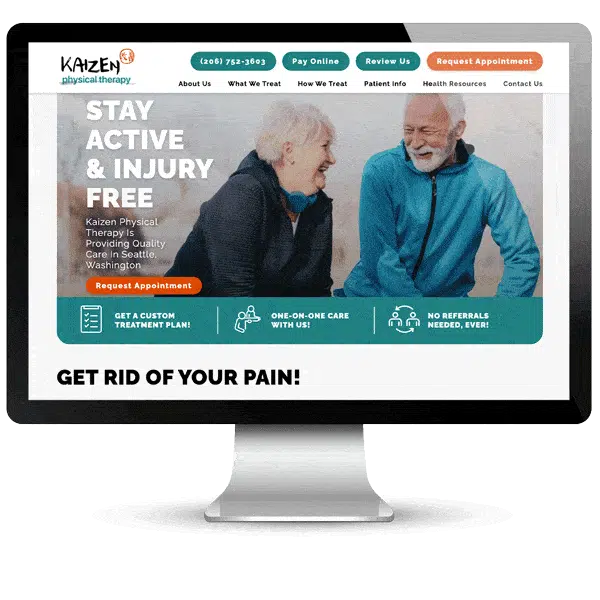
Kaizen Physical Therapy built its website around one goal: helping patients clearly understand what physical therapy treats and how care works. The site focuses on education first, which removes confusion early in the decision process.
Website design highlights
✔️ Easy-to-read explanations of conditions and treatments
✔️ Interactive “conditions we treat” graphic
✔️ Bright, consistent color palette that improves readability
✔️ Clear service pathways supported by Google Ads traffic
Results achieved: In April 2022, 35% of website visitors booked an appointment, which is 14 times higher than the average conversion rate of 2.5%.
2. Skills on the Hill Pediatric Therapy

Skills on the Hill designed its website to speak to three audiences at once: physicians, parents, and children. The site creates reassurance quickly, which is essential for pediatric care.
Website design highlights
✔️ Bright colors and child-friendly fonts
✔️ Photos of children that reflect the clinic environment
✔️ Interactive content for pediatric conditions
✔️ Clear reassurance messaging for parents
Results achieved: After launching their new website with Google Ads support, the clinic generated 135 patient leads in just 60 days.
3. Hands-On Physical Therapy
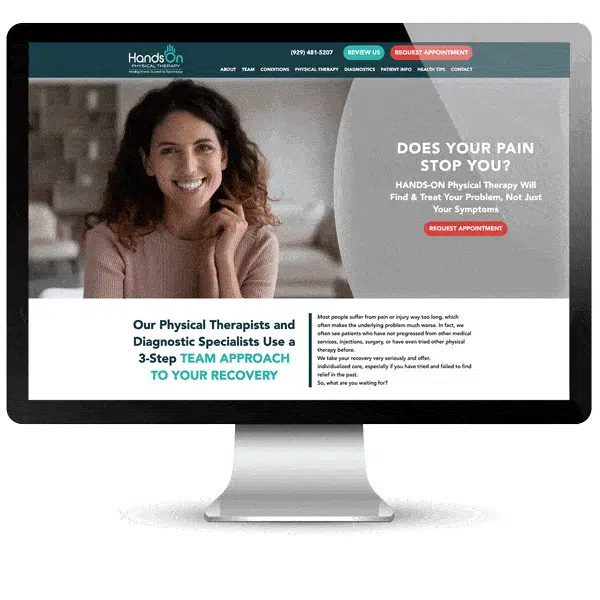
Hands-On Physical Therapy wanted a website that reflected its personal, manual treatment approach without creating extra work for the team. The final design keeps the experience simple and authentic.
Website design highlights
✔️ Custom photos featuring real staff and patients
✔️ Clean, modern layout across all pages
✔️ Strong visibility for “Request Appointment” and “Review Us” buttons
✔️ Smooth mobile experience with blog and social integration
Design impact: The site reinforces trust and personal connection while making it easy for patients to take action.
4. Beyond Therapy and Wellness
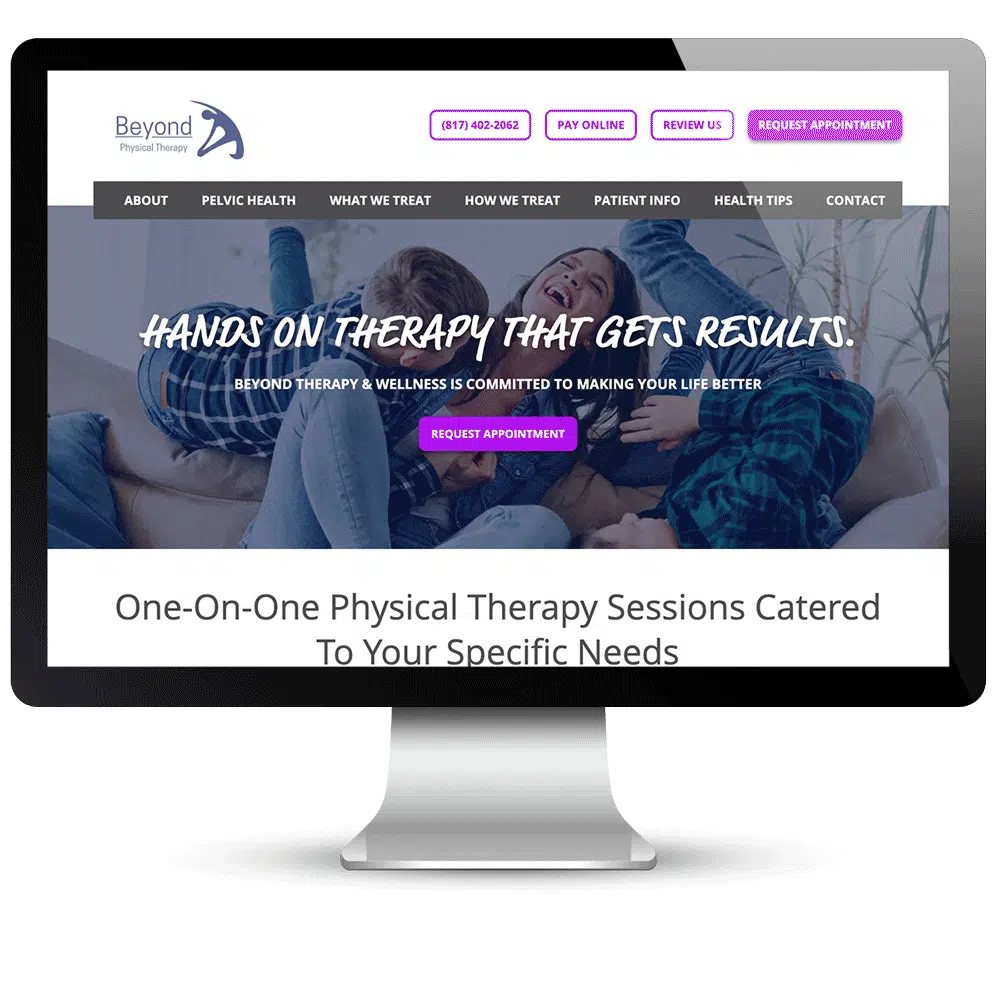
Beyond Therapy and Wellness built a website focused on women’s pelvic health, with an emphasis on comfort, education, and ease of booking.
Website design highlights
✔️ Clear focus on women’s health services
✔️ Prominent “Request Appointment” button in a contrasting color
✔️ Streamlined consultation booking process
✔️ Educational blog content supporting patient confidence
Results achieved: In 2024, the website converted 14% of visitors into appointment requests, which is four times the industry average. Patient leads increased from 10–30 per month to 100–120 per month after launch.
5. Eastside Sports Rehab
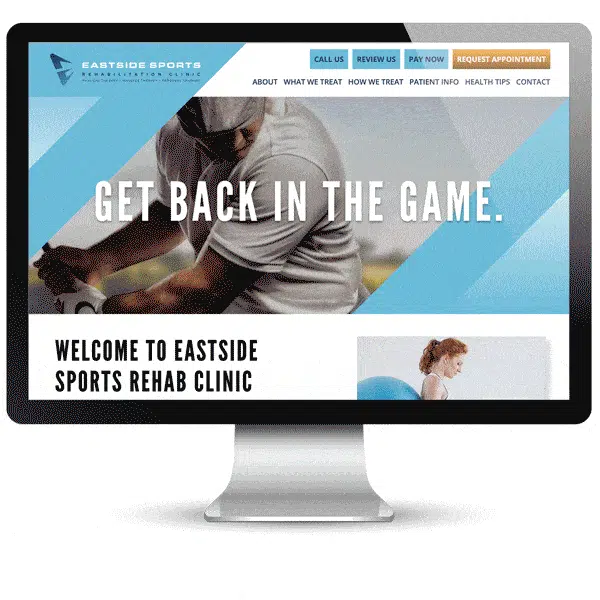
Eastside Sports Rehab needed a website that matched its high-energy sports and performance focus while standing out in a competitive local market.
Website design highlights
✔️ Athlete-focused imagery and dynamic layout
✔️ Strong call-to-action placement at the top of the site
✔️ Integrated AI chatbot and review tools
✔️ Updated branding and logo
Results achieved: Within the first year, the website generated 420 additional patient visits per month.
6. South Coast Physiotherapy
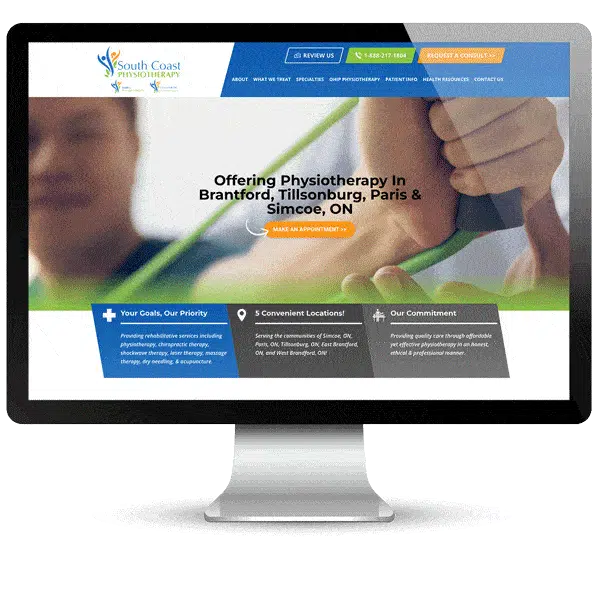
South Coast Physiotherapy created a website that balances simplicity with visibility, making booking the clear next step for visitors.
Website design highlights
✔️ Bright, welcoming color palette
✔️ Large, easy-to-find “Book Appointment” button
✔️ Patient reviews displayed prominently
✔️ Google Ads integration to increase traffic
Results achieved: In April 2022, 26% of website visitors booked an appointment, which is 10 times higher than the average clinic conversion rate.
7. Stride Sports & Physiotherapy
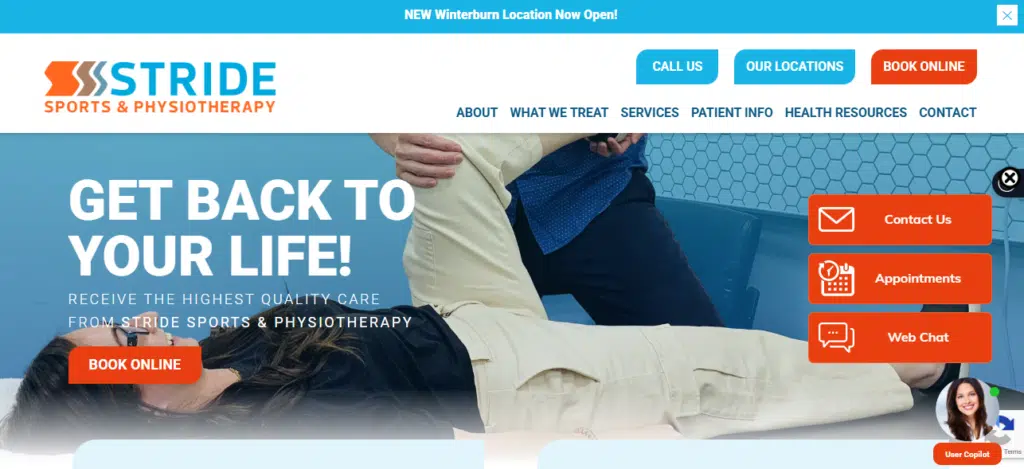
Stride Sports & Physiotherapy’s website is built to speak clearly to active patients who want to understand treatment options without digging through dense content. The layout keeps services front and center, helping visitors quickly assess whether the clinic fits their needs.
Website design highlights
✔️ Service pages organized around injury and performance care
✔️ Clear headings that guide visitors through treatment options
✔️ Visual emphasis on movement, rehab, and active recovery
Design impact: The site helps visitors identify relevant services quickly and move forward with confidence.
8. Bloor Jane Physiotherapy & Active Rehabilitation
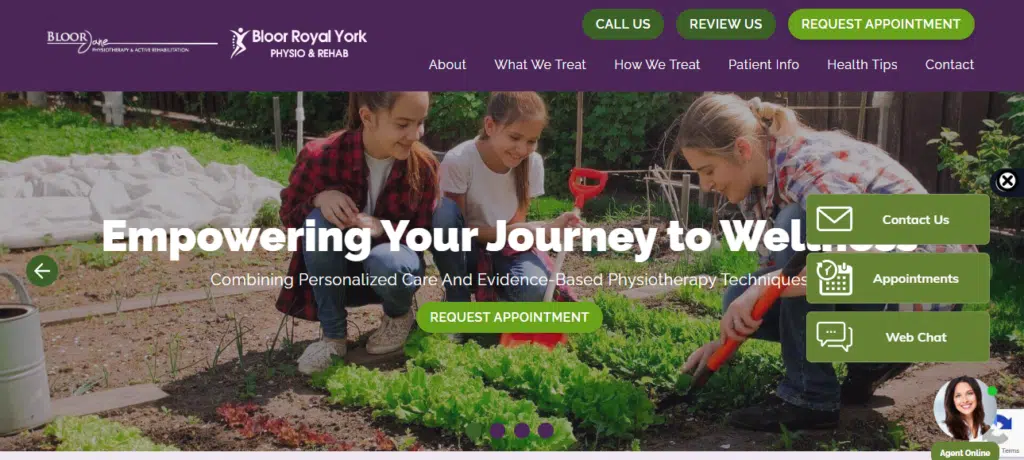
Bloor Jane Physiotherapy & Active Rehabilitation uses a structured, information-first website design that prioritizes clarity. The site focuses on helping patients understand available treatments and how to get started.
Website design highlights
✔️ Well-organized service sections with clear labels
✔️ Patient-friendly language that explains care options
✔️ Booking and contact information that stays visible
Design impact: The design supports faster decision-making by reducing confusion and keeping information easy to access.
9. West End Physiotherapy
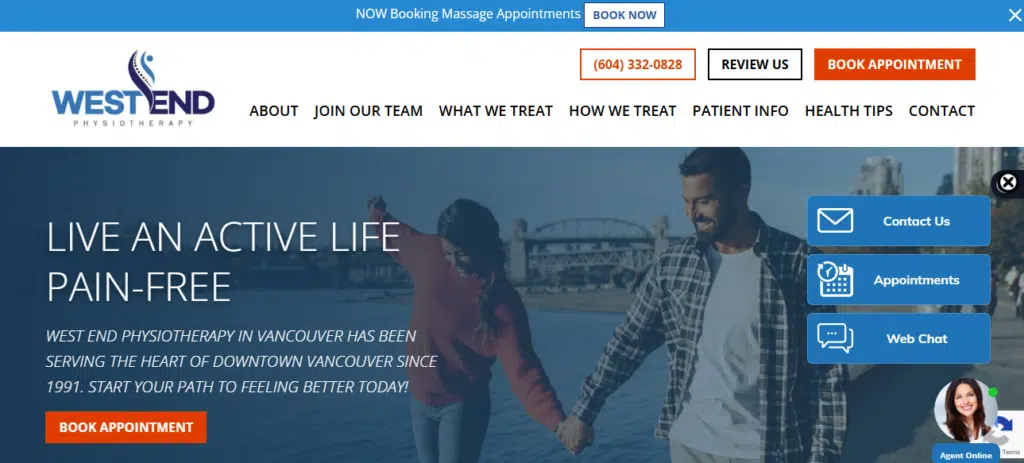
West End Physiotherapy’s website uses a clean, balanced layout that keeps attention on services and patient needs. The design avoids clutter while maintaining a professional clinical tone throughout the site.
Website design highlights
✔️ Consistent formatting across all service pages
✔️ Clear visual hierarchy that improves readability
✔️ Navigation that supports easy movement between sections
Design impact: Patients can scan content comfortably and focus on choosing the right care option.
10. Momentum Health
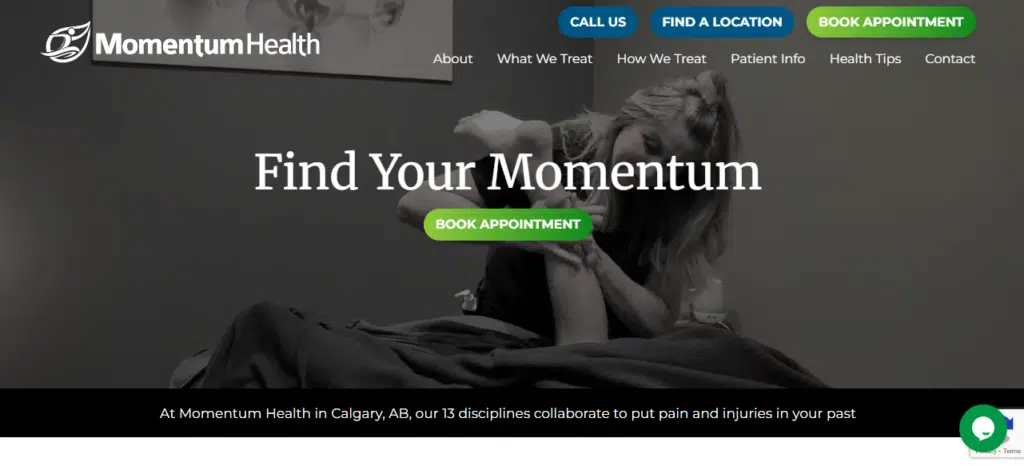
Momentum Health’s website presents a wide range of services in a way that remains easy to follow. The design focuses on structure and readability, helping visitors understand what the clinic offers without feeling overwhelmed.
Website design highlights
✔️ Logical content flow across pages
✔️ Clear service descriptions written for patients
✔️ Consistent visual style that supports readability
Design impact: The site helps visitors understand the clinic’s scope of care and identify next steps more easily.
11. Expert Physio Plus
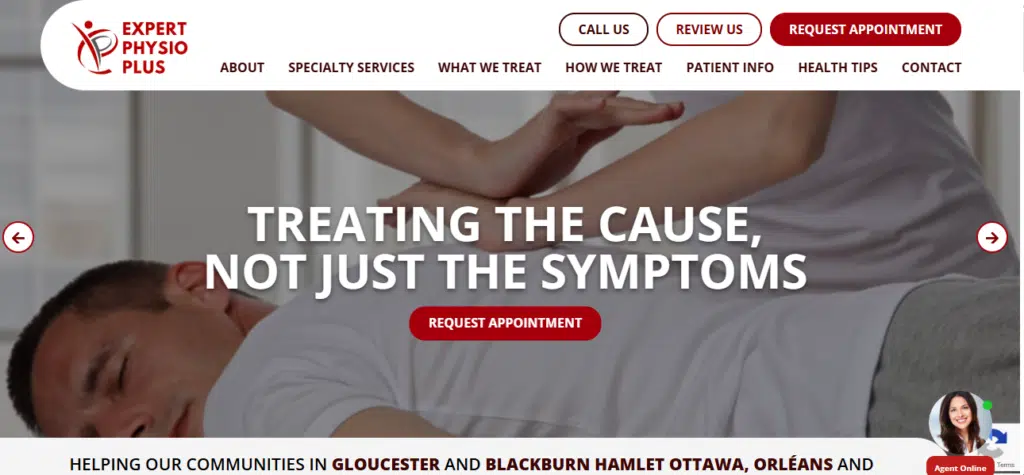
Expert Physio Plus uses a straightforward website design that emphasizes clarity and accessibility. The content focuses on explaining services clearly while keeping navigation simple and intuitive.
Website design highlights
✔️ Service listings written in plain, patient-focused language
✔️ Clean page layouts that reduce effort
✔️ Navigation designed to support quick access to key pages
Design impact: The design supports patient understanding and reduces hesitation when taking the next step.
Best Practices for Physical Therapy Website Design
Effective physical therapy websites follow clear design principles that support patient trust, visibility, and action. The points below highlight what consistently works across high-performing clinic sites.
✔️ Use high-quality images – Photos of the clinic, care spaces, and team help patients understand what their visit may look like and reduce uncertainty before reaching out.
✔️ Keep navigation simple – Clear menus and logical page order help visitors find services, conditions treated, and contact details without frustration or extra clicks.
✔️ Include online booking – Placing appointment buttons near service explanations helps patients act while interest is high instead of searching for next steps.
✔️ Optimize for local SEO – Clinics that want stronger visibility often pair good design with solid SEO tips that support local search performance. Some clinics also combine strong website design with Google Ads to drive qualified traffic to high-converting pages.
✔️ Use educational content – Blogs and resource pages answer common questions while keeping the site active and relevant over time.
Common Mistakes to Avoid
Even strong clinics lose potential patients when website design creates friction or confusion. The issues below appear often and can quietly limit engagement and appointment requests.
❌ Slow load times that push visitors away – When pages take too long to load, many visitors leave before reading about services or reaching the booking page.
❌ Outdated design that weakens credibility – Old layouts, cluttered pages, or inconsistent visuals can make a clinic appear less current, even when the care itself is excellent.
❌ Unclear or missing booking options – If patients cannot easily find how to request an appointment, they often exit the site without taking action.
❌ Poor mobile usability – Text that is hard to read, buttons that are difficult to tap, or layouts that do not adapt well to smaller screens can quickly discourage engagement.
❌ Overloading pages with too much information – When pages try to explain everything at once, key messages get lost, and visitors struggle to decide what to do next.
❌ Driving traffic to pages that are not built to convert – Investing in SEO or Google Ads without a clear website structure can result in traffic that does not turn into appointments.
Ready to Upgrade Your Physiotherapy Website Design?
A strong website does more than display services. It helps patients understand their options, builds trust early, and supports consistent appointment requests. When design, content, and performance work together, clinics see stronger engagement and clearer patient pathways.
Practice Promotions helps private practices create websites that support real growth. From clear service structure to booking-focused layouts, each website is built to attract the right patients and guide them toward action. These designs also work alongside SEO and paid traffic, so visibility and conversion improve together.
If your current website is outdated, hard to manage, or unclear for patients, reach out to us. Our team can help you create a site that supports patient trust, improves visibility, and makes it easier for people to book care.
Frequently Asked Questions
How often should a physical therapy website be updated?
Most clinics benefit from regular updates every few months. This may include refreshing service pages, adding new blog content, or updating team and location details. Ongoing updates also support search visibility and patient trust.
What makes the best physical therapy website design stand out?
The best physical therapy website design focuses on clarity, speed, and ease of use. Patients should quickly understand services, find booking options, and feel confident taking the next step without confusion.
Does website design affect local search results?
Yes. Website structure, load speed, mobile usability, and content organization all influence local search performance. Clinics often see stronger results when website design supports broader SEO efforts.
Should physical therapy websites include online booking?
Online booking makes it easier for patients to request appointments when interest is high. Clinics that place booking options near service explanations often see better engagement and follow-through.
Can a new website help increase patient inquiries?
A clear, well-structured website helps attract better-fit patients and guide them toward action. When combined with strategies like SEO or Google Ads, website design plays a direct role in improving inquiry volume.